The repair begins with lacquer, not gold
Gold is the visible finish, but it is not what holds a kintsugi repair together. The fragments are joined with urushi, a natural lacquer made from the sap of the lacquer tree. Where pieces are missing or the break leaves a gap, the craftsperson can build up and smooth the surface with lacquer mixed with fine materials such as clay or powder.
Urushi hardens through a chemical reaction with moisture in the air. That makes the repair a slow sequence rather than a quick glue job: each layer needs time in a warm, humid environment to cure before the next can be added. The joins are refined, coated with a final layer of lacquer, and dusted with powdered gold while that coating is still tacky.
Why make the seam visible?
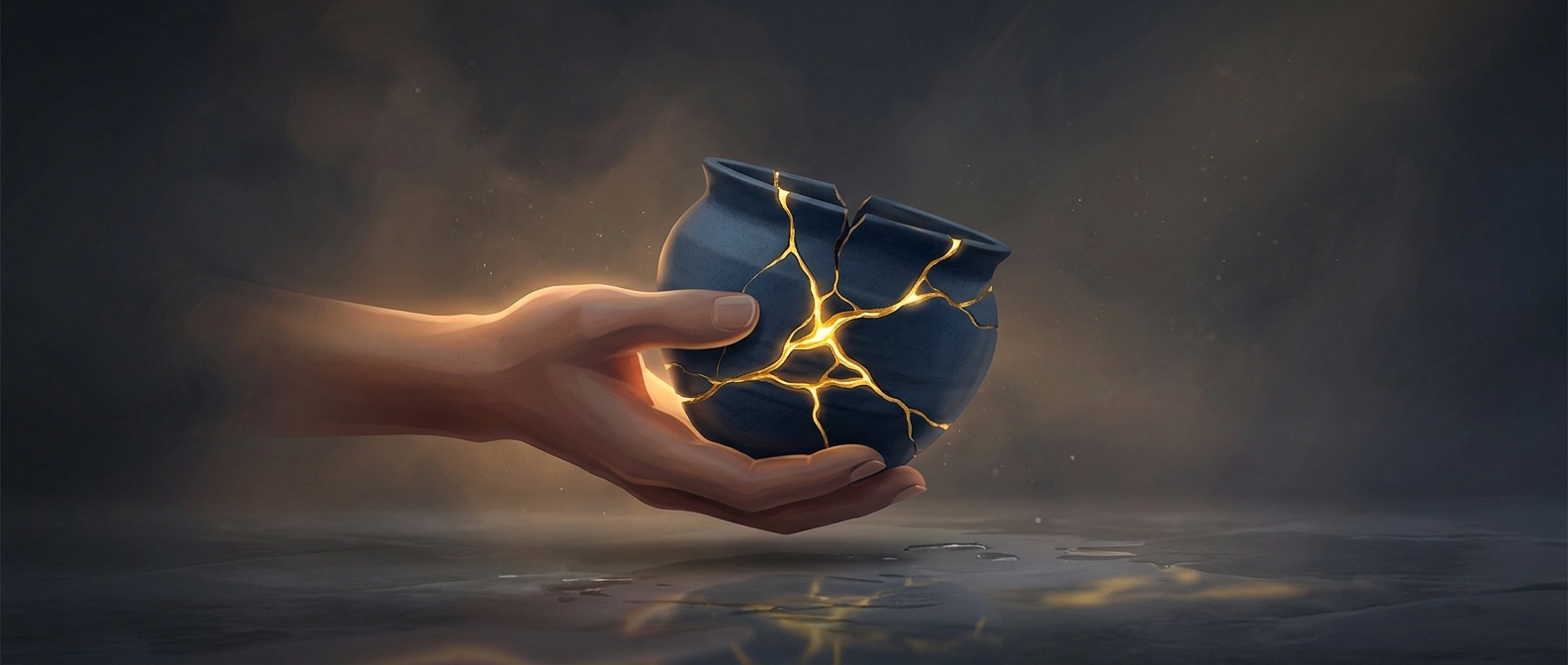
A conventional repair often aims to make damage disappear. Kintsugi instead gives the eye a clear path along the break. The gold traces how the vessel came apart and was reassembled, so the repair becomes part of its design—not a disguise for the accident.
That choice has a practical consequence, too: the finished object is not a seamless imitation of its former self. Its repaired lines remain legible, and their shape depends on the original fracture. The break determines the pattern; the craftsperson’s work makes that pattern durable and deliberate.