How computers added color to monochrome frames
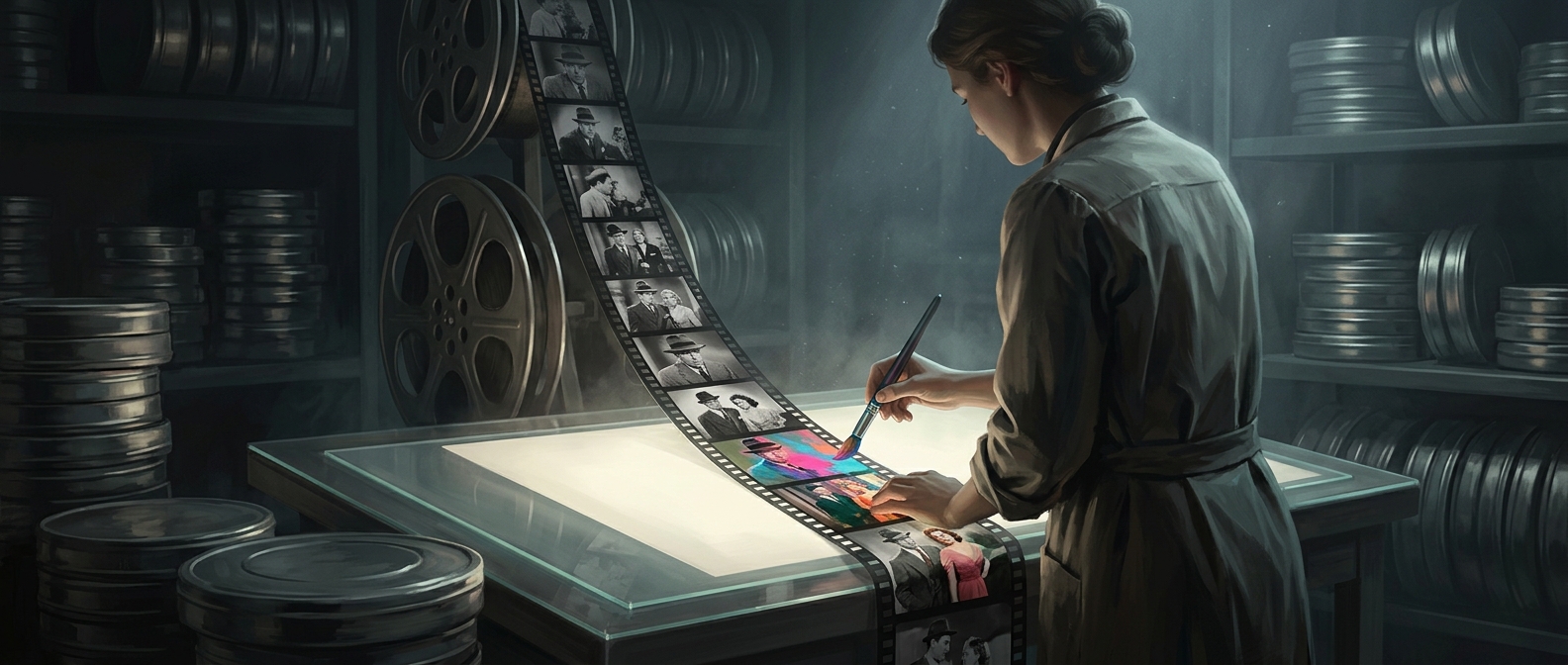
Colorizing a black-and-white film was not a matter of asking a computer to recover colors hidden in the image. The film recorded brightness, not the original colors, so there was no color information for software to restore. Instead, people chose plausible hues and used computers to apply them consistently across moving pictures.
A technician marked regions in a frame—such as a face, coat, or patch of sky—and assigned each a color. Software could carry those selections forward as objects moved, but scenes still needed human attention: a hand might cross a face, lighting might change, or an object might be partly hidden. Corrections helped keep colors attached to the right shapes from one frame to the next.
Why the result could feel like a different film
Color choices were necessarily interpretations. A gray coat might be assigned a particular shade, but the image itself could not confirm that choice. The process also changed how viewers read a scene: color can draw attention to one object and make others recede, even when their brightness stays similar.
That mattered because black-and-white cinematography was often designed around differences in light and darkness. A director or cinematographer might use shadow, contrast, and carefully arranged tones to guide the eye. Adding color could compete with those choices, making a carefully shaped image feel flatter, busier, or simply unlike the version its makers intended.
The dispute was about authorship, not just technology
For media companies, colorization offered a way to present older films to audiences accustomed to color television. For many filmmakers, however, the original monochrome image was an artistic decision, not a defect awaiting a technical fix. Once color was added, the underlying story remained, but the visual experience—and the viewer’s attention—could change. That is why the controversy centered on who had the right to revise a film’s look after its creation.