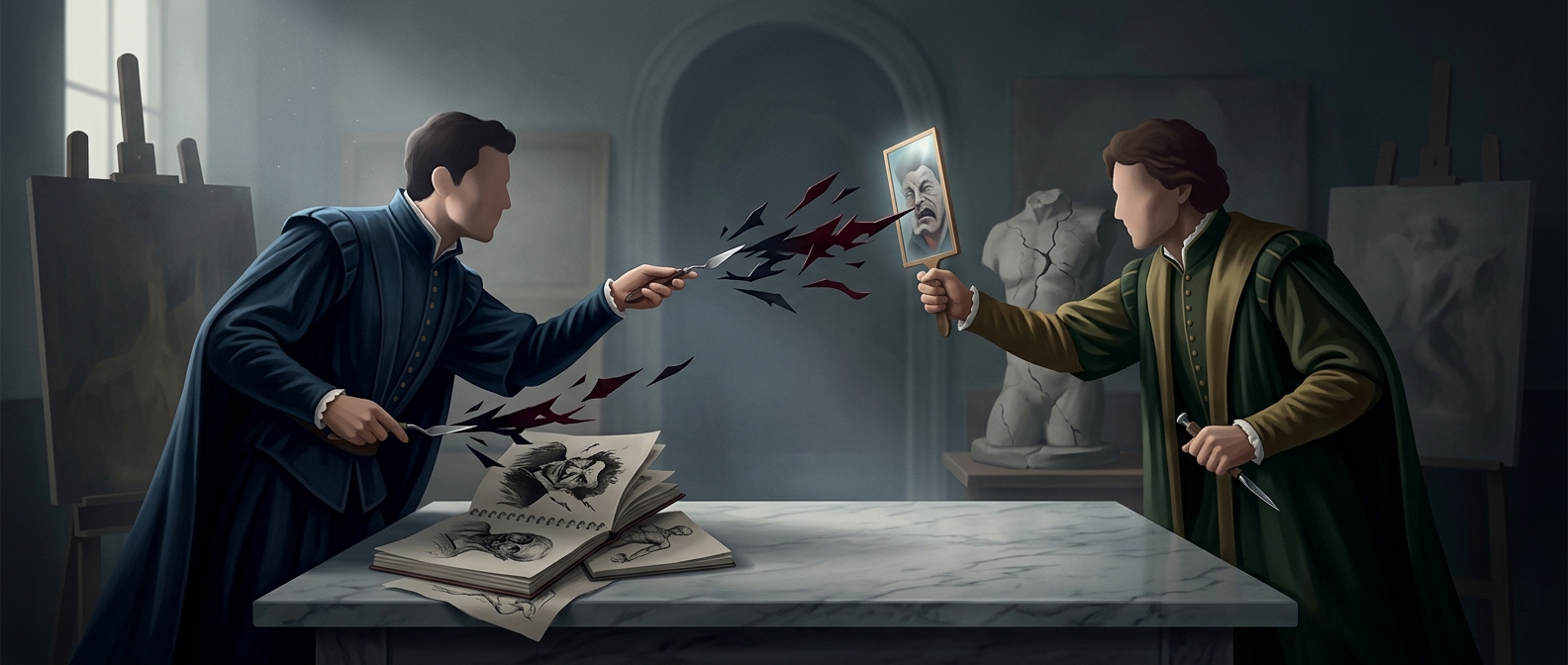
Why an insult could matter to an artist
Renaissance painters competed for more than admiration. They needed commissions: paid assignments from wealthy households, religious institutions, and civic authorities. A patron choosing one artist might pass over another, so a rival’s reputation could affect who got the next job. Calling a competitor incompetent was a rough way to argue that the competitor’s work—and therefore his claim to public standing—was undeserved.
Reputation was part of the performance
In cities where artists and patrons encountered one another, an insult could travel beyond a private quarrel. Spoken before an audience, it invited listeners to take sides and made artistic judgment a social contest. The attack might be about skill, but it also advertised the speaker’s confidence and tried to shape how others viewed the rival. In that sense, a put-down was not merely an expression of anger; it was a bid for status.
The stakes depended on the city, the people involved, and the setting. Not every rivalry became a spectacle, and not every sharp remark changed anyone’s prospects. But when a painter’s standing helped determine who received work, public mockery could serve as a weapon in the competition for reputation—and, potentially, commissions.