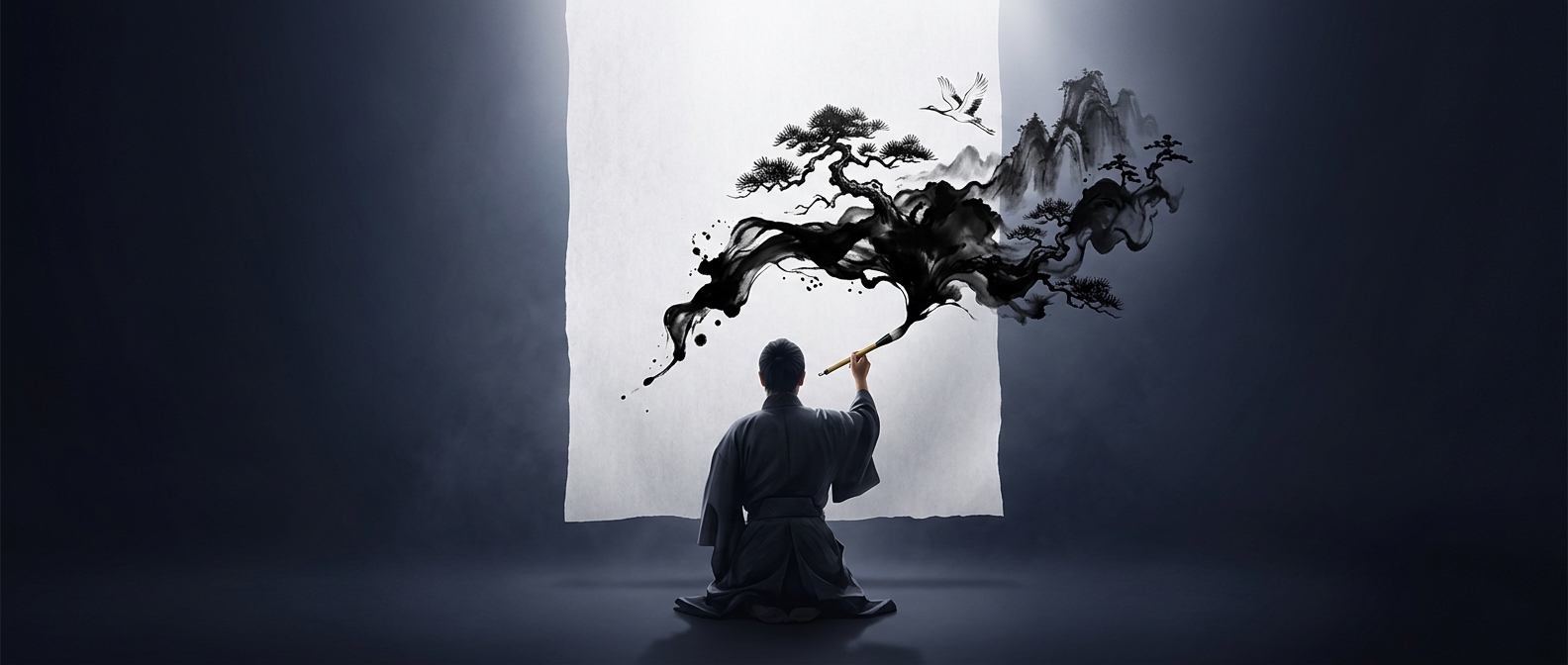
How One Ink Makes Many Tones
Sumi-e artists do not need colored pigments to suggest light, distance, or texture. They dilute black ink with water, creating washes that range from pale gray to deep black. A brush can also carry different amounts of ink and water at once, so a single stroke may shift in tone as it moves across the paper.
That range turns a limited palette into a practical tool. A dark, loaded stroke can define a branch; a lighter wash can suggest mist or a distant hillside. The subject emerges through contrasts in value—the relative lightness or darkness of marks—rather than through color.
Why the Brushstroke Matters
Traditional ink painting is often made on absorbent paper or silk. These surfaces take in ink quickly, so a stroke can spread or feather before the painter has time to adjust it. Brush angle, pressure, speed, and moisture all affect the result: pressing harder lays down a broader mark, while a quick, lighter movement can leave a thinner one.
Because a wet mark is difficult to erase cleanly, the painter has to decide what the stroke should do before making it. That does not mean every mark is mechanically planned; control comes from practicing movements until the hand can respond with precision.
What the Unpainted Space Does
The blank areas are part of the composition, not simply places left unfinished. They can stand for sky, water, or fog, allowing a few inked shapes to suggest more than they depict. In sumi-e, the image’s clarity depends as much on where the brush stops as on where it lands.