Why Arabic letters can become a shape
Arabic writing is built from letters that usually connect to their neighbors, and many letters change form depending on whether they appear at the start, middle, or end of a word. That gives a calligrapher more than one fixed outline to work with. Some connections can also be lengthened with a horizontal stroke called a kashida, creating extra space without changing the word.
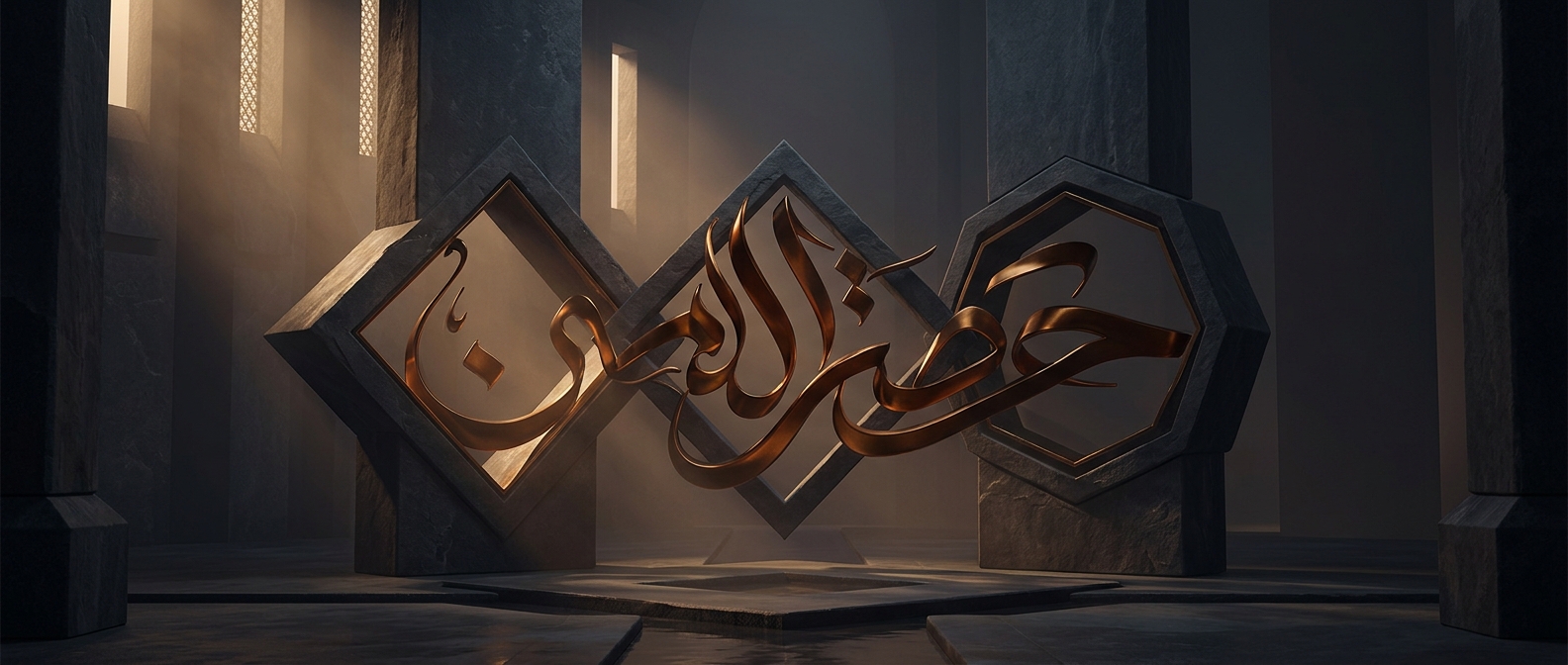
These features make it possible to adapt a line of writing to a circle, arch, or other outline. The calligrapher adjusts spacing and stroke length, then fits the words together as a composition. The goal is not simply to stretch every letter: the design has to preserve the relationships that let readers recognize the words while balancing dark strokes against open space.
When the design competes with reading
A geometric outline imposes its own demands. A short word may need room to occupy part of a curve; a longer one may have to be compressed or arranged around other writing. Calligraphers can use changes in scale, carefully chosen letter forms, and interlocking strokes to make the whole design feel unified. But those choices can also make familiar words less immediately legible, especially to someone who does not know the script well.
That tension is part of the form’s appeal: the writing communicates through language and through its visible structure. A viewer may first see a circle or a flowing pattern, then trace the connected strokes to uncover the words inside it.