When the Material Becomes Part of the Image
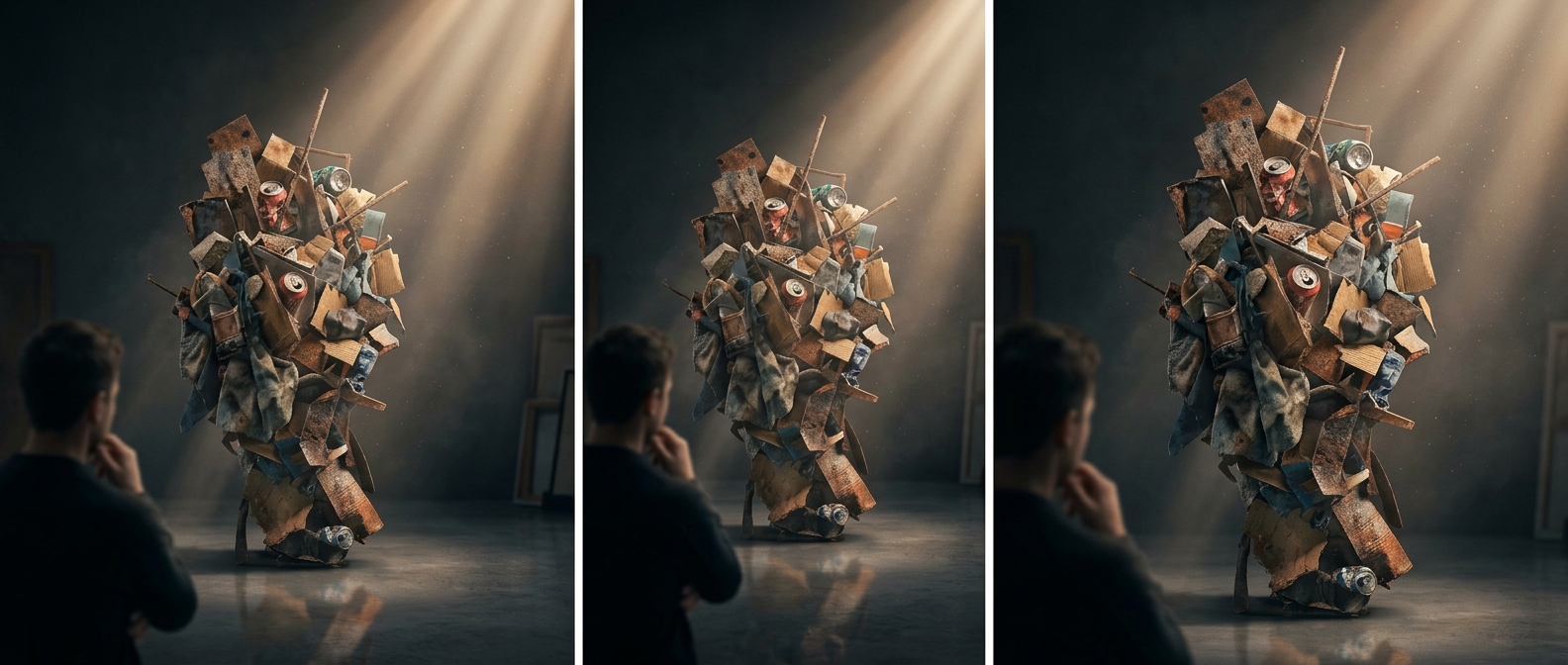
A painted picture represents a surface; a work made with actual scraps has one. That difference changes how viewers read it. A strip of cardboard brings its own ridges and torn edge, while a rust stain records a real material changing over time. These features can give an abstract composition texture and unevenness that would be difficult to reproduce with paint alone.
Composition, Not Just Collection
Artists who attach found objects still make deliberate choices about shape, color, weight, and placement. A wrapper’s bright patch might interrupt a muted field; a bent piece of metal can cast a small shadow or make one side of a board feel heavier. The object is not merely included because it is unusual: it has to work within the arrangement.
This approach is often called assemblage when a work is built from combined materials and objects. It overlaps with collage, which commonly involves attaching flatter materials such as paper. In either case, the artist turns selecting and arranging into part of the making process.
Everyday Traces, Kept in View
Discarded material also carries a recognizable history. A torn package or worn fragment has been handled, exposed, or damaged before it reaches the artwork. It can bring the visual world of streets and ordinary consumption into a gallery without depicting that world in a conventional scene. The result holds two things at once: an abstract arrangement and a piece of material with a life before the artwork.