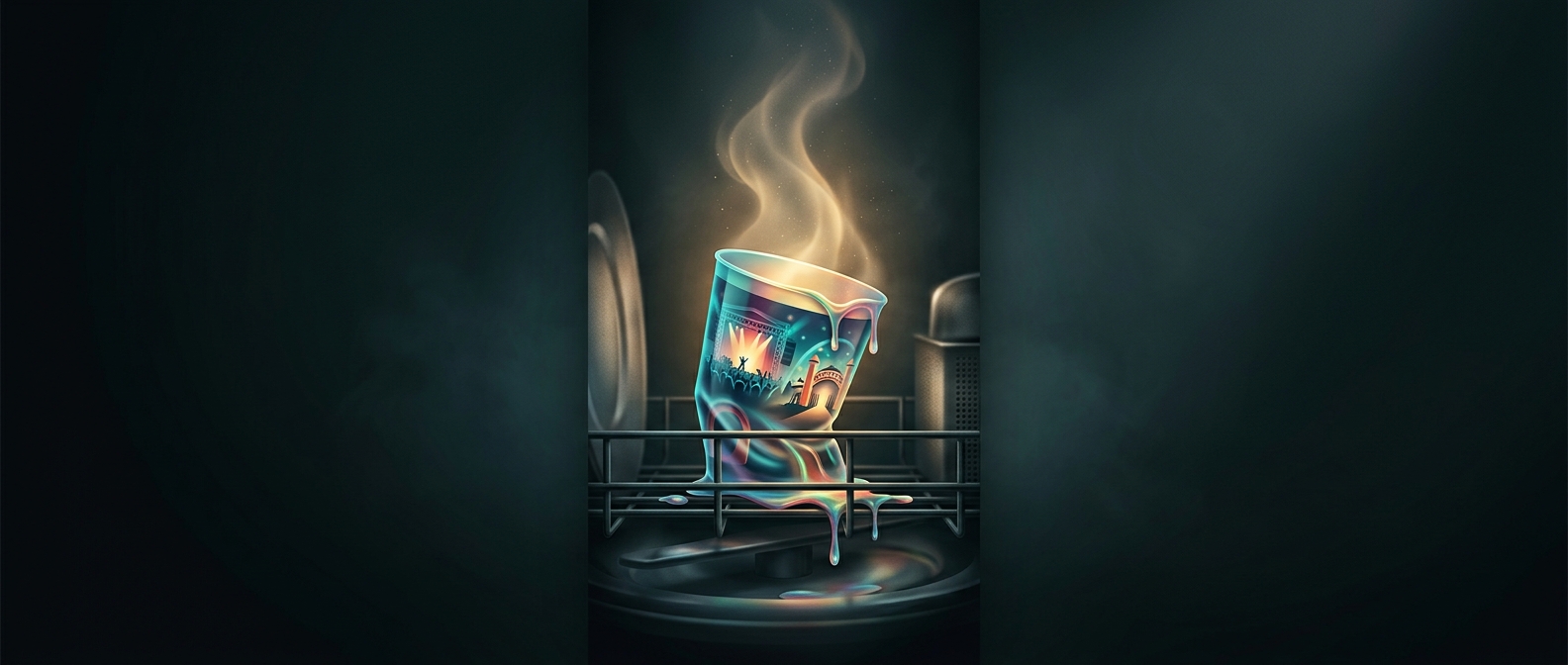
Why a souvenir cup loses its shape
Plastic is not one material with one melting point. Different plastics soften at different temperatures, and a lightweight souvenir cup may be made from a type that becomes flexible in a dishwasher’s heat. It does not have to melt: once softened, the cup can bend under its own weight or press against a rack or another dish.
The base is especially vulnerable. It may be broad and thin, and it has to support the cup while hot water moves around it. If the bottom bows during the wash or drying phase, the plastic can cool in that distorted position. The result is a cup that rocks on the counter or no longer stands flat.
What “dishwasher-safe” can—and can’t—tell you
A dishwasher-safe label means the item is intended to withstand dishwasher conditions, but plastics differ in how much heat they tolerate, and thin walls can still be vulnerable to stress or repeated heating. A cup without that marking is a gamble; decorative prints and glued-on details may also fare poorly.
When a plastic item is marked dishwasher-safe, placing it on the top rack can keep it farther from the heating element in many machines. Turning off heated drying, if the dishwasher allows it, can also reduce exposure to intense heat. Those steps lower the risk, but they cannot make an unsuitable plastic heat-resistant. A souvenir cup that once stood firmly on a shelf may come out of the cycle with its base permanently reshaped.