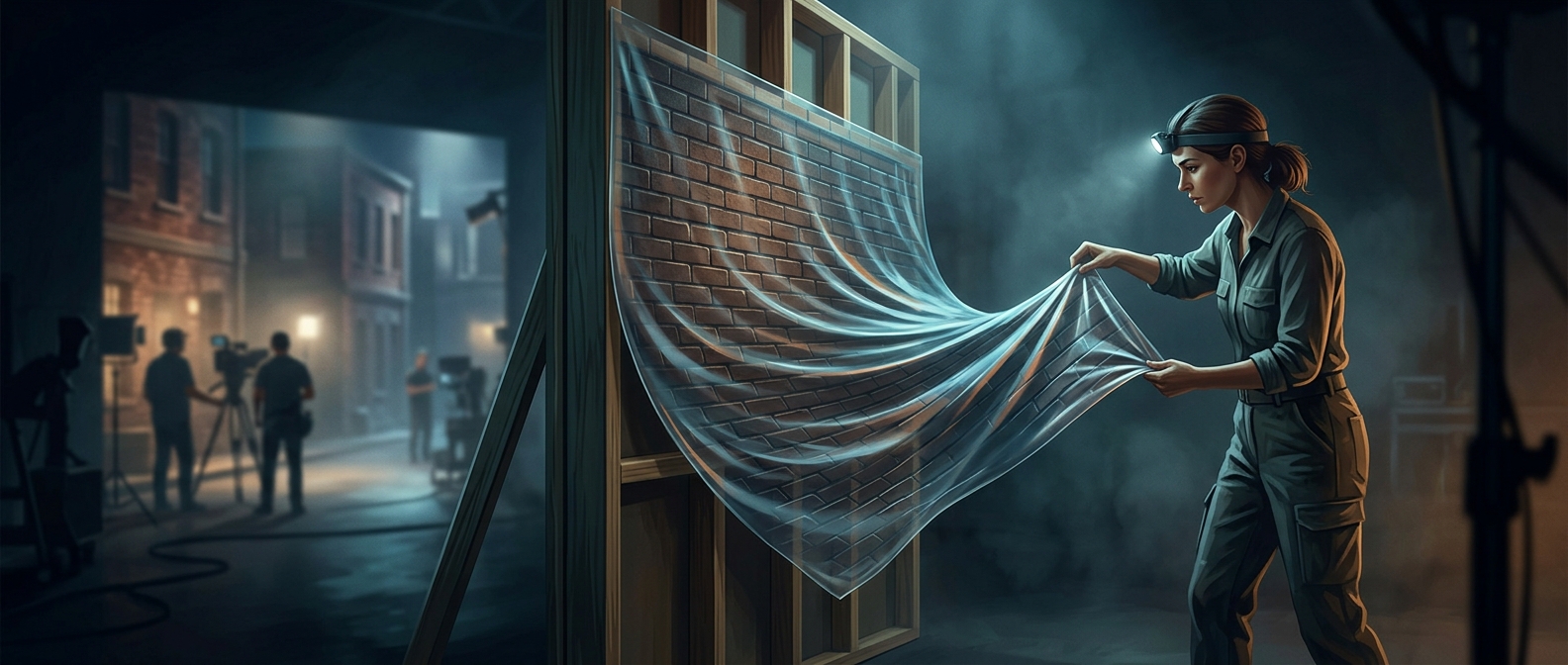
A brick pattern made by pressure, not masonry
A vacuum-formed panel begins as a sheet of plastic warmed until it softens. The sheet is drawn over a mold shaped like brickwork, and suction pulls it into the mortar lines and raised faces. Once cool, it keeps that shallow relief. Paint and surface treatments add the color variation and weathering that help the pattern read as brick rather than smooth plastic.
The result is a thin shell, not a miniature wall. Its texture is shallow, but a camera often needs only enough depth to create small highlights and shadows. At the intended distance and angle, those cues can make a flat backing look convincingly solid. Close inspection, harsh side lighting, or a view of the panel’s edge can reveal the trick.
Built for the shot, not for a building
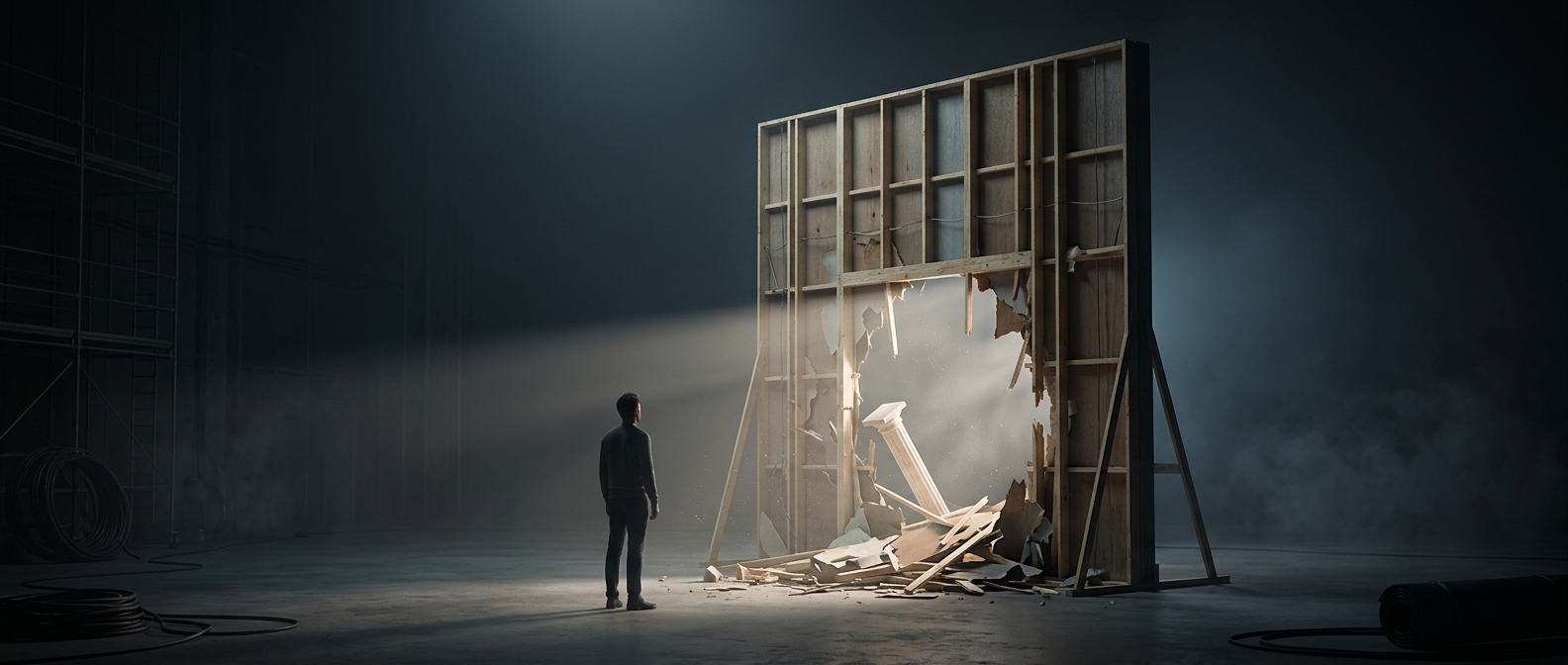
A real brick wall is heavy, slow to alter, and fixed in place. Lightweight panels let a crew dress a set quickly, reposition a wall, or reuse the same frame for another scene. That matters when a production needs a particular doorway, street corner, or interior only for a limited stretch of filming.
The tradeoff is that the wall must be supported and handled like scenery. The frame carries the panel, while the panel supplies the visible surface; it cannot bear structural loads like masonry. Its usefulness comes from matching what the camera can see while avoiding the weight and permanence of the real thing.