The Camera Cannot Hold Every Brightness at Once
A window scene asks the camera to record two very different things: a relatively dim room and a bright view outdoors. If exposure is set to keep faces and furniture clear, the real view can turn into a blank patch of white. If the camera is exposed for the view, the room may sink into shadow. This limitation is especially noticeable when the scene needs visible detail beyond the glass.
A Window That Can Be Lit Like a Set
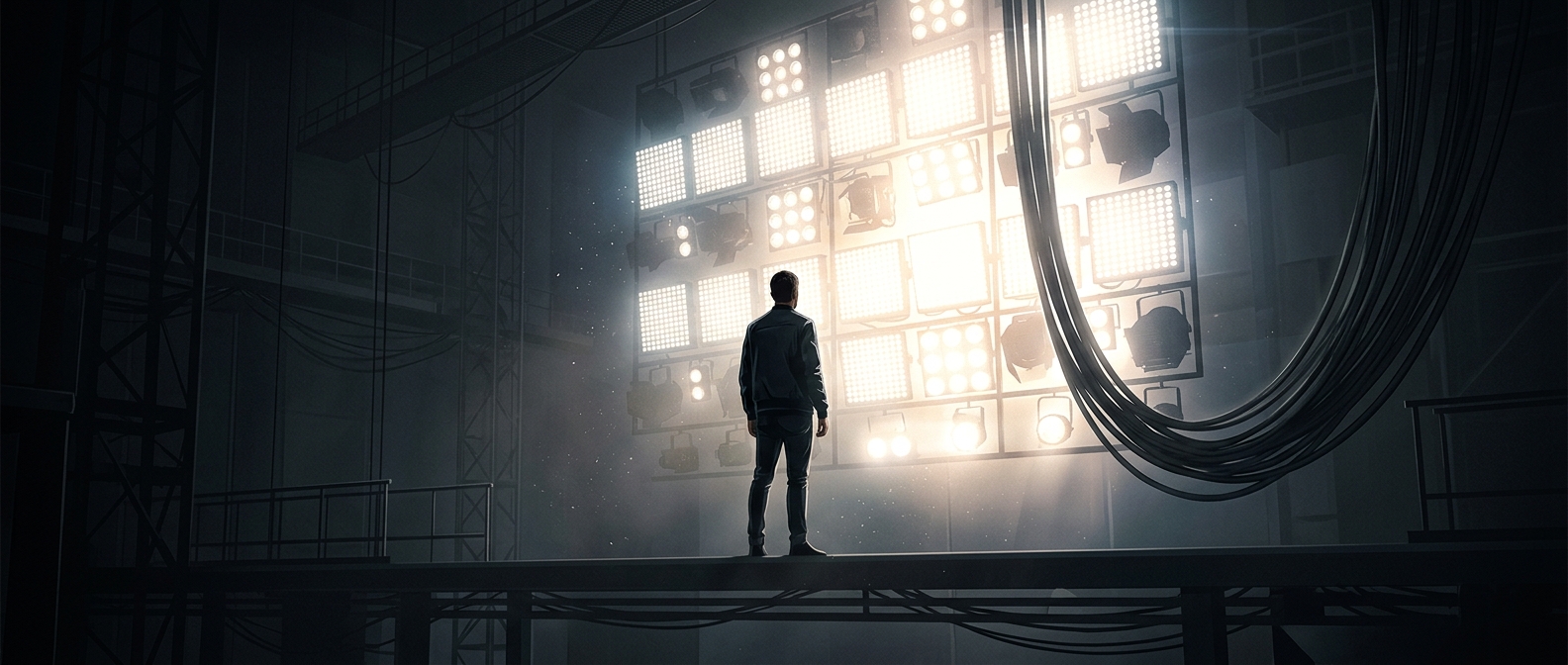
A fake window gives the crew control over the light coming from “outside.” Powerful lamps are placed behind or beyond its frame to create the direction and intensity of daylight, while diffusion—material that spreads and softens light—can make the glow less harsh. The crew can then balance that illumination against the lights on the actors and the rest of the room.
The setup also makes the look repeatable. Real sunlight shifts with clouds, time of day, and the building’s surroundings; set lighting can be adjusted to match from one shot to the next. The bright lamps may run hot, so the effect has a practical cost for the people working nearby. The fake window is not just scenery: it is a controllable light source that lets the camera make the room and its apparent daylight work together.