The Desk Is Part of the Control Room
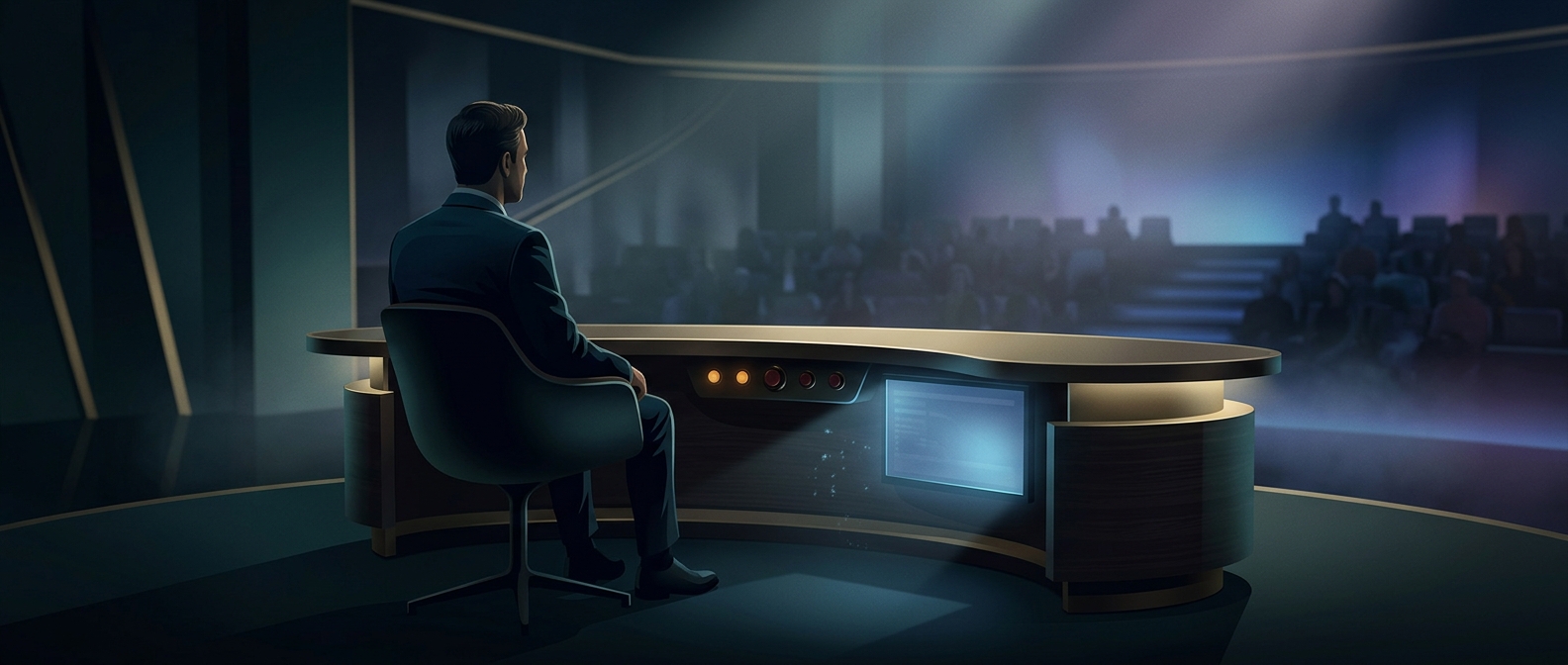
A talk-show desk may look like a simple piece of furniture from the audience, but its hidden side can serve as a compact control station. A monitor gives someone on set a view of the program feed—the picture viewers are actually seeing—while switches can provide quick access to production functions. A panic button, where one is installed, offers a way to cut a live feed if something goes seriously wrong.
Why Put Controls in the Furniture?
Live television runs on timing. The host may be speaking while cameras, audio, graphics and commercial breaks are being coordinated elsewhere. If a control needs to be reached quickly, keeping it within easy reach can be more practical than sending someone across the studio or relying on a distant control room. The desk also gives the equipment a natural visual cover: from the audience’s angle, the set stays polished rather than looking like a bank of switches and screens.
The arrangement is not a universal feature of every talk-show desk. Its contents depend on the production and the set. But the design captures a basic tension in live entertainment: the broadcast must look relaxed and effortless even though people behind the scenes need fast, reliable ways to monitor and manage it. A piece of furniture that appears to separate host from audience can quietly help connect the performance to the machinery keeping it on air.