A soap-opera problem became a camera-side machine
In early television, performers had to deliver long scripts while looking toward the camera. Memorizing every line was demanding, and glancing down at pages could break the sense that an actor was speaking directly to the viewer. The solution grew out of a performer’s practical need: actor Fred Barton Jr. helped develop a device that let talent read without turning away.
How the scroll kept pace
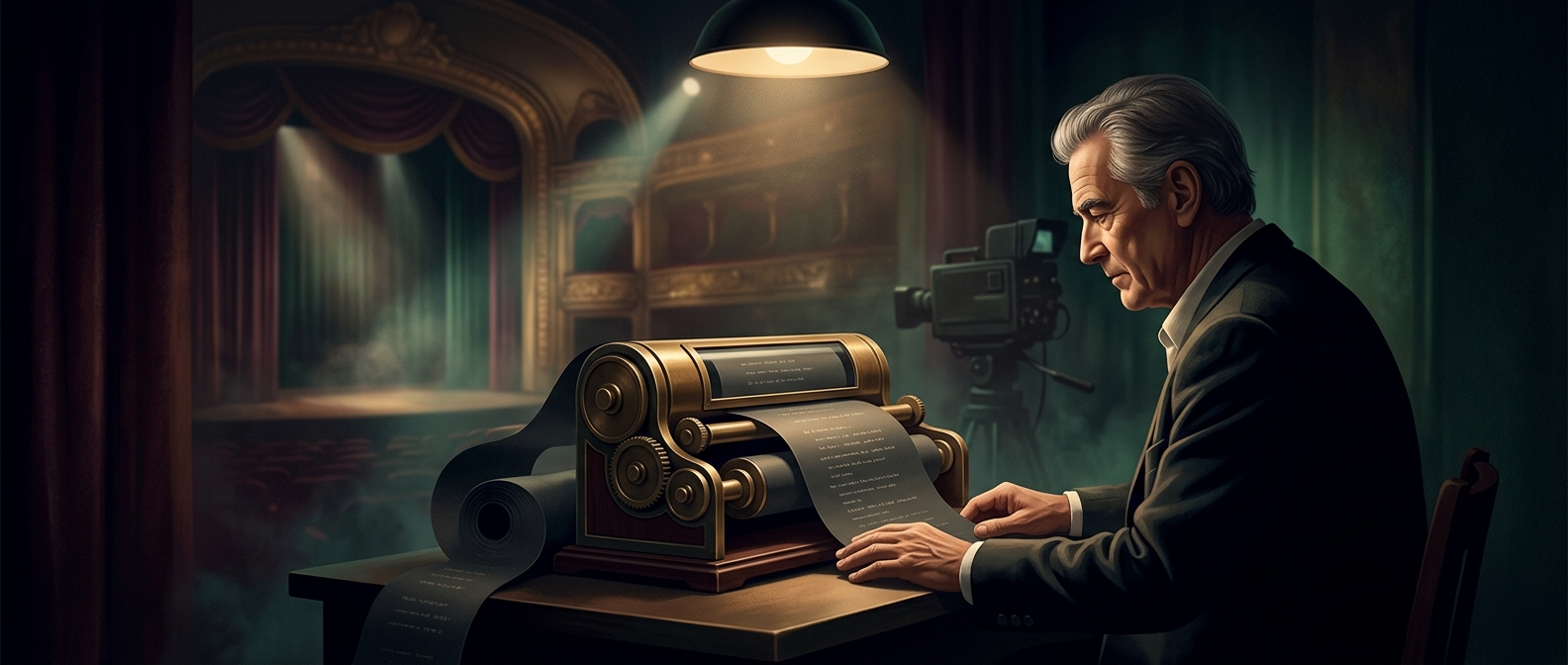
The first teleprompter was a motorized paper scroll carrying the script. It sat near the camera, and the text moved as the performer read. An operator could adjust the scroll’s pace to match the delivery, turning a static script into something closer to a moving cue card. The compact, suitcase-like arrangement made the mechanism usable in a cramped studio.
The key design choice was not to make actors memorize less at any cost, but to keep their eyes near the lens while they spoke. That preserved the direct, conversational look television needed—especially on soap operas, where new dialogue had to be delivered reliably and on schedule.
From paper to reflected words
Later systems put text on a screen and used angled glass to reflect it toward the speaker while allowing the camera to see through the glass. The basic aim stayed the same: make the words readable from the performer’s position and keep their gaze aligned with the audience.
That small change in workflow had a lasting effect. A line could be read aloud while the performer appeared to address the viewer personally—a useful illusion built from paper, a motor, and careful placement beside the camera.