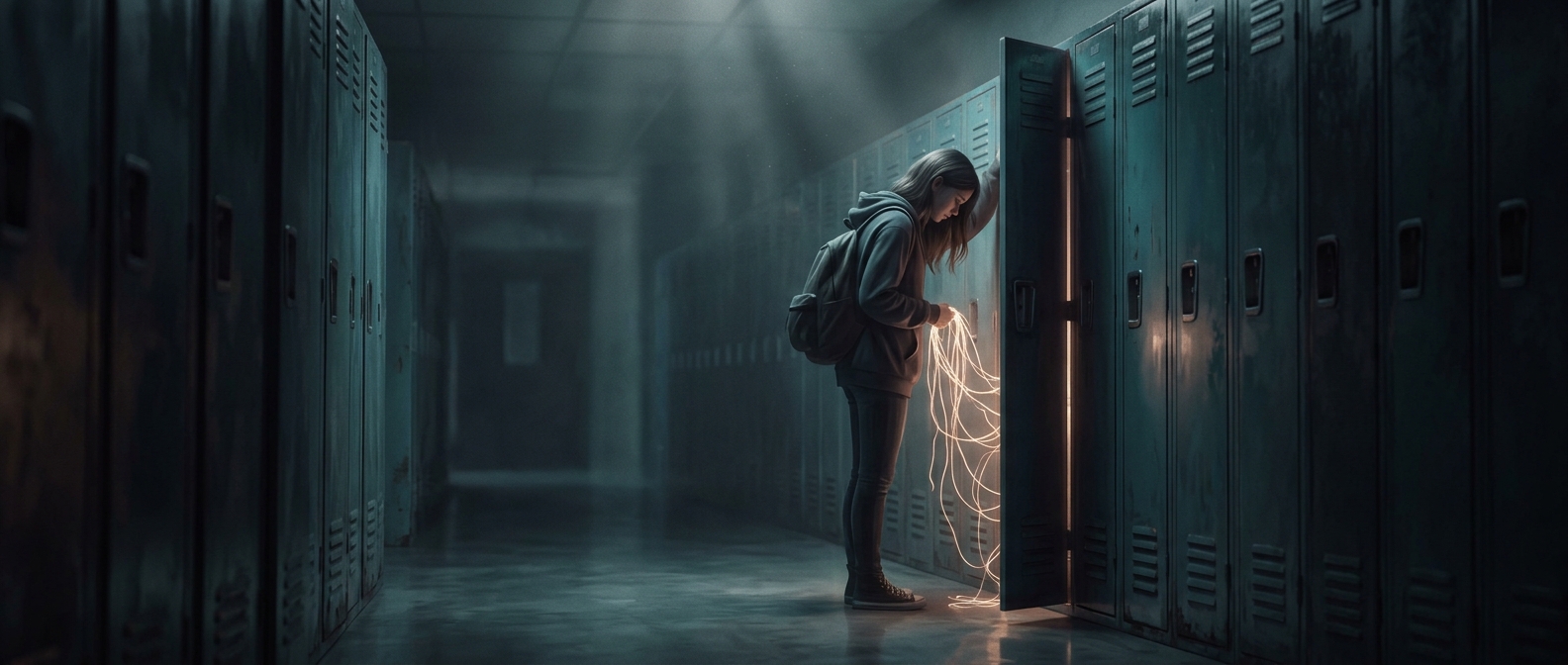
Why lockers carry so much drama in teen stories
A school hallway is a useful stage for a story: students pass through it in groups, but they also have reasons to pause. Lockers make those pauses feel natural. A character can stop to change books, linger after class, or be caught alone while everyone else moves around them. That turns an ordinary transition between lessons into a place where social tension can surface.
A private space in a public corridor
A locker belongs to one student, yet it sits in full view. That makes it a compact symbol of adolescence, when young people are trying to claim independence while still being watched by classmates, teachers, and family. Opening the door can briefly create a pocket of privacy; a note tucked inside can make that privacy feel intimate. A message found or exposed by someone else turns the same space into a breach.
The locker also gives writers a simple way to make feelings visible. A slammed door makes anger audible. A hidden object can become evidence of a secret, a crush, or a betrayal. Instead of explaining a character’s emotions at length, a scene can attach them to a physical action the audience recognizes.
Why the trope keeps working
Lockers are familiar, easy to read on screen, and built into the school day. They let a story stage conflict quickly without moving characters to a special location or interrupting the sense of everyday school life. Their function is practical, but their dramatic appeal comes from the contrast: a student’s small, supposedly personal territory is surrounded by a crowd.
That is why a locker scene can feel more charged than its setting suggests. The door may open onto textbooks and a few personal things, but in a teen story it can also mark the fragile boundary between what a student keeps to themself and what the school gets to see.