Why Prom Becomes a Story’s Big Finale
A school dance is ordinary on its own: a room, music, formal clothes, and a few hours together. In teen stories, though, prom often works like a deadline. The date is fixed, the evening is brief, and the characters know who is likely to be there. That makes it an efficient setting for bringing several unresolved threads into one place.
A rivalry can become a public contest over status; a romance can face one last chance to be spoken aloud. The crowded room matters because private feelings suddenly have an audience. A rejection, a reconciliation, or an unexpected pairing can change how characters see one another—and how they think the school sees them.
The Meaning Behind the Decorations
Prom also gives the story a ready-made threshold. Students dress for an occasion, arrive with expectations, and anticipate what the night will mean afterward. The dance can stand in for the end of a familiar social world: graduation is near, friendships may shift, and the routines that made school feel permanent are about to stop.
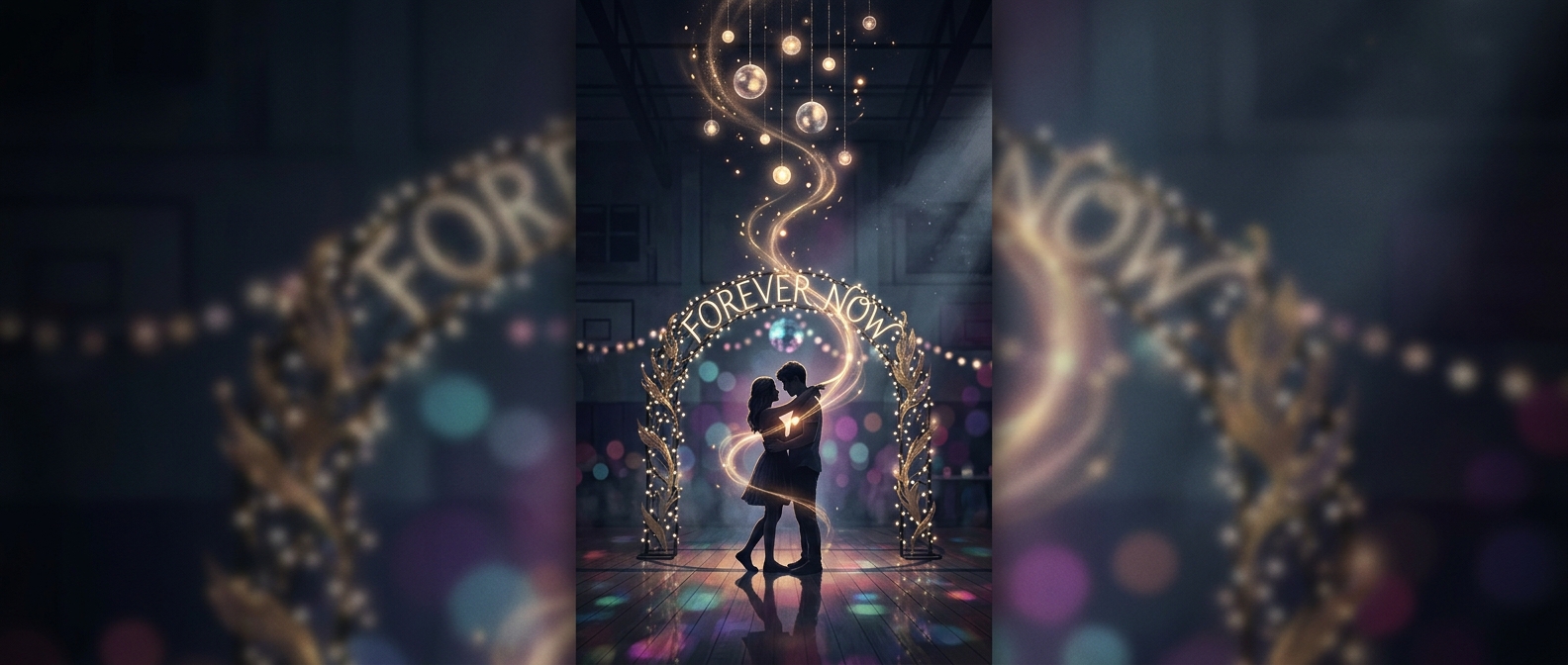
That pressure helps explain why fiction can make a gym’s decorations seem almost monumental. The room is not truly the center of anyone’s life; it is a stage where characters try to settle questions that have been building throughout the story. The familiar ritual supplies the setting, while the characters supply the stakes.
The midnight deadline is part of the same storytelling shorthand. It turns a sprawling school year into a single evening, making every entrance and conversation feel consequential. The dance ends, but what matters is who leaves together, who is left waiting, and what has changed by morning.