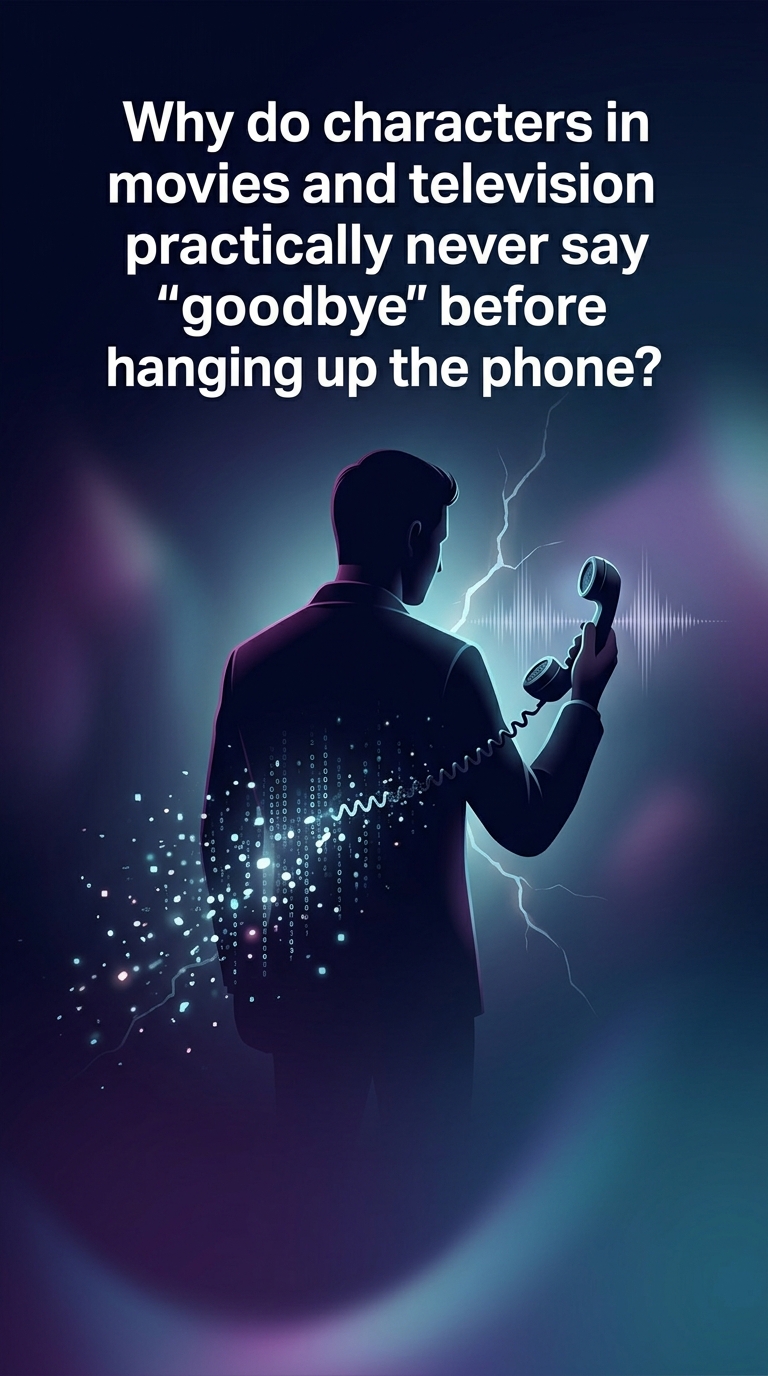
Why Screen Calls Often End Without “Goodbye”
A movie or TV phone call is usually not meant to reproduce every beat of a real one. It is a compact scene: the audience needs the information, the reaction, and the consequence, not the routine exchange that would normally close the conversation.
So once a character has heard what matters, the scene may cut straight to their next action—or show them ending the call. The missing farewell works like an edit: it skips a predictable moment and keeps the story moving.
The Cut Can Carry the Meaning
A sudden hang-up can also make the character’s state of mind legible. Someone who is frightened, furious, distracted, or in a hurry may end a call abruptly; the absent “goodbye” becomes part of the performance. In other scenes, the camera cuts away as soon as the important line lands, leaving the audience to understand that the conversation is over.
There is a practical writing choice behind it, too. If a farewell adds no new information or emotion, it can feel like dialogue included only because people say it in real life. Screenwriters and editors tend to preserve ordinary exchanges when they reveal something; otherwise, they can trim them.
Not a Rule, but a Shortcut
Characters do say goodbye when the moment calls for it—especially when a farewell carries tenderness, tension, or a sense of finality. But in a routine call, the audience can infer the ending without hearing the polite sign-off. The story keeps the meaningful beat and lets the familiar social ritual happen offscreen.