How a Film Set Makes Rain Read on Camera
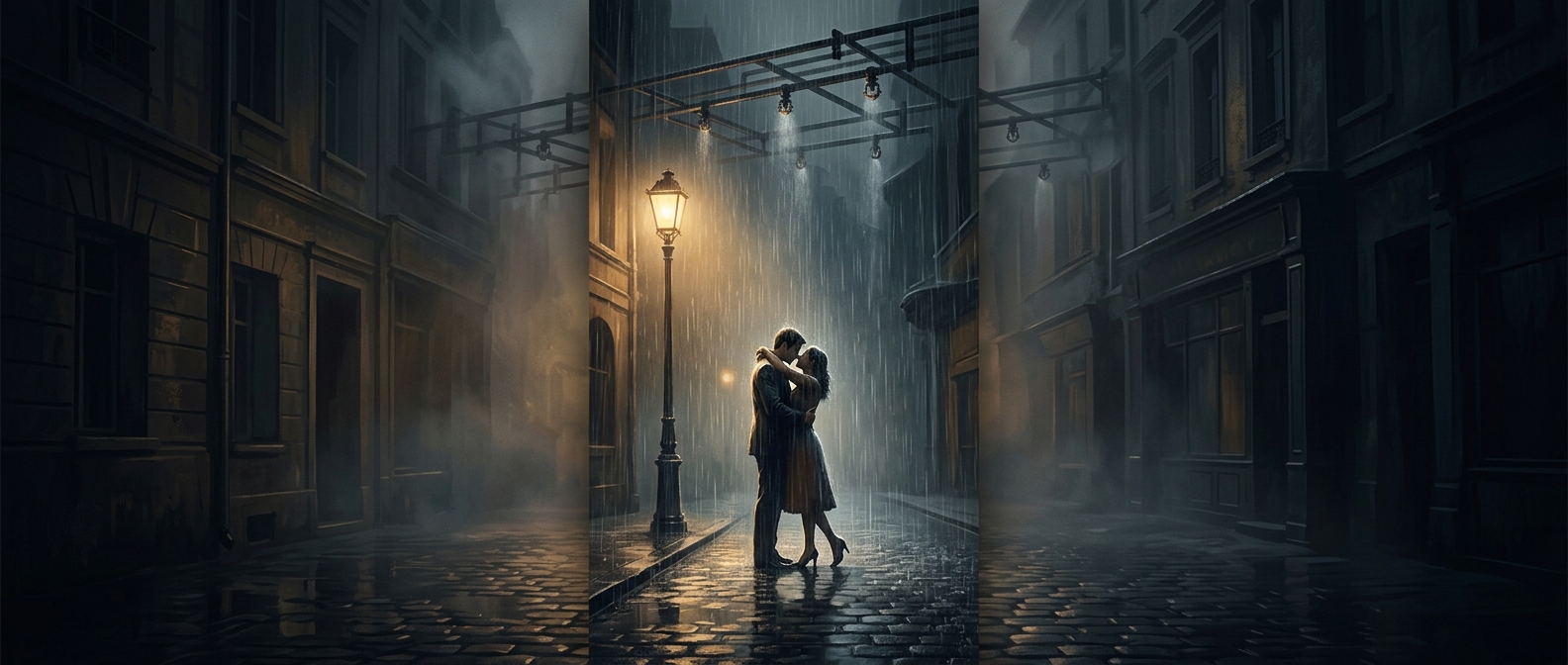
A hose can soak a street, but simply spraying water overhead does not always look like a convincing downpour. On camera, individual drops may be hard to see—especially against a bright or cluttered background. Crews often aim the water so it crosses the frame, where the falling streaks are easier to notice, and use lighting that catches the droplets.
That makes the rain a designed effect, not just weather recreated on demand. The spray has to land where the shot needs it: over the actors, across the visible street, or in the background. Hoses and nozzles can sit beyond the frame, while the camera is shielded from water that could damage equipment or blur the image.
Why the Downpour Has to Be Repeated
Real rain changes from moment to moment; a film scene may need the same wet look across multiple takes and camera angles. A controlled spray lets the crew keep the pavement, clothing, and performers wet enough for the scene to match. Between takes, those details matter: a suddenly dry sleeve or a puddle that has shifted can make cuts feel inconsistent.
The effect also brings practical limits. Water makes surfaces slippery, so performers and crew have to work around wet floors, cables, and equipment. Drainage matters too: repeated spraying can quickly leave a set with more water than it can safely hold.
The result is a carefully arranged illusion. What looks like weather sweeping naturally through a scene may be water directed from just outside the audience’s view—and managed so the rain appears continuous while the shot remains usable.