The Pause Turns Motion Into a Punchline
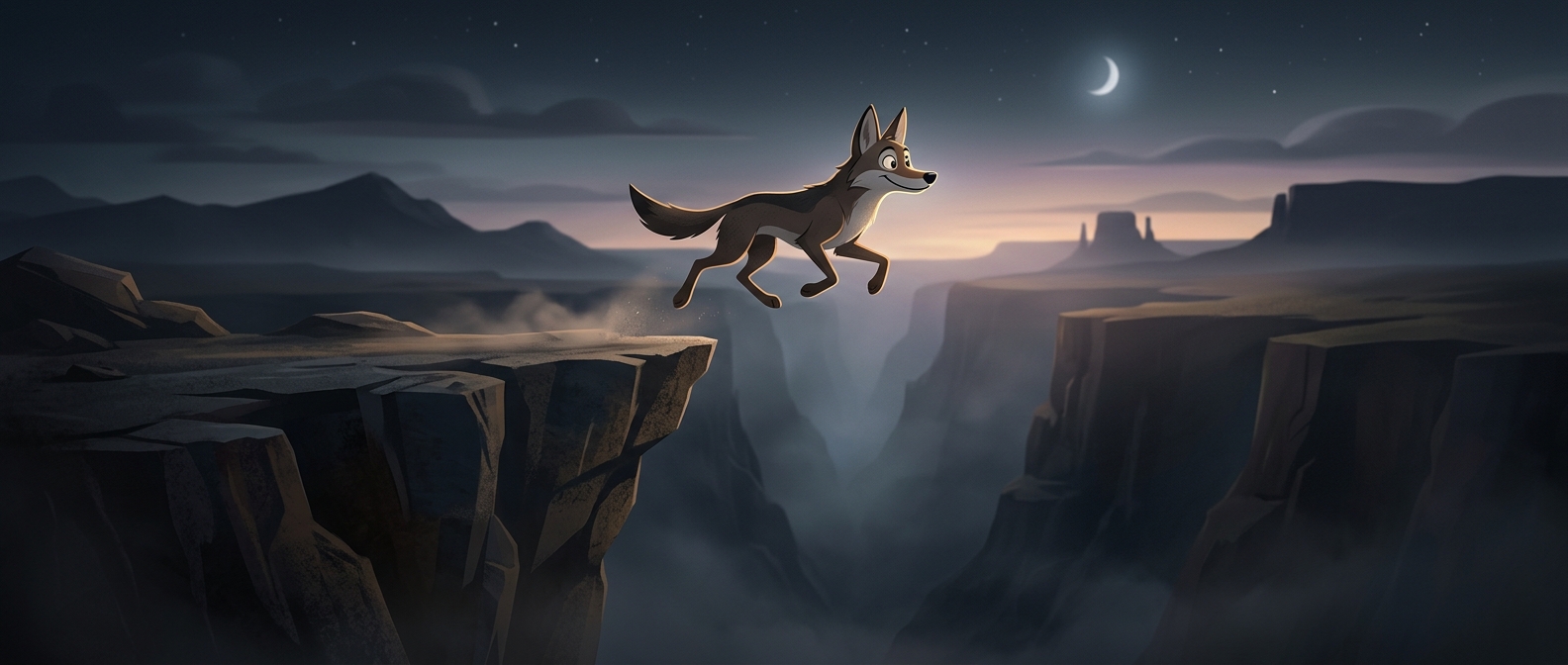
The gag works by separating two events that ordinary physics keeps together: crossing the edge and beginning to fall. The character’s legs keep running, but the background no longer offers anything to push against. That mismatch is a visual clue that the scene has temporarily stopped obeying gravity—and a setup for the character’s expression to become the next event.
Looking down supplies a comic “switch.” The character has crossed the edge physically, but the fall waits until the character understands what that means. The pause lets the audience see the danger first, creating a beat of anticipation before the consequence arrives.
A Tiny Performance, Not a Physics Lesson
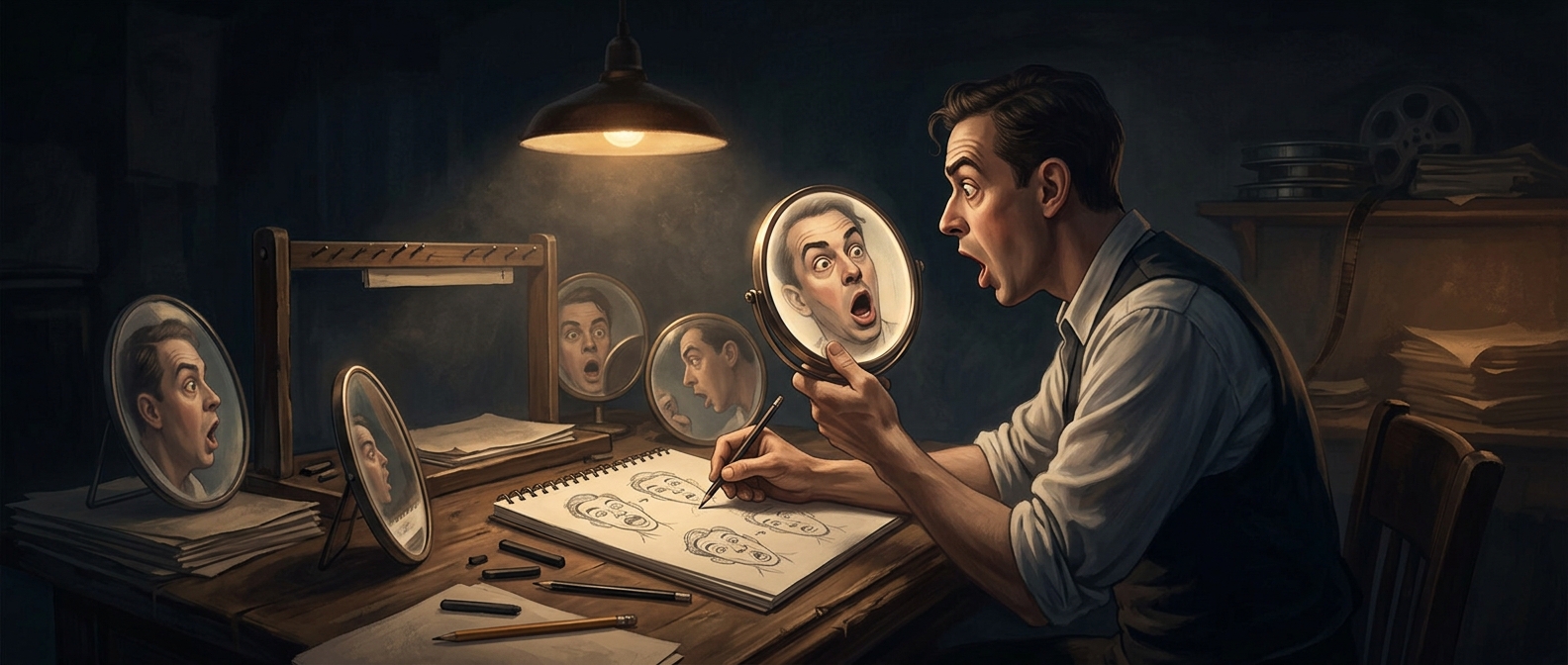
In animation, timing and pose can make an invisible thought legible. A glance downward, a stiffening body, or a sudden change in expression tells viewers that the character has noticed the drop. The animator can hold that pose for a moment, stretching the gap between recognition and impact. When the fall finally begins, the contrast makes it feel abrupt and satisfying.
The trick also gives the character a brief, impossible escape from cause and effect. The joke is not that gravity has changed; it is that the character’s awareness appears to activate it. That makes the pause feel like a comic rule the audience can anticipate: once the character looks, the safety of not knowing is gone.