Animation turns food into a visual event
A real meal is usually seen in ordinary light, from a fixed angle, with uneven edges and muted colors. An animated meal can be designed like a tiny performance. A slice bends; cheese stretches in a clean ribbon; a glossy highlight sweeps across a ham. Each motion and shine gives the food a clear, readable signal: it is hot, soft, rich, or delicious.
Those signals are deliberately simplified. Artists can make a surface smoother, a color more saturated, or a cheese pull last longer than it could in life. Because nothing in the drawing has to obey the material limits of real mozzarella or pastry, the image can concentrate several appetizing cues into one striking moment.
The comparison happens in the viewer’s head
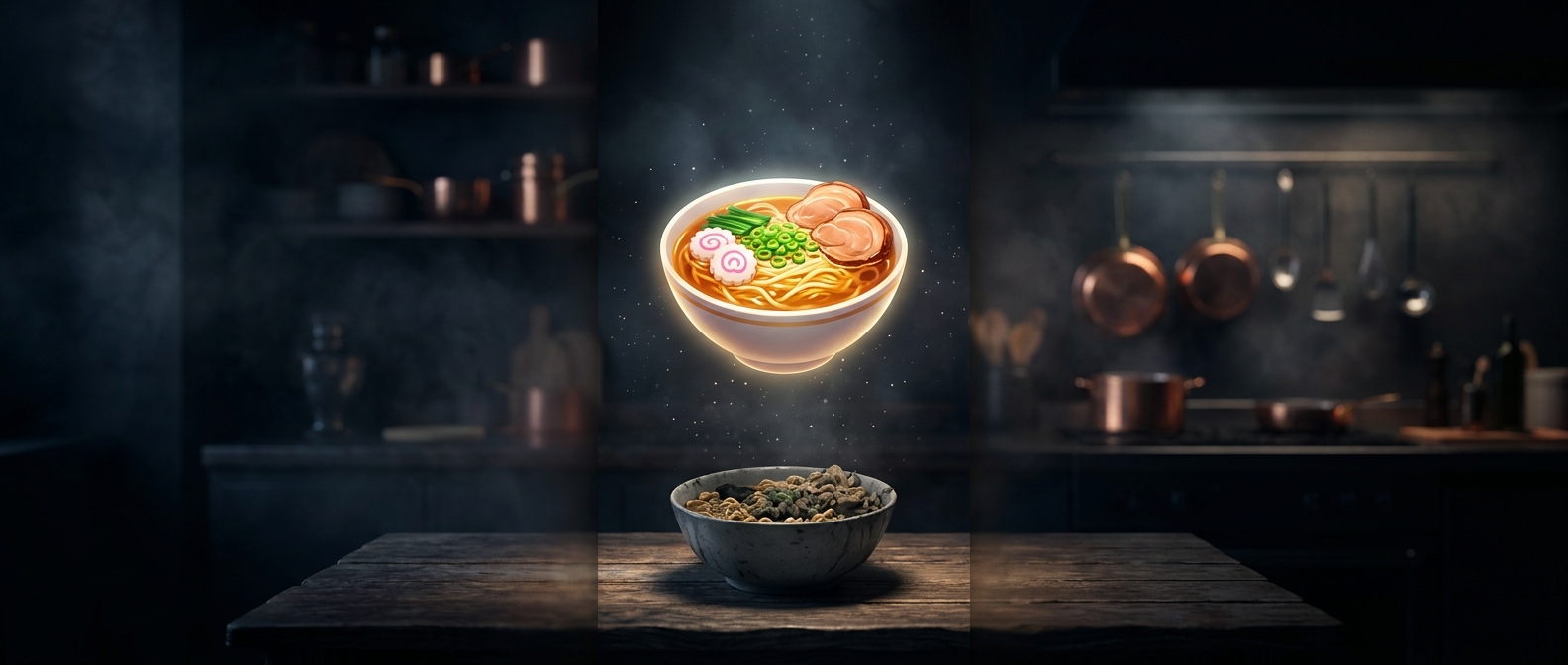
After seeing that heightened image, a person may look back at actual food under less flattering conditions: kitchen lighting, a slightly uneven slice, or cheese that breaks instead of stretching. The meal has not changed, but the comparison standard has. Real food is being measured against an image optimized for visual impact, not against another ordinary plate.
Animation also controls what the viewer notices. A close-up can hide a messy plate and frame only the bubbling surface; a slow, exaggerated pull gives the viewer time to savor the texture. In everyday life, eating involves smell, taste, and touch as well as sight. A picture can’t reproduce those sensations, so it amplifies the visual ones it can show.
That is why a cartoon meal can outshine the real thing before the first bite: it is built to deliver the most appetizing details all at once, while an actual meal has to be imperfectly, pleasantly real.