Why a held pose can suddenly lurch
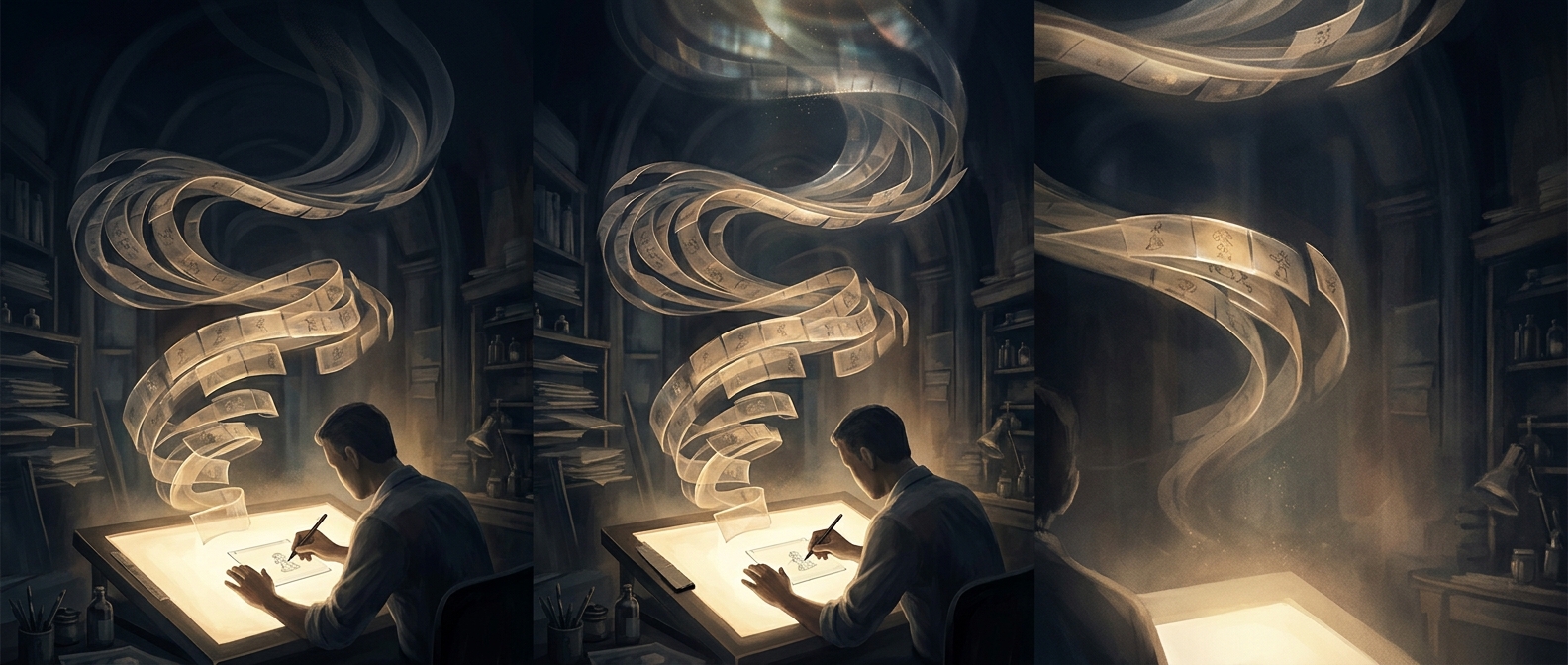
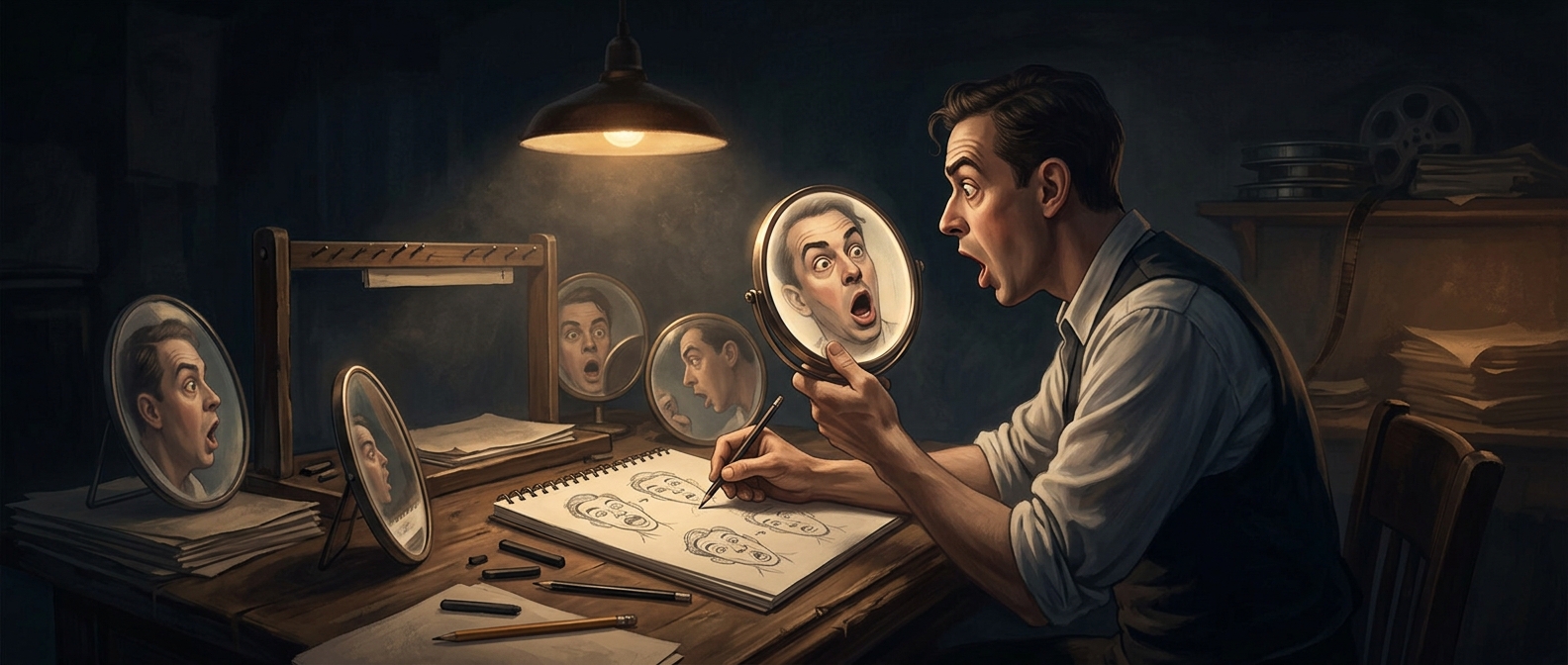
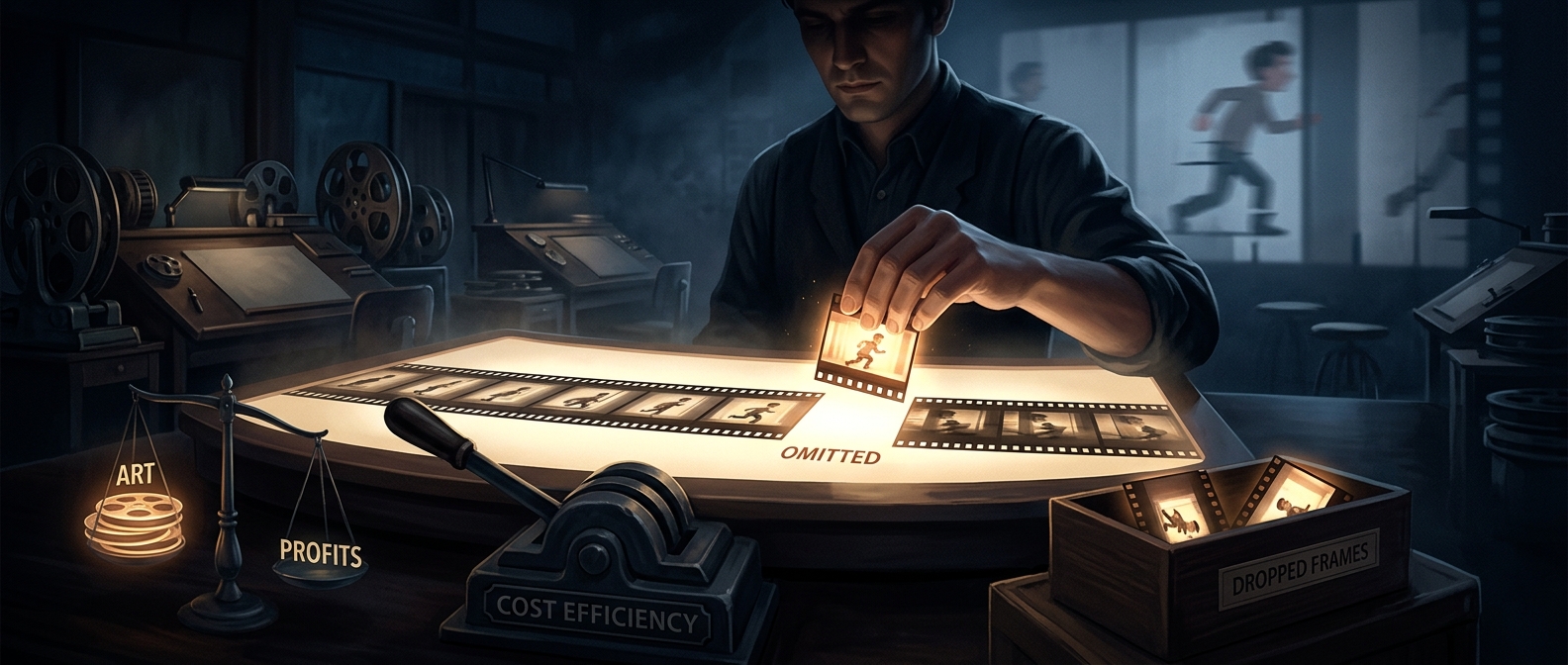
A drawn pose tells the eye what a character looks like, but motion depends on how that pose changes from moment to moment. When an image is held and then shifted to a new position, the character appears to teleport partway across the screen: there are no intermediate drawings to show its path. The longer the hold and the larger the shift, the more abrupt the jump feels.
The trick is in what moves—and what stays still
In limited animation, artists can keep most of a character fixed while moving only a part, such as the mouth or an arm. They can also slide a whole drawing across the frame, or move the background behind it. These choices preserve recognizable poses while creating enough change to suggest an action or keep a scene moving.
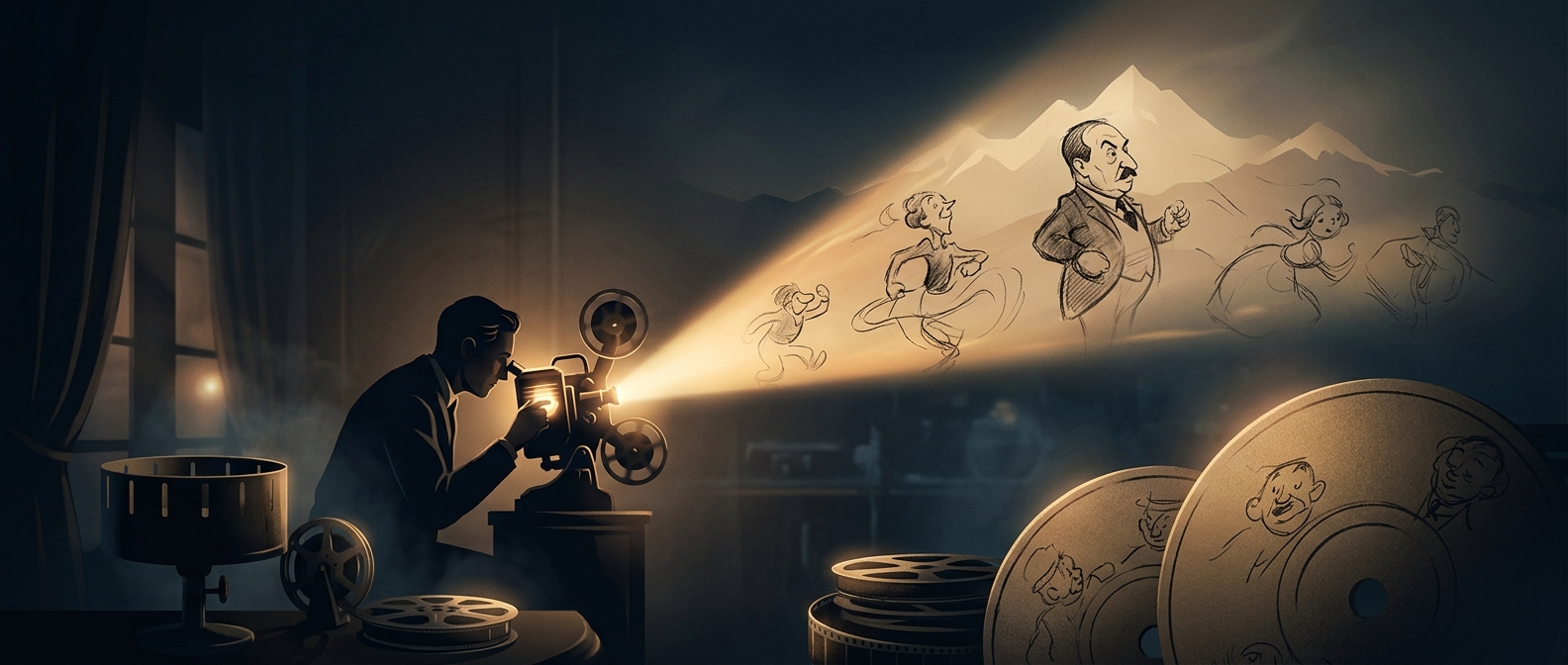
But sliding a drawing is not the same as redrawing the character in new positions. A smoothly animated walk, for instance, changes the body’s balance, the legs’ positions, and the character’s relation to the ground. A held drawing moved across the screen carries the same pose along, so the body can seem to glide or jerk instead of taking natural steps.
A visible result of a production tradeoff
The style makes the number of drawings—and the moments chosen for them—feel unusually noticeable. A sudden shift can emphasize a reaction or give a scene a punchy rhythm; elsewhere, it exposes the shortcut as a shortcut. The jump is not a flaw in the image itself so much as the visible gap between two poses the viewer’s eye is asked to connect.