A Desk Mirror Turned an Expression Into a Study
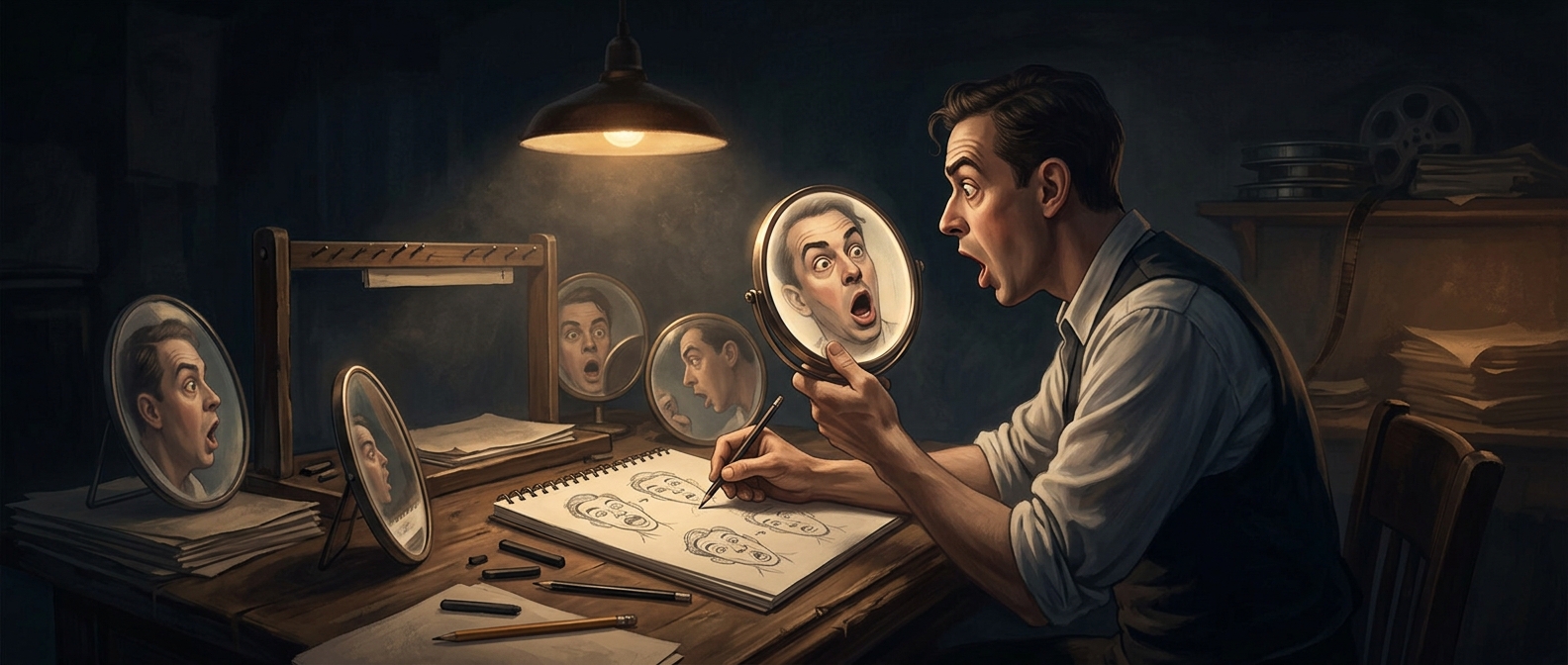
A grimace can flash across a face too quickly to remember accurately. A mirror gave an animator a way to hold that fleeting expression in view: tighten the mouth, raise one cheek, narrow the eyes, then study how the features changed together. The goal was not simply to draw “anger” or “disgust,” but to notice the physical details that made a particular face readable.
That mattered because drawn animation is built from selected poses. An animator had to decide which changes to emphasize and how those changes would unfold from one drawing to the next. A mirror offered a live reference for the shape of a brow or the pull at one corner of the mouth—details that might disappear in a generalized symbol for an emotion.
From Self-Observation to Character
The mirror was a reference, not a template. An animator could observe the mechanics of a human face, then adapt them to a character whose proportions, personality, and style might be very different. A small shift in the eyes or mouth could make an expression seem sly rather than furious, or awkward rather than confident. The drawings had to communicate clearly even when the character was exaggerated.
Before motion capture made recorded performance available as a production tool, this kind of close observation helped animators supply details from their own bodies. The useful result was not a perfect copy of a face, but a more specific drawing—and, through it, a character whose reaction felt like it belonged to that moment.