How mirrors turned a spinning drum into a moving picture
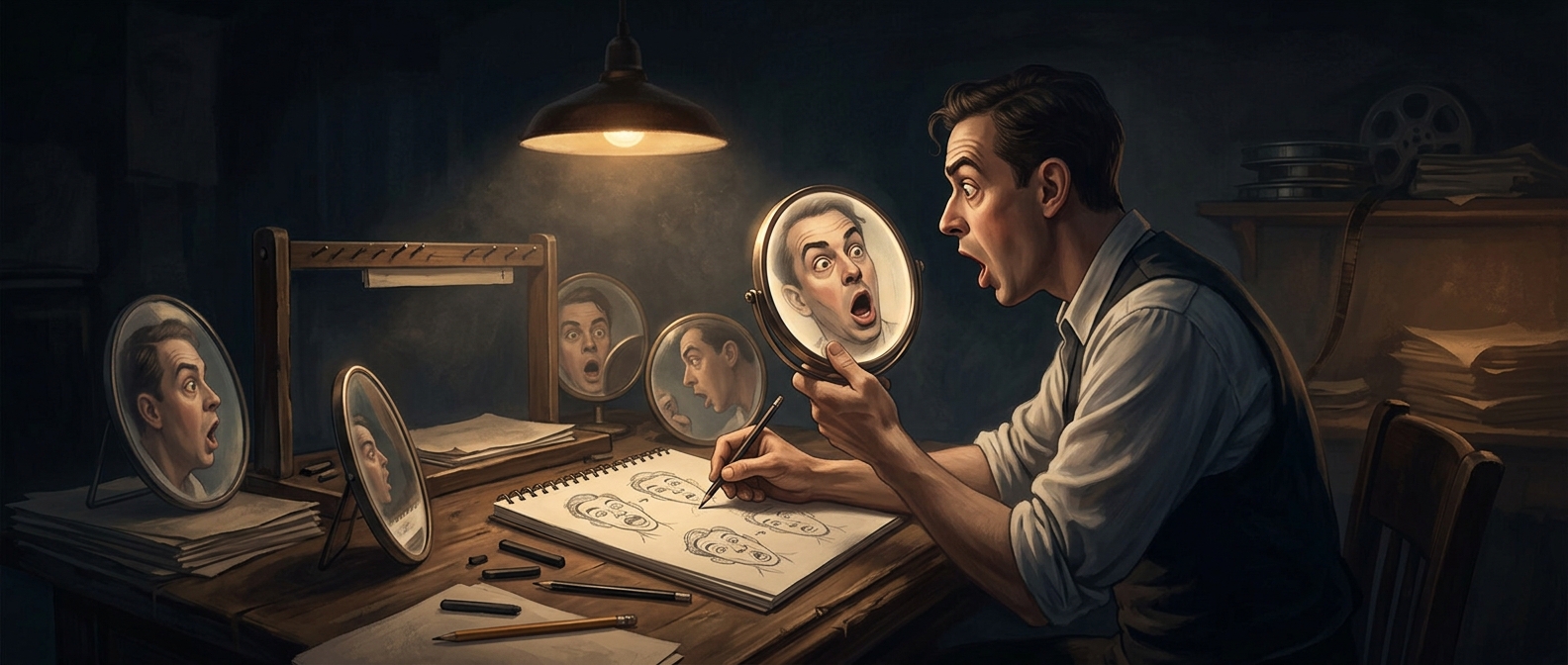
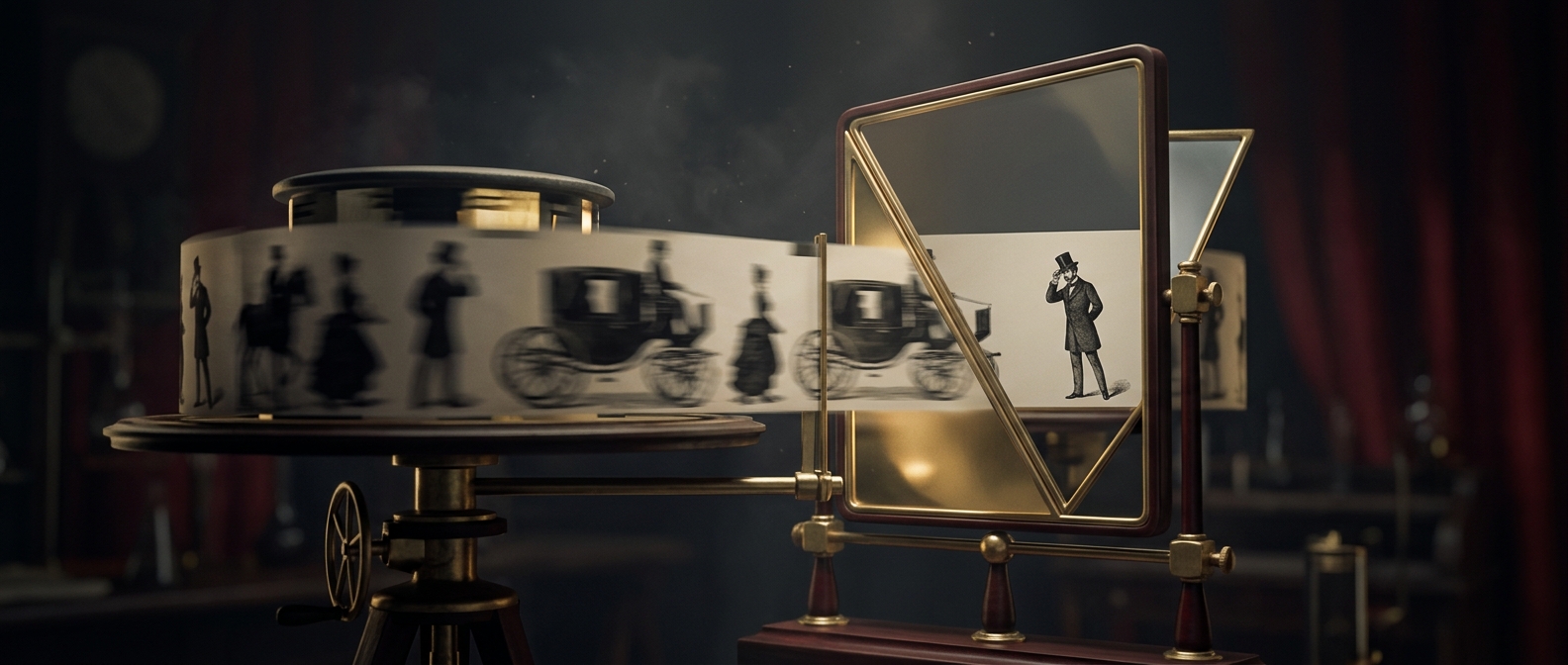
Before cinema, an animated drawing had to be made from a sequence of still images. Reynaud’s Praxinoscope arranged those images around the inside of a rotating drum. At its center, a ring of mirrors reflected them one after another as the drum turned. The viewer saw the reflections in a fixed mirror, where the changing poses appeared to flow into motion.
Earlier viewing toys used narrow slits: a viewer looked through each opening at a different drawing as the device spun. The slits helped separate the images, but they also blocked much of the light and made the view less steady. Reynaud’s mirrors provided a continuously visible reflection instead, so the pictures looked brighter and less interrupted.
From a toy to a little stage
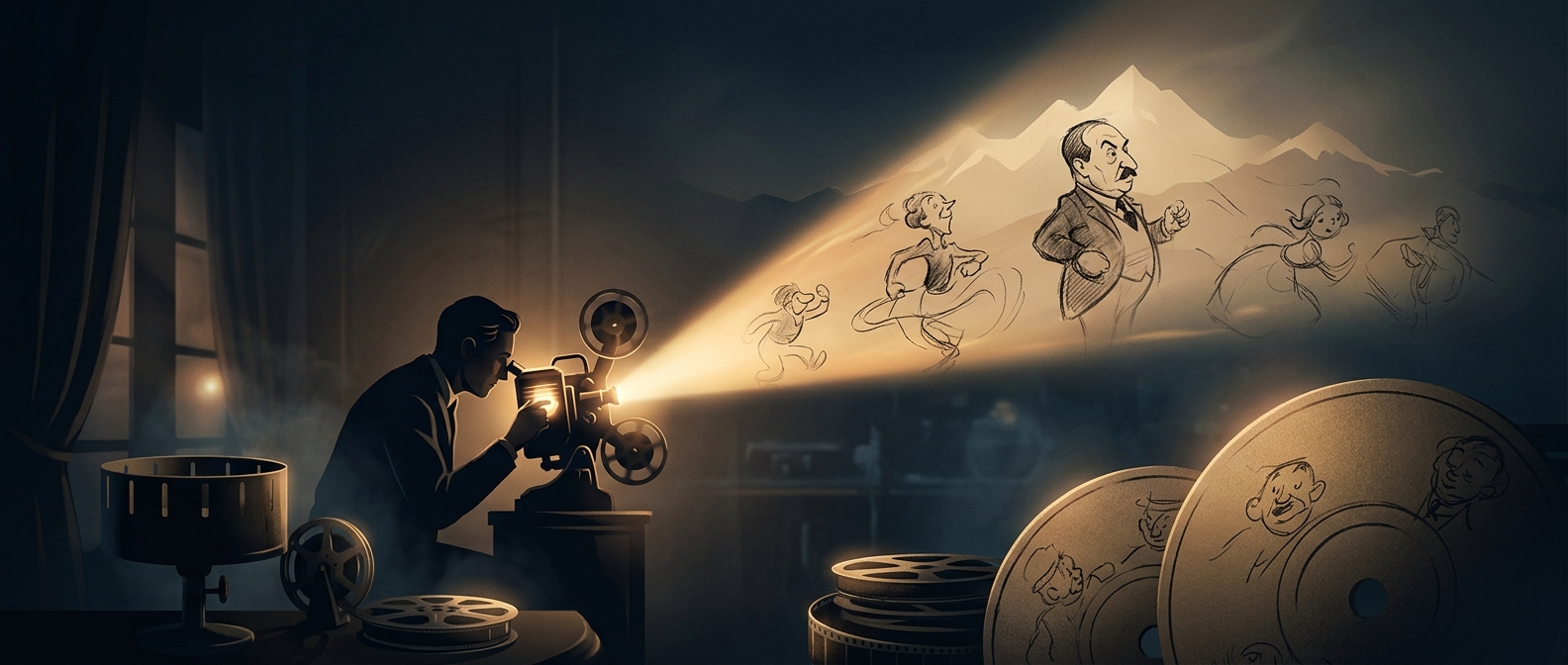
Reynaud later adapted the moving images for a wooden viewing box with a glass window. A painted background could remain visible behind the animated figures, giving the scene a setting rather than presenting motion by itself. The box made the experience feel more like looking into a miniature stage: the background established where the action took place, while the changing drawings supplied the movement.
That shift mattered because animation was not only about making drawings move. It was also about controlling what viewers saw around them. Reynaud’s mirrors improved the basic illusion; the boxed display added a world for that illusion to inhabit.