From Tide-Pool Guide to Undersea Comedy
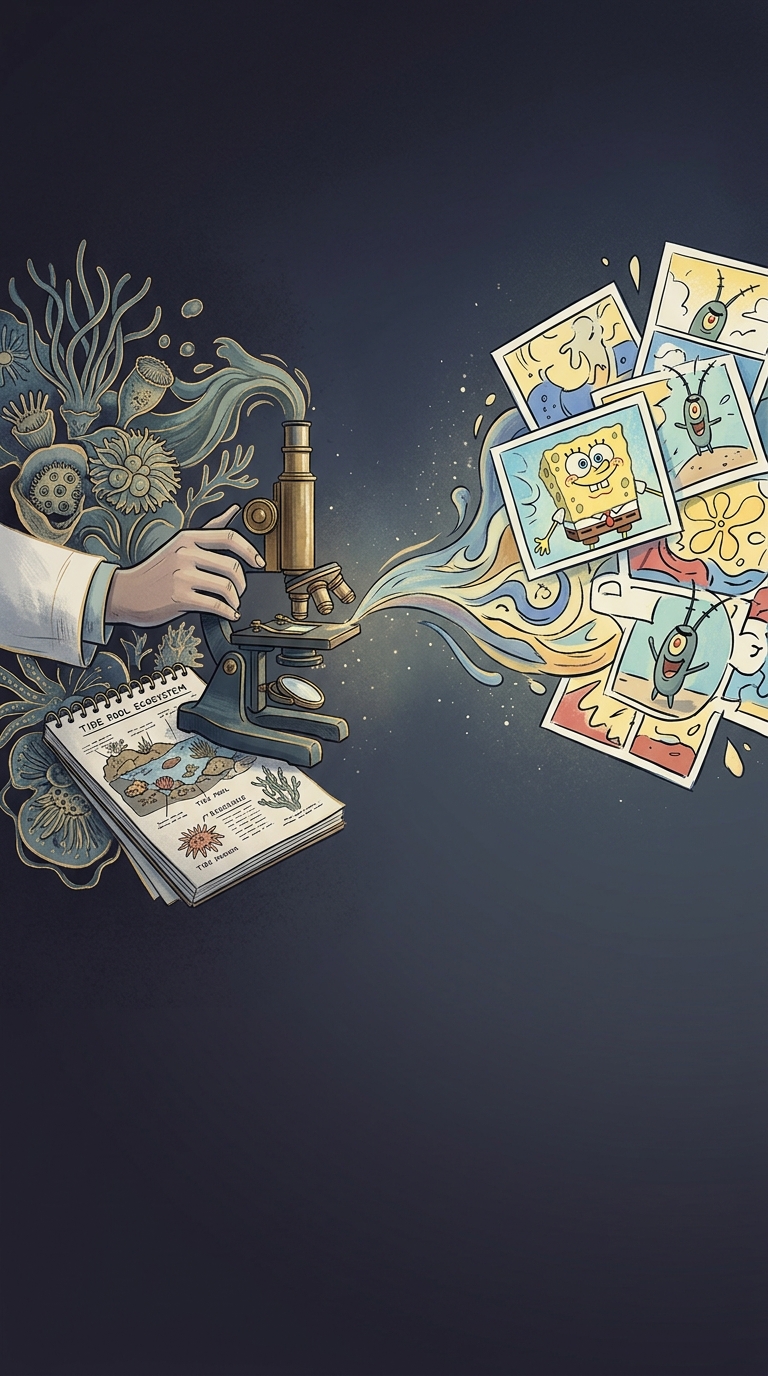
A tide pool is a small, temporary habitat left among rocks when the ocean recedes. Its residents—such as sea stars, crabs, and sponges—must cope with changing water levels, temperature, and exposure to air. That crowded, changeable world gave Stephen Hillenburg a natural setting for teaching marine life, and he developed an educational comic called The Intertidal Zone for students.
The comic was a starting point, not simply a cartoon script waiting to be animated. Hillenburg’s later work in animation gave him a way to reshape its undersea premise into characters and stories built for television. The science remained part of the imaginative foundation, but the show’s focus shifted from explaining organisms to making an eccentric community funny and memorable.
Why the Science Still Fits the Comedy
Turning marine life into cartoon characters meant playing with the gap between what an animal is and what a person might do. SpongeBob is a sea sponge, but he has a home, a job, and a very human enthusiasm for his work. That contrast makes the ocean setting more than scenery: it invites viewers to recognize familiar social situations while encountering creatures and habitats that are real.
The educational origin also helps explain why the series can feel so full of undersea detail without functioning like a lesson. Hillenburg could draw on knowledge of marine environments, then bend that knowledge toward visual jokes and comic personalities. A tide pool began as a place to teach students how ocean life works; in the show, that curiosity became a world where even a fast-food shift could feel like an undersea adventure.