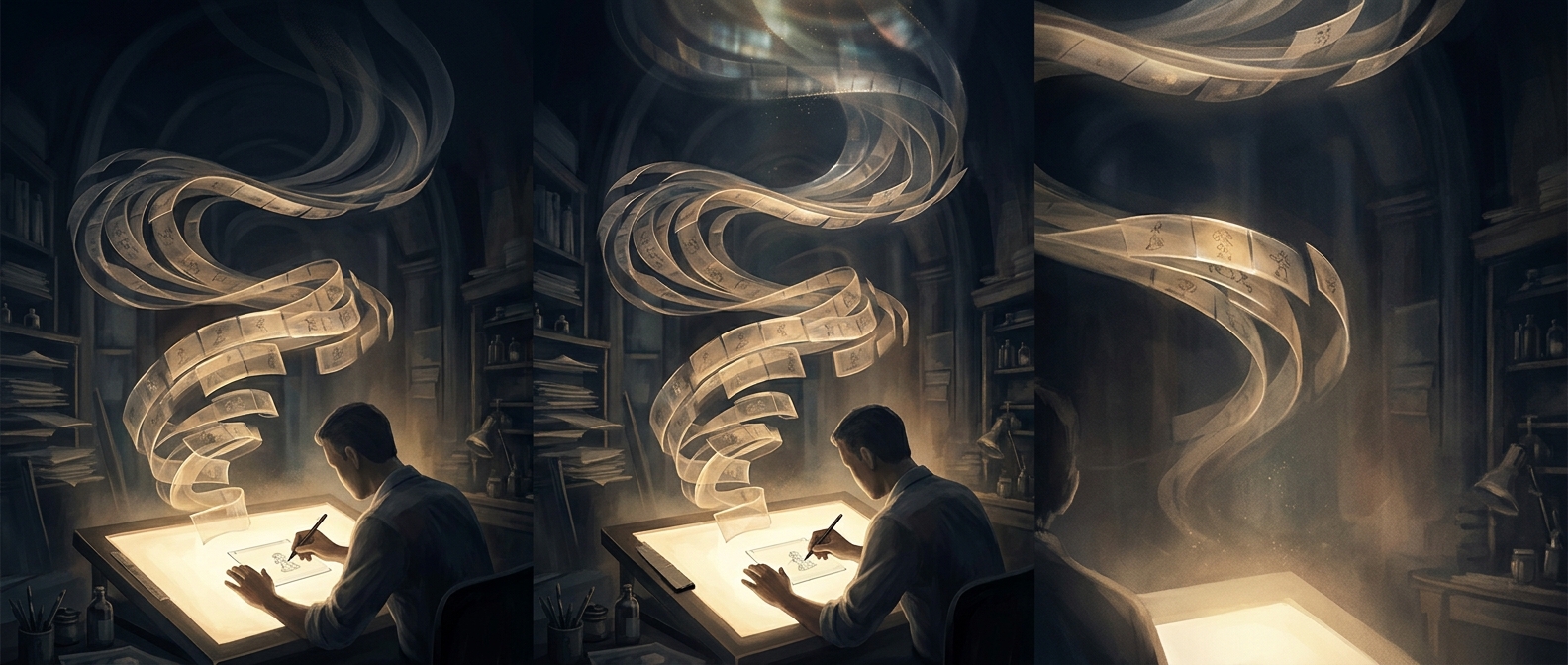
How a drawing became a moving scene
A cel was a clear sheet of celluloid carrying one layer of the image—often a character or part of a character. Artists could place painted cels over a separately painted background, then photograph the layers together. For the next moment, they changed the character’s pose while keeping the background in place. That separation meant a forest did not have to be painted again every time a character blinked or moved.
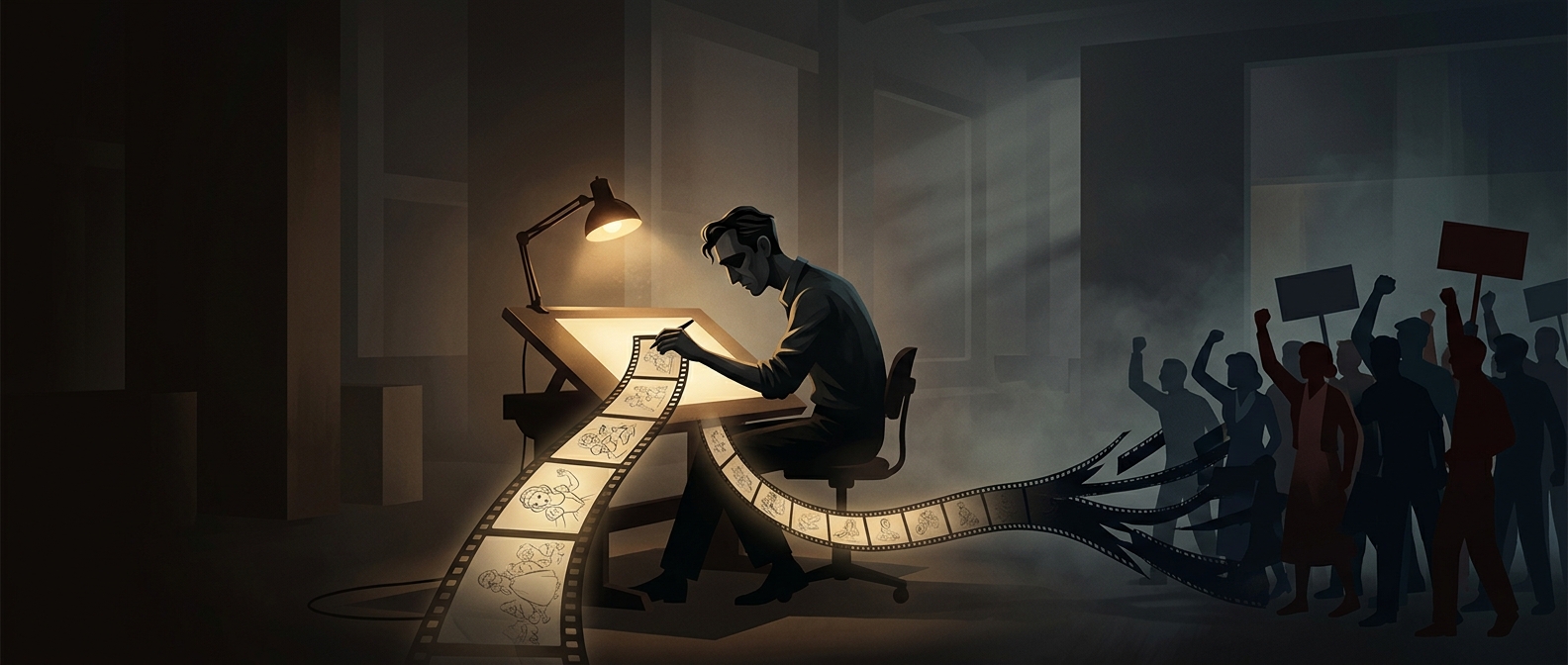
The workflow divided the work among specialists. Animators planned and drew the action; other artists refined those drawings and transferred the outlines to the transparent sheets. Painters filled in the colors, typically on the reverse side, so the visible ink lines remained crisp. Each sheet had to match the surrounding poses closely: a slight shift in a face or costume could make the character appear to wobble on screen.
Precision at a punishing scale
The apparent fluidity came from assembling many small, carefully controlled changes. A finished scene might layer several cels over a background, and successive photographed images had to preserve the same placement, color, and proportions. The camera recorded each setup; then the sheets were changed or repositioned for the next image. A smudge, misplaced layer, or inconsistent painted area could mean repeating work rather than simply correcting a digital file.
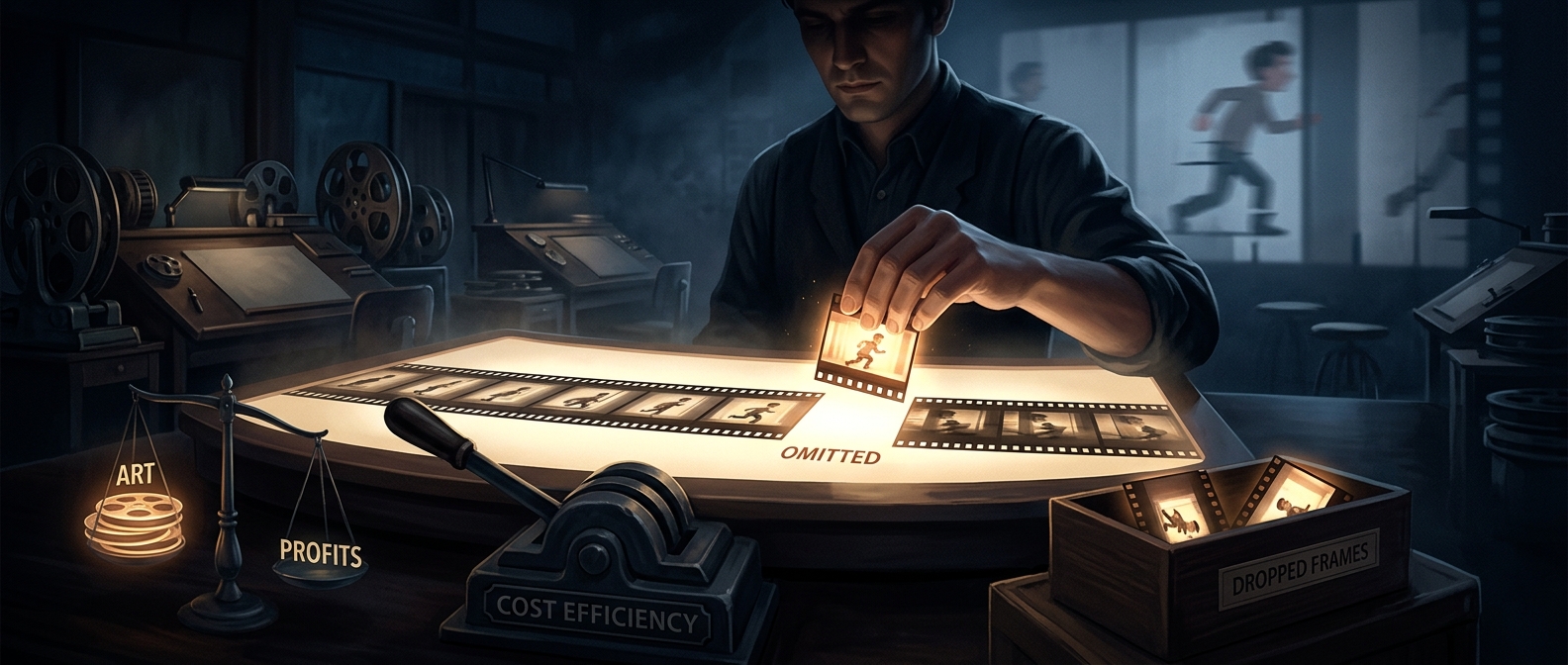
Not every projected film frame required a wholly new drawing. Animators could hold a pose across frames or use other timing choices, but dialogue, gestures, and movement still demanded a large stream of coordinated artwork. The process turned artistic decisions into a production schedule: every new scene added drawing, cleanup, transfer, painting, and camera work.
The financial gamble behind the polish
That labor helps explain why making Snow White and the Seven Dwarfs was such a financial gamble for Disney’s studio. The film’s ambition required far more sustained production than a short cartoon, while audiences would judge the result as one continuous story—not as thousands of separate tasks. Its visual richness was therefore also a costly bet on whether viewers would stay with a feature-length animated film.
The striking consequence is that the film’s smoothness was built from individually handled pieces: transparent layers, painted by hand and aligned so precisely that the labor disappeared into the motion.