Why Stories Put Arguments in Elevators
An elevator turns a disagreement into a scene with a built-in timer. The characters cannot simply walk away without making a conspicuous choice: the doors are shut, the ride is underway, and the next exit is already determined. That small practical constraint keeps both people in the same frame—and keeps the conflict alive for a few more seconds.
The Silence Has Somewhere to Go
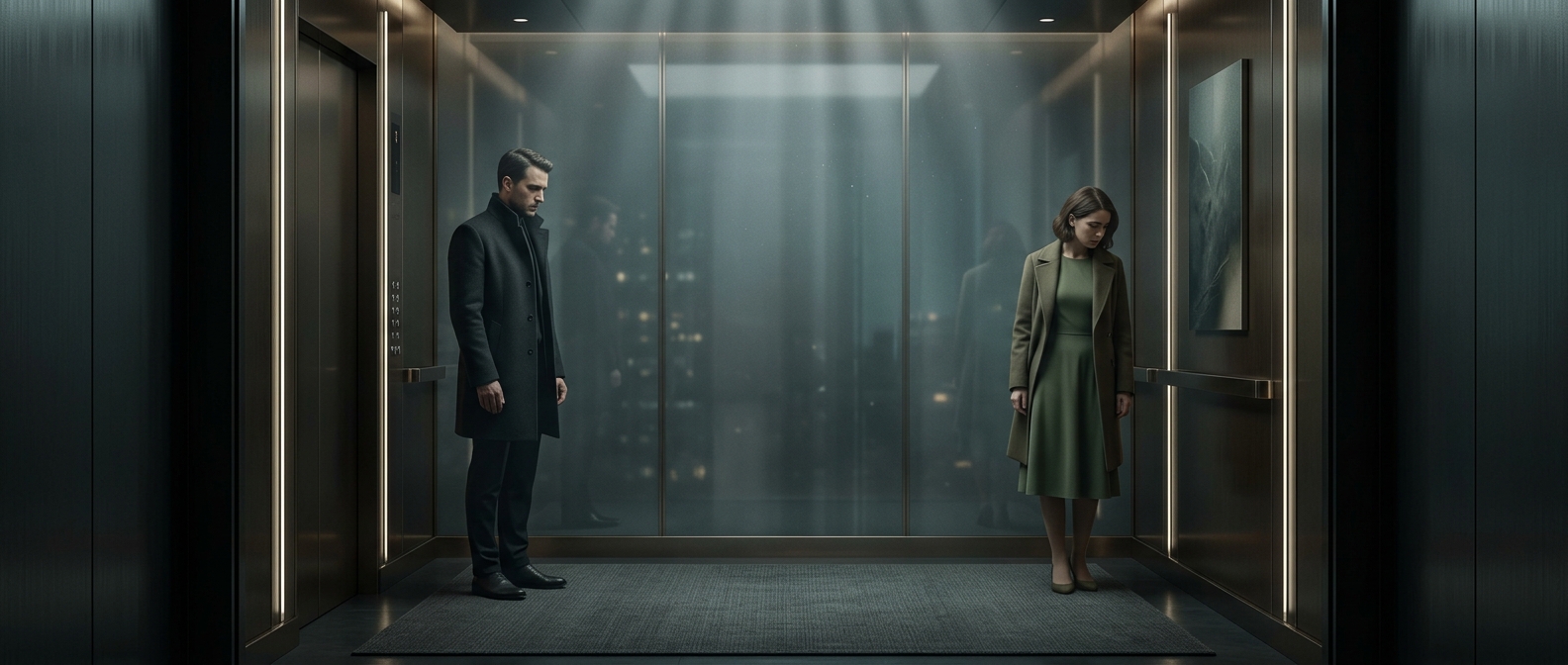
In an ordinary hallway, a pause can be broken by movement: one person leaves, another follows, or the conversation shifts. An elevator strips away those options. Characters may face the doors, study the floor numbers, or pretend to be absorbed in a phone, while the audience watches the argument continue through posture and glances rather than dialogue.
The machine supplies a simple rhythm. A floor indicator changes; the motor hums; the doors stay closed. Each passing moment makes the silence feel deliberate, and the arrival bell offers a natural cutoff. The characters can resume fighting outside—or separate without resolving anything.
A Tiny Room With a Built-In Exit
That is why elevators are such efficient story settings: they compress a relationship problem into a brief, shared stretch of time. The awkward pause is not the elevator’s only possible role, but it is a particularly handy one. When the doors finally part, even stepping out can become the scene’s last word.