Why Movie Money Often Goes Uncounted
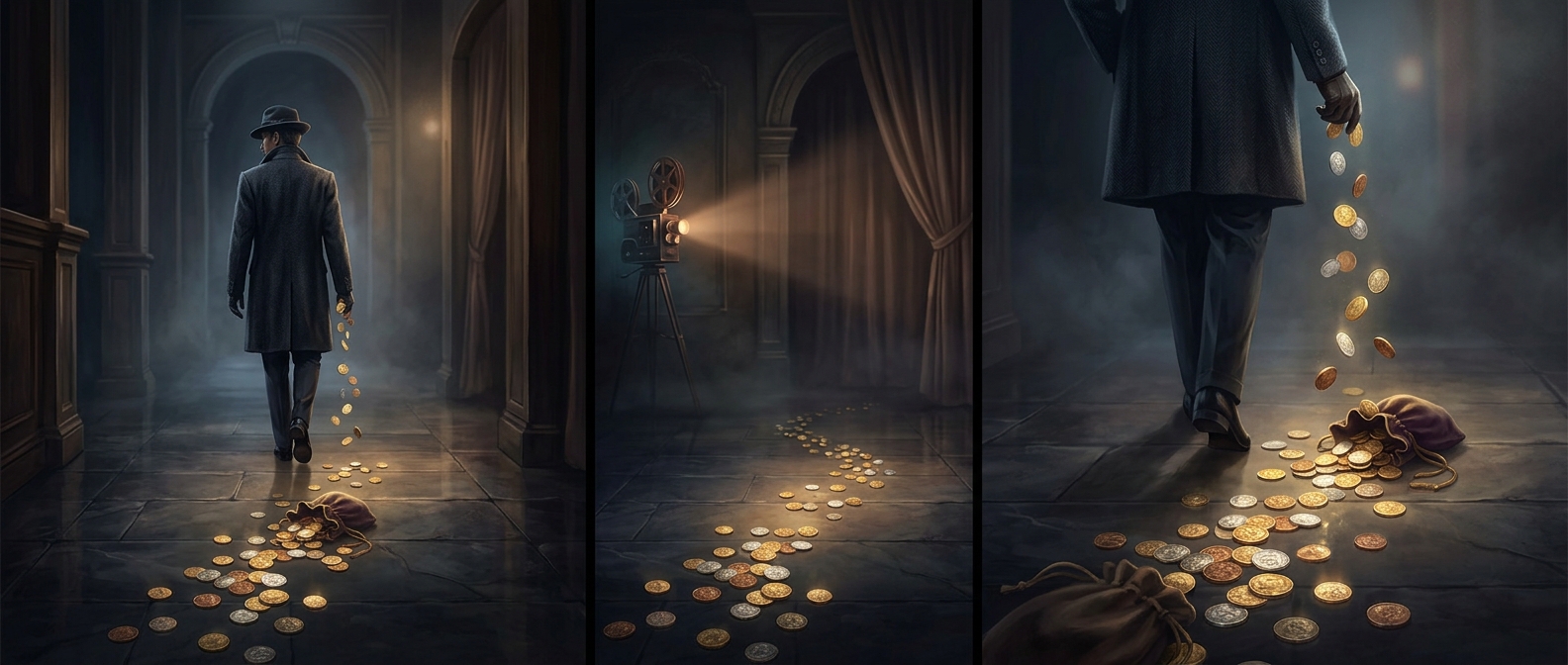
A character who drops cash on a table and walks out is usually making a story move, not demonstrating careful budgeting. Counting bills takes time, and on screen it can stall a scene just when the audience is meant to follow an argument, a glance, or a hurried exit. A quick toss lets the film move on while still showing that the character has paid—or thinks they have.
Cash Becomes a Visual Shortcut
Money can communicate a relationship or mood without a line of dialogue. A generous-looking tip may suggest affection, guilt, impatience, or wealth; a hurried payment can make a character seem distracted or under pressure. The exact amount may matter less than the gesture. The audience reads the cash as part of the action, much as it reads a slammed door or a hurried handshake.
That shortcut also works because many scenes treat payment as a routine transaction. Viewers are unlikely to need every bill counted unless the plot makes the amount important. If a character is short on cash, being cheated, or arguing over a bill, then the arithmetic becomes the scene rather than background business—and the film has a reason to linger on it.
The Scene Has Practical Limits, Too
Real transactions involve small actions that can be awkward to stage repeatedly: handling bills, checking a receipt, waiting for change, and getting the timing right. A film may shoot a scene from several angles, so the cash and its placement need to look consistent across takes. Keeping the exchange simple gives performers less business to repeat and keeps attention on the story.
The result is a familiar screen convention: money is often shown clearly enough to establish the gesture, but not examined closely enough to audit. When a coffee seems to earn a wildly large tip, that mismatch can be a useful reminder that the scene is measuring character and pace—not balancing a real till.