The Curbside Space That Keeps the Story Moving
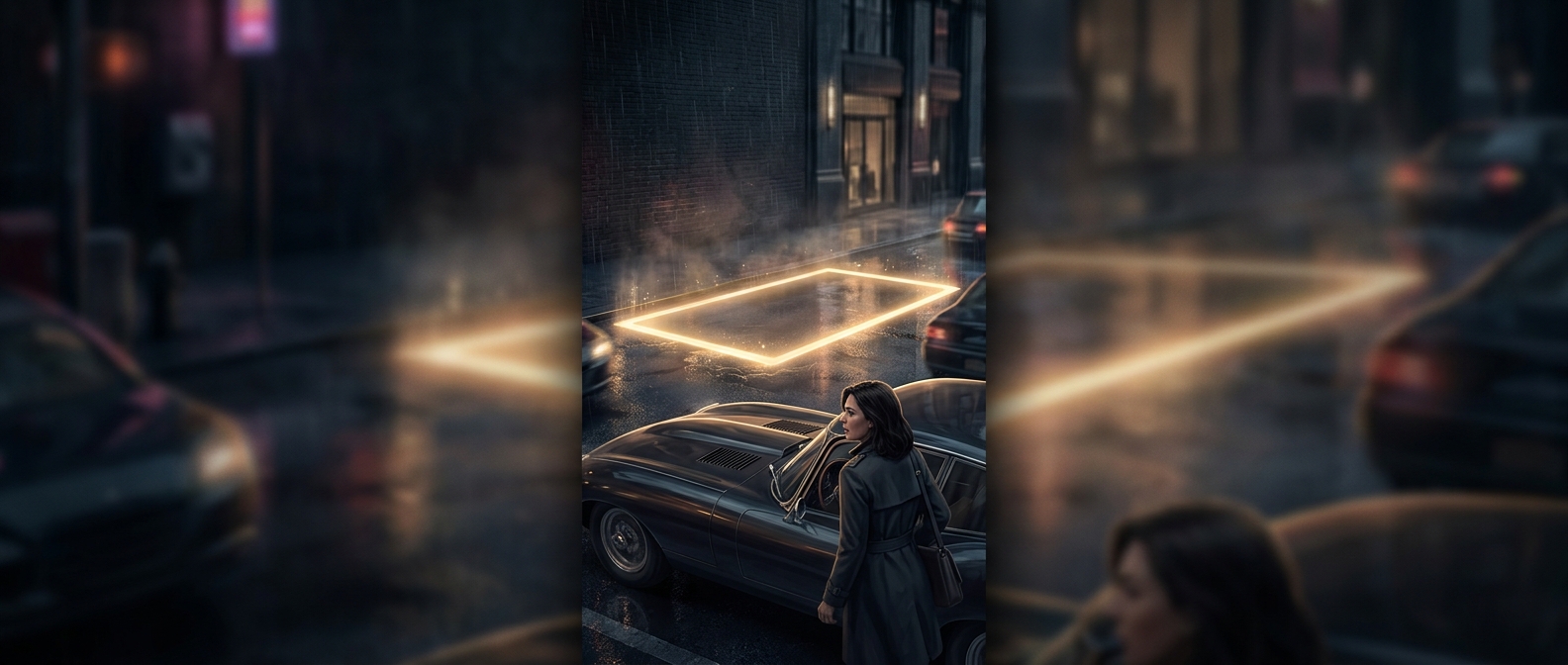
A convenient parking spot is a tiny shortcut with a large storytelling effect. If a character has to circle, wait, or park several blocks away, the audience’s attention shifts from the urgent errand to the logistics of getting there. A space at the destination lets the scene move straight from arrival to confrontation, discovery, or escape.
That shortcut also helps a film or television episode compress time. Viewers can understand that the character has reached the right place without watching the ordinary steps between driving and entering. The parking space works like a quick transition: it clears the way for the next important beat.
The Filmmaking Convenience Behind the Convenience
A scene needs to be readable as well as plausible. A car stopped near the entrance gives the audience an immediate sense of where the character is and makes it easy to connect the drive with what happens inside. It can also keep the actor, vehicle, and doorway together in a manageable area for filming, rather than requiring the scene to follow a character from a distant parking spot.
Real streets do not reliably provide that tidy arrangement. But showing every search for parking would consume screen time without necessarily changing the story. The film chooses which everyday friction to keep and which to skip.
That choice is why the lucky space can feel almost supernatural: it removes one of the small delays that would complicate an ordinary trip, while preserving the character’s sense of urgency. The curb becomes less a realistic parking plan than a piece of narrative infrastructure—one open spot, and the plot can get inside.