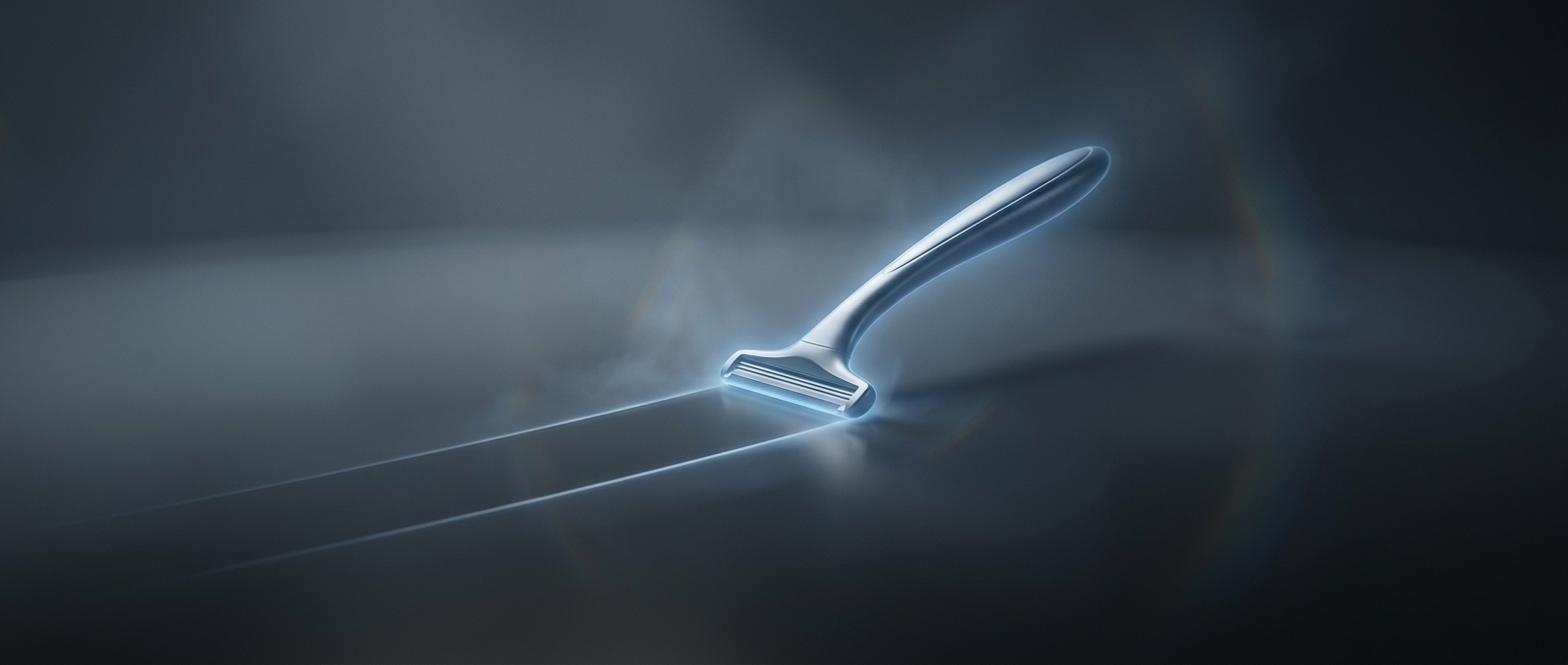
A shaving stroke is staged for the camera
A movie shave has to read instantly: the character is tidy, hurried, nervous, or getting ready to face the day. Repeating careful passes can make that small action feel slow on screen, so a single broad sweep gives the audience a clear before-and-after in a moment.
Shaving cream helps make the action visible. Its white layer stands out against skin, and the cleared track makes the razor’s path easy to follow. The stroke is therefore designed as a piece of visual storytelling, not as a close demonstration of how someone would remove every bit of stubble.
The trick is controlling what the audience sees
A performer may mime the motion with a prop or a razor used under controlled conditions; the exact method depends on the production. Either way, the movement is planned around safety, camera angle, and what the shot needs to show. The razor can travel across a patch of lather while the framing hides details that would make the action look less clean.
The cream also makes continuity important. If a scene needs several takes, the crew has to restore the lather and match its shape, the actor’s position, and the razor’s starting point. A simple-looking sweep can require more setup than the brief action suggests.
That polished stroke is a compact screen convention: it shows the idea of shaving without spending time on every pass. The flawless result belongs to the shot’s timing and framing as much as to the character’s razor.