When a Character Becomes a Plot Device
A hero’s loved one can be killed in a story to make the danger feel personal. The problem critics identified was a recurring imbalance: female characters were sometimes injured, killed, or otherwise stripped of agency chiefly so a male protagonist could suffer, become angry, or set off on a quest. The emotional focus then shifted from what happened to her to what her loss would make him do.
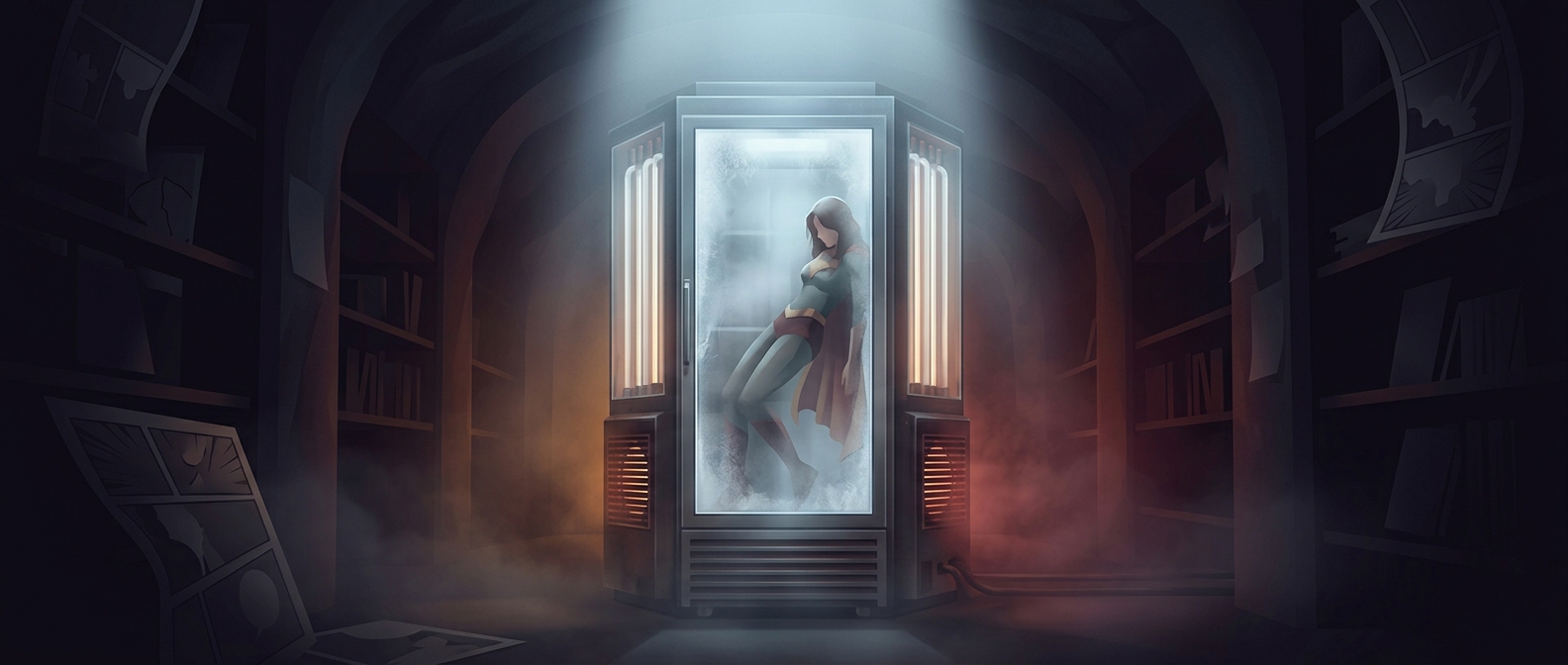
That pattern is often called “fridging,” after the image that gave the term its name. It does not mean that every female character’s death is automatically a bad choice. The sharper question is whether she has a life and purpose in the story beyond provoking someone else’s development.
From One Image to a Critical Lens
Gail Simone’s “Women in Refrigerators” list gathered examples of female comic-book characters who had been killed, maimed, or otherwise harmed. Its point was not simply to object to grim stories; it was to make a repeated storytelling habit easier to notice. Once the pattern had a name, readers could ask whose pain was treated as the main event—and whose pain was used as a tool.
That question reaches beyond comics. In any genre, a writer can give a harmed character her own choices, relationships, and consequences, or use her suffering as a shortcut to a male hero’s motivation. The difference is visible in what the story follows after the violence: does it remain interested in her, or only in what her loss does to him?