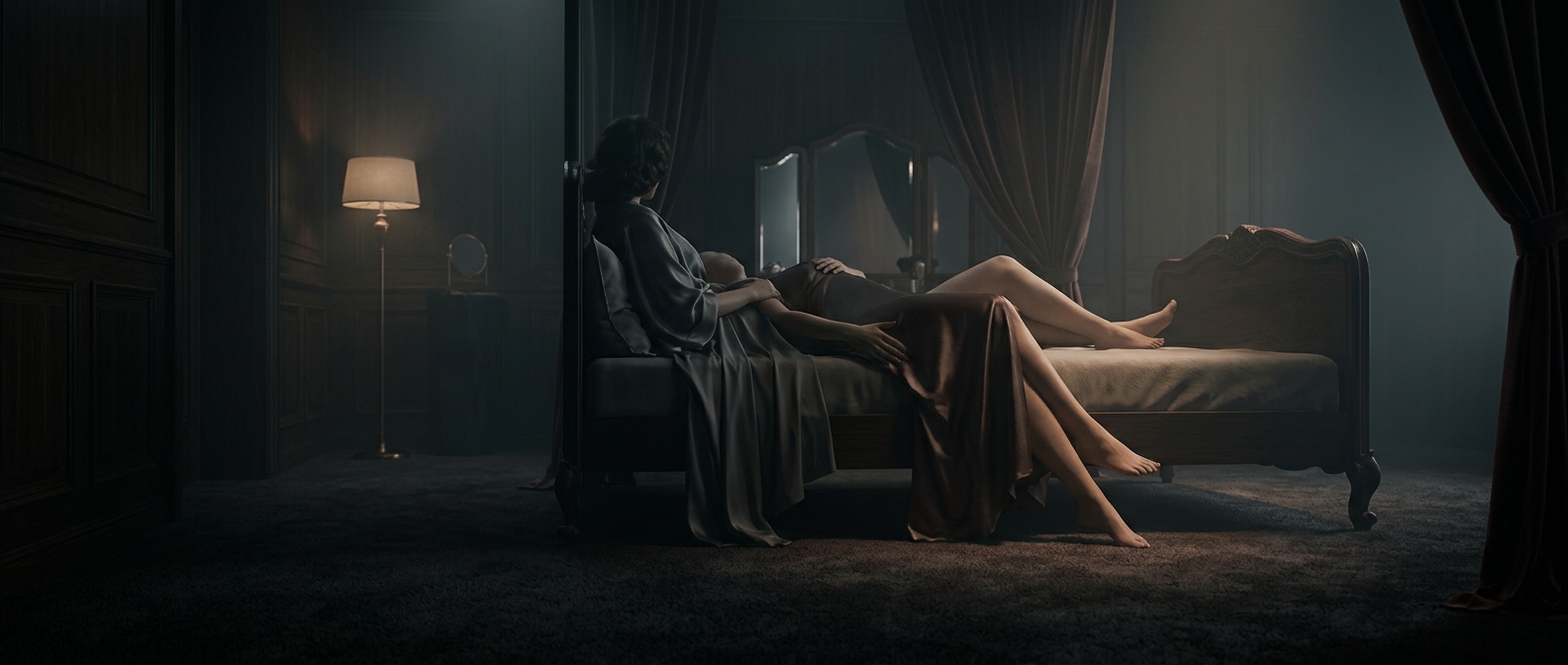
The blanket is part of the blocking
The apparently impossible blanket works because it is arranged around two bodies, not simply laid across them. A raised shoulder or bent arm can hold one edge high, while the actors’ hips and legs anchor the rest. Folds and pressure points keep the fabric in place; the camera sees the carefully arranged front, not every place where it is tucked or supported.
That arrangement is a form of blocking: planning where performers and props go so the scene reads clearly on camera. A slight change in an arm, shoulder, or blanket edge can expose more than intended, so performers and the crew have to settle the positions before filming.
Modesty has to survive the camera
A bed scene is built for a particular frame. The blanket may cover the performers from the camera’s viewpoint while leaving room for faces, gestures, and movement. The lens flattens a three-dimensional setup into one image, making an awkward drape look like a single, effortless shape. From another angle—or if someone shifts—the illusion may vanish.
The fabric also has to stay put through repeated takes. Actors may need to speak, turn, or adjust their posture without revealing what the scene is meant to keep covered. The result is less a blanket defying gravity than a small piece of stagecraft: bodies provide the supports, the frame hides the arrangement, and careful positioning makes modesty look effortless.