Why a birth scene has to be staged
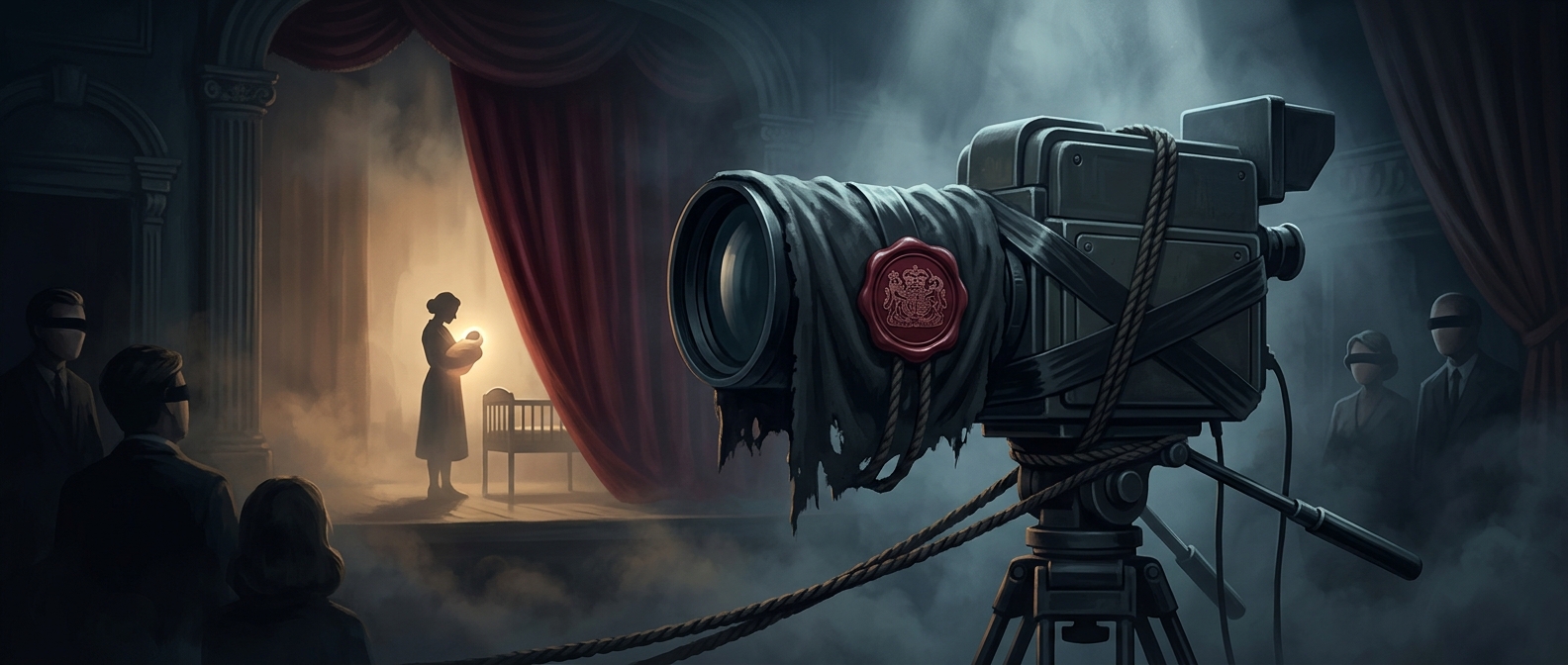
A British drama can depict childbirth, but it cannot use genuine footage of a human baby being born in a fictional entertainment production and distribute it in the UK. The distinction is between showing the event and showing an actual birth: the scene must be simulated.
That makes childbirth an unusual production challenge. A scene may need to suggest a long, physically demanding process while keeping the camera close enough to feel immediate. Filmmakers create that impression with performance, sound, editing and carefully framed shots rather than recording a real delivery.
How productions create the effect
The mechanics are similar to other forms of screen illusion. A prosthetic abdomen or newborn prop can provide the visual details the camera needs; actors’ reactions and off-screen sounds carry the rest. Cutting between faces, hands and selected angles lets the scene feel intimate without showing the event itself.
These choices also give directors control. A real birth unfolds on its own timetable, while a scripted scene has to fit the story’s pacing and the practical limits of a set. Simulation allows the crew to repeat a moment, adjust the framing and coordinate the scene with the surrounding performance.
The line is about the footage, not the subject
The restriction does not mean British fiction cannot include childbirth or that every depiction must be discreet. It means the production has to manufacture the image rather than incorporate genuine birth footage. The result is a scene built from cues: a prop, a reaction, a sound, and an edit that lets viewers understand what happened without seeing a real delivery.