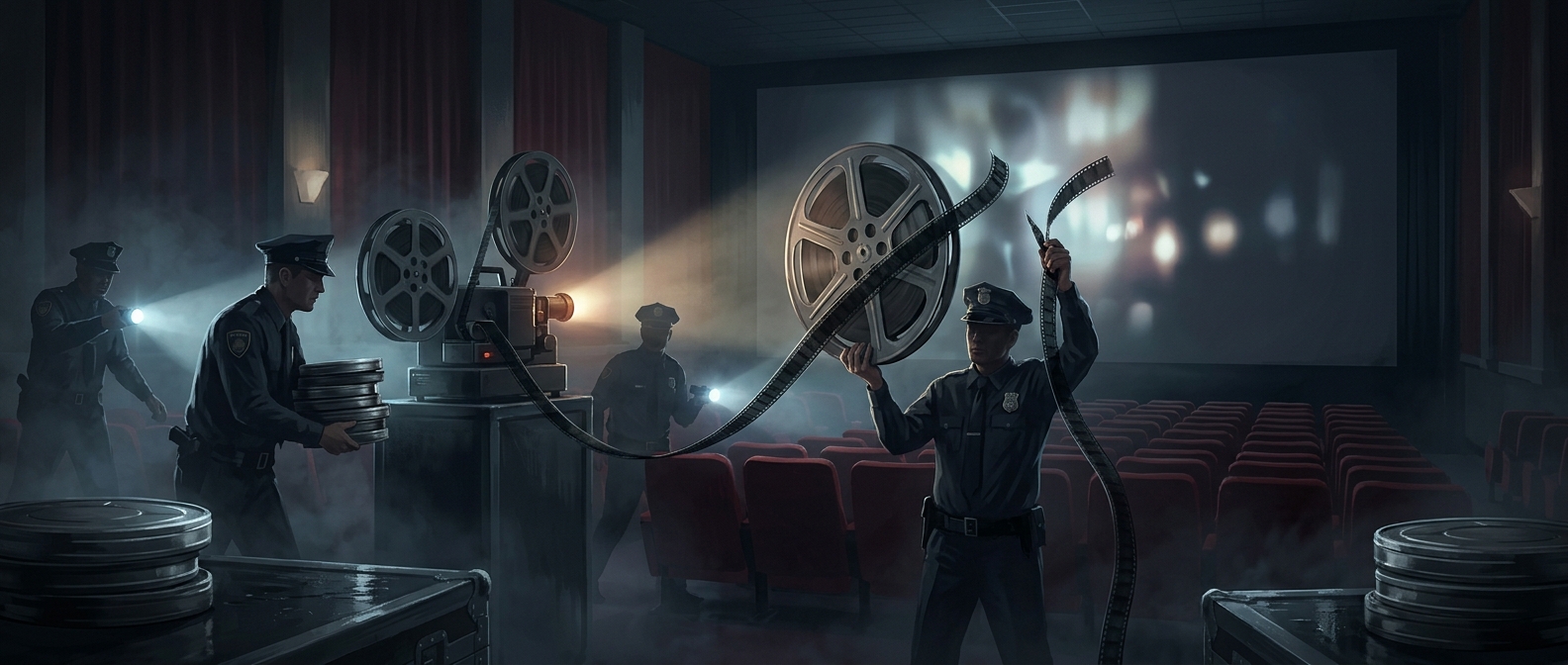
A raid could stop a film mid-scene
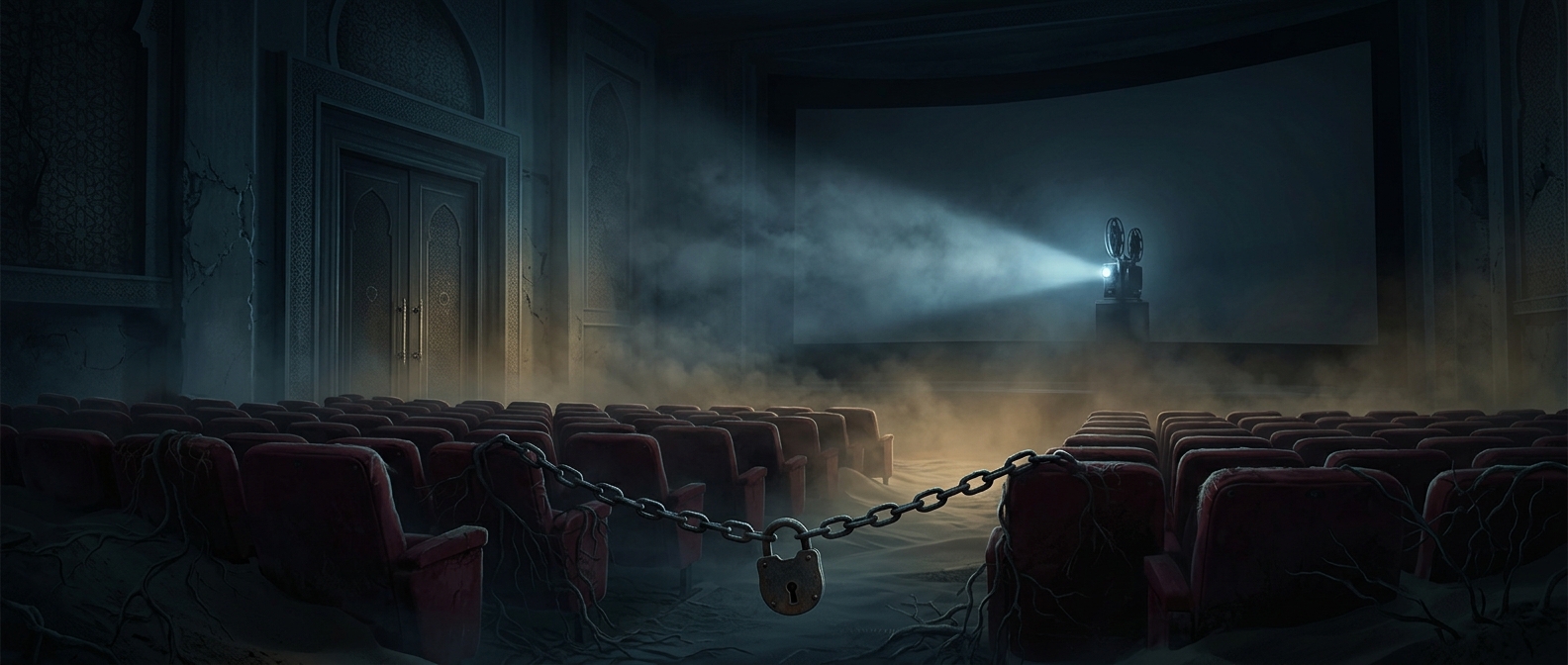
Before digital projection, a movie existed at the cinema as a series of physical film reels. A projectionist threaded the film through a projector, which pulled it past a light source and cast the moving images onto the screen. A feature was often divided among several reels, so removing one could interrupt the story instantly; taking the reels could end the screening altogether.
That made the projection booth a consequential place to search. It held the material needed to show the film, not merely a copy of its paperwork. If officers seized the reels while patrons were watching, the audience might be left in darkness while the screening stopped and the film was carried away.
Taking the reels changed what could be shown
A physical seizure could serve different purposes depending on the case: authorities might take film as evidence, or remove it to prevent further screenings. Either way, the immediate effect was practical. A cinema could not simply call up another copy from a server; it needed the reels back or another physical print before it could show that version again.
The scene captures how control over a movie once depended on control of an object. The projector turned film into a public experience, but the reels themselves were vulnerable to being removed—and a raid could reach the screen before the audience had even left their seats.