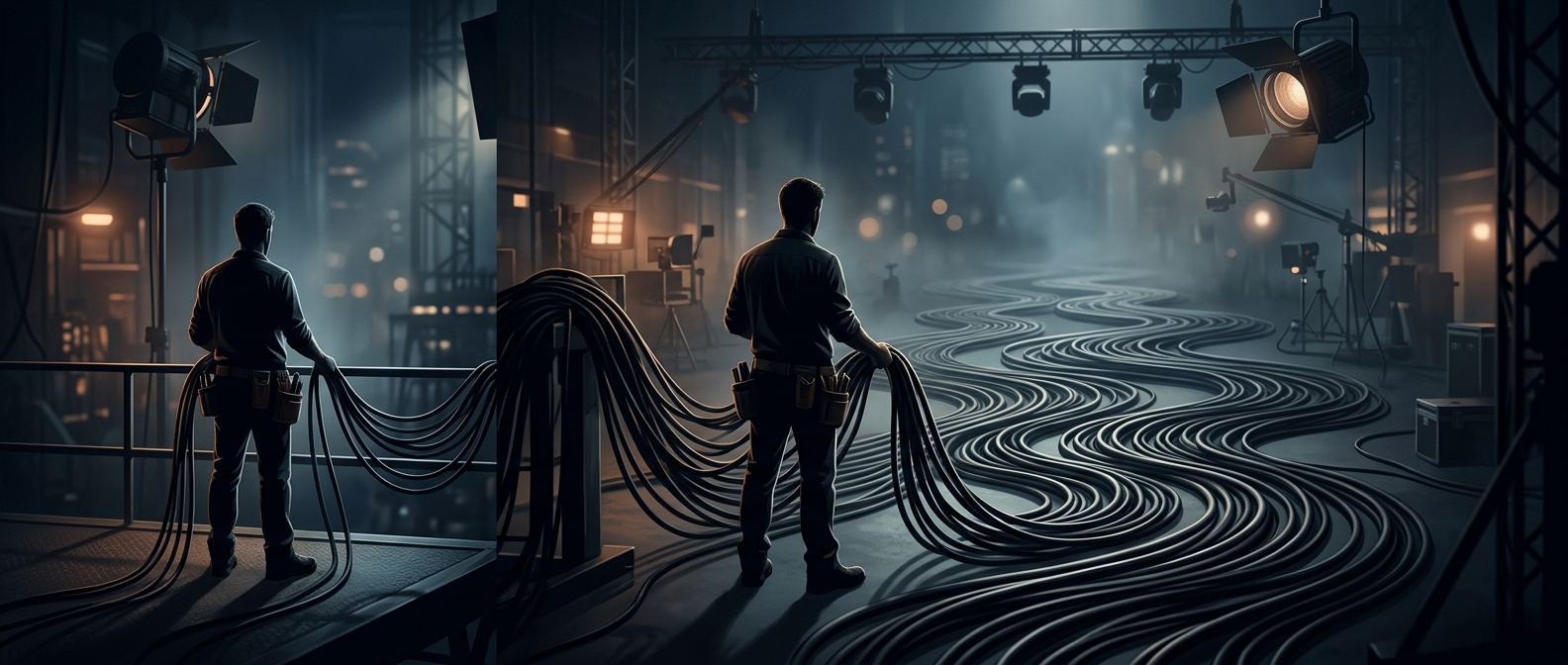
The Hidden Wiring Behind a Film Set
A film set may look like a collection of cameras, lights, and carefully arranged scenery. Behind that image is a working electrical network. The gaffer—the head of the lighting and electrical crew—helps plan how power reaches the lamps and other equipment, while coordinating the crew members who run and secure the cables.
The routes can be complicated because a cable must reach its destination without disrupting the scene or blocking the people making it. A set might have narrow passages, moving equipment, doorways, or outdoor ground to contend with. The gaffer’s team has to keep track of those paths as the setup changes from shot to shot.
A Cable Route Is Also a Safety Decision
Heavy cables are not just inconvenient clutter. Left across a walkway, they can catch a foot or wheel; where water is present, damaged electrical equipment or connections can create an additional hazard. Crew members route lines away from puddles and busy paths when possible, and secure crossings with tape or protective covers so people can see or safely pass over them.
That work takes coordination. A camera move, a light repositioning, or a change in the scene can make yesterday’s safe route a new obstacle. The electrical crew has to adapt the wiring while keeping the set usable for performers and the many workers moving through it.
Why the Work Stays Out of the Picture
Good cable management is easy to overlook precisely because it works: lights get power, walkways remain clear, and the camera can frame the scene without unwanted lines in view. The practical result is that the image on screen depends partly on a second, less visible layout—the routes that let the set function safely between takes.