Focus Is a Moving Target
A lens can render only a limited range of distances sharply at once. That range is called depth of field; when it is shallow, an actor’s small step forward or backward can be enough to soften their eyes. This is especially noticeable in close-ups, where the camera is near the subject and the background is meant to blur away.
Marks Turn Movement Into a Plan
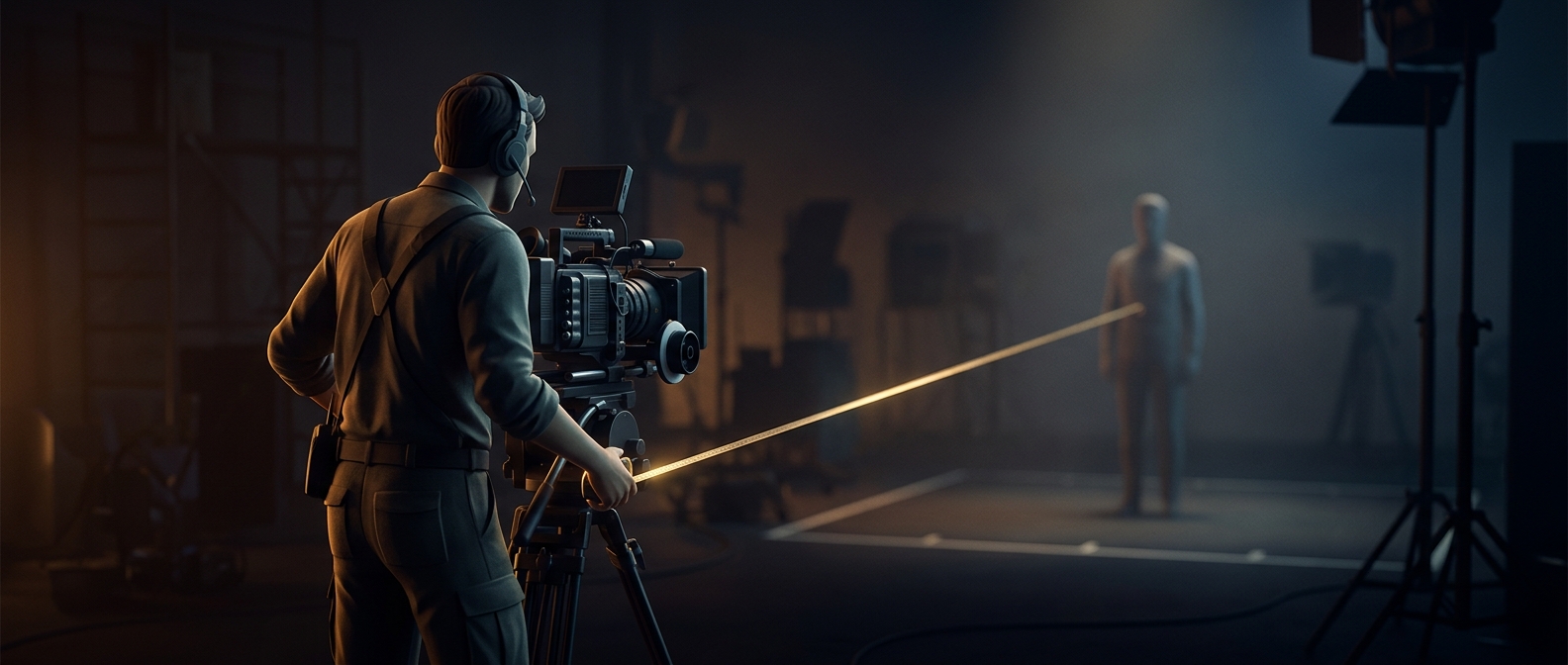
Before a take, the focus puller—usually the camera crew member responsible for focus—may work with the actors and camera team to map the shot. They measure the actor’s distance from the camera at key points, then put small reference marks on the lens’s focus ring or a separate marking disk. The marks translate positions in the scene into settings on the lens.
During the take, the focus puller watches the actor’s movement and turns the ring at the right moment, moving the plane of sharpness along with them. Rehearsal helps establish the timing, but the operator still has to respond if a step, turn, or pause differs from the plan. The job is not simply to set a distance once; it is to anticipate where the actor’s face will be as the shot unfolds.
Why Not Let the Camera Do It?
Some cameras and productions do use autofocus. But a focus puller can make a deliberate choice about what should be sharp and when—such as shifting focus from one person to another—rather than relying on the camera to select a subject. That control matters when focus changes are part of the scene’s visual storytelling.
The result can look effortless: an actor crosses the frame, and their eyes remain crisp while everything behind them stays soft. That smoothness is carefully timed camera work, often guided by measurements made before the scene begins.