Why a Steadicam Doesn’t Follow Every Footstep
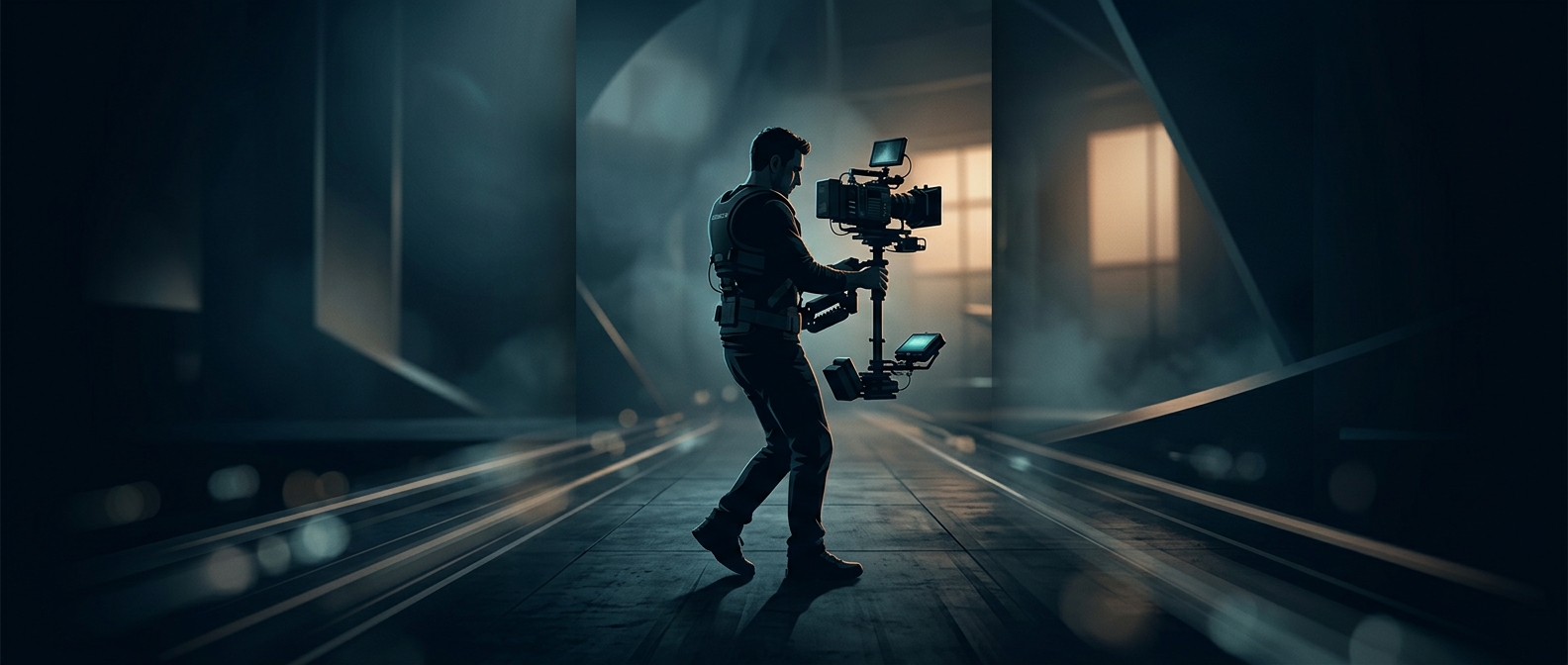
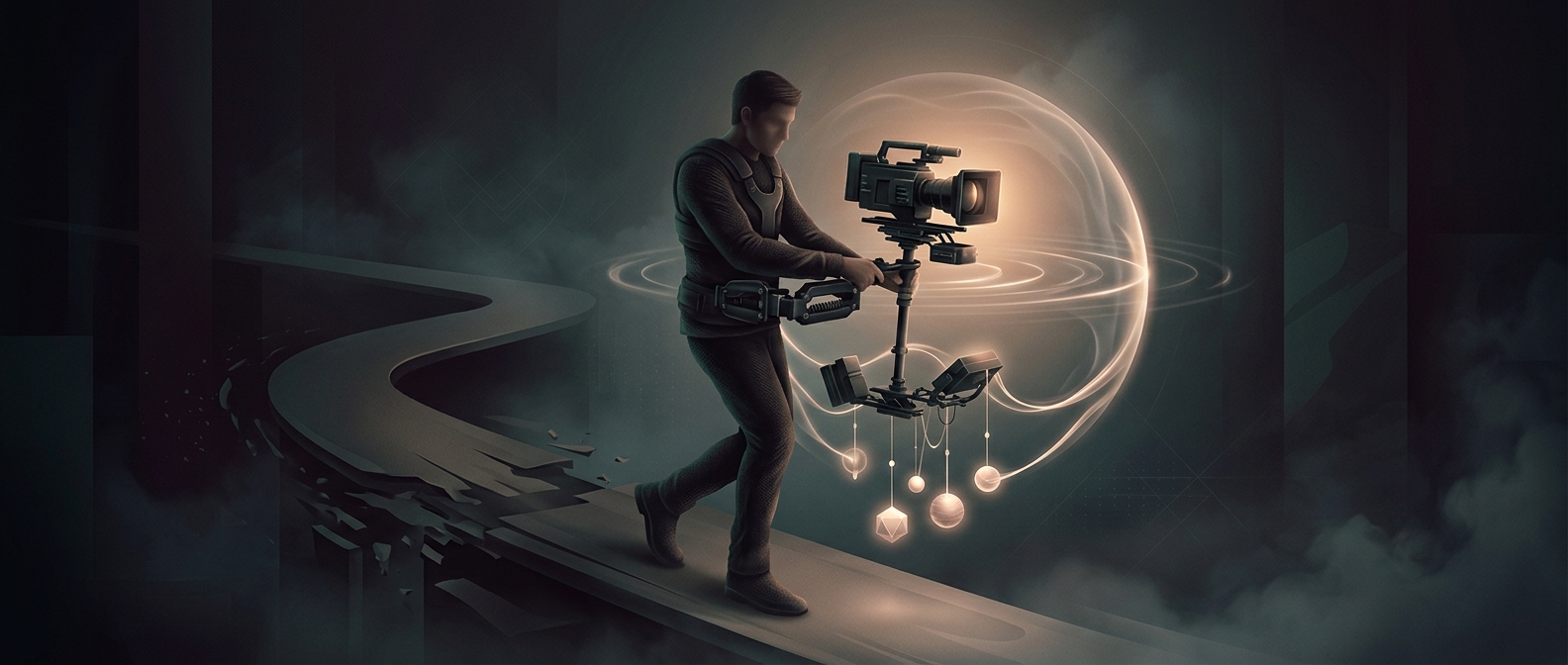
A camera carried by hand tends to rise and dip as its operator walks. A Steadicam reduces that motion through a chain of mechanical supports: the camera is attached to a balanced rig, the rig connects to a spring-loaded arm, and the arm is mounted to a body harness. The camera can still move through space, but the operator’s jolts are softened before they reach the image.
Counterweights Keep the Camera Balanced
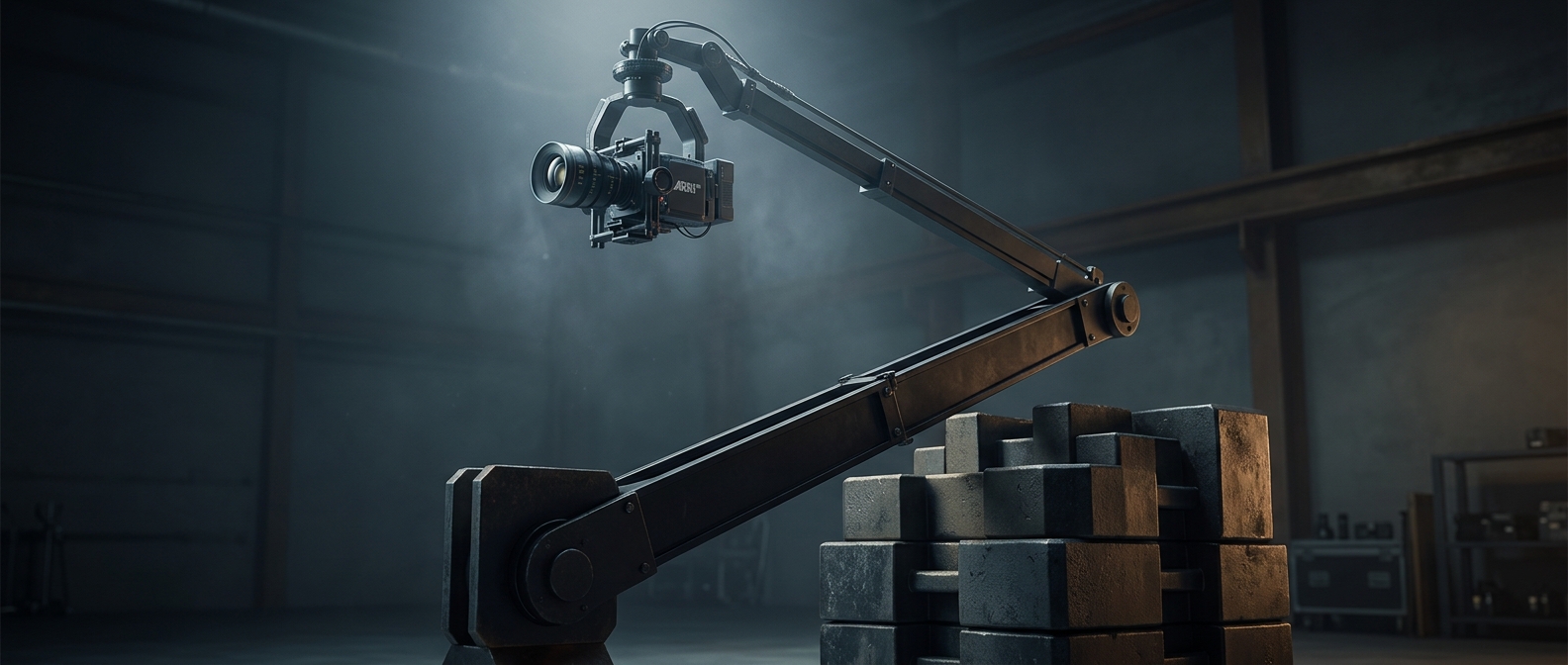
The rig’s counterweights matter because they help balance the camera around its support point. When the operator shifts or turns the rig, that balance makes the camera less likely to tip abruptly with each small movement. The spring arm adds another layer of isolation, flexing under the rig’s weight instead of passing every bump straight through.
This is not the same as locking the camera in place. The operator steers the rig and chooses its path; the support system mainly smooths unwanted motion. That combination lets a shot travel alongside an actor or through a room while retaining a sense of movement, rather than looking like a fixed camera view.
Smooth Images Take Physical Work
The harness transfers much of the rig’s load from the operator’s hands to the body, while the arm helps carry and cushion it. But the full system is still heavy, and the operator must control its balance and direction while moving. The floating look on screen is therefore not effortless: it comes from carefully managing a camera that is free to travel but buffered from the body’s every step.