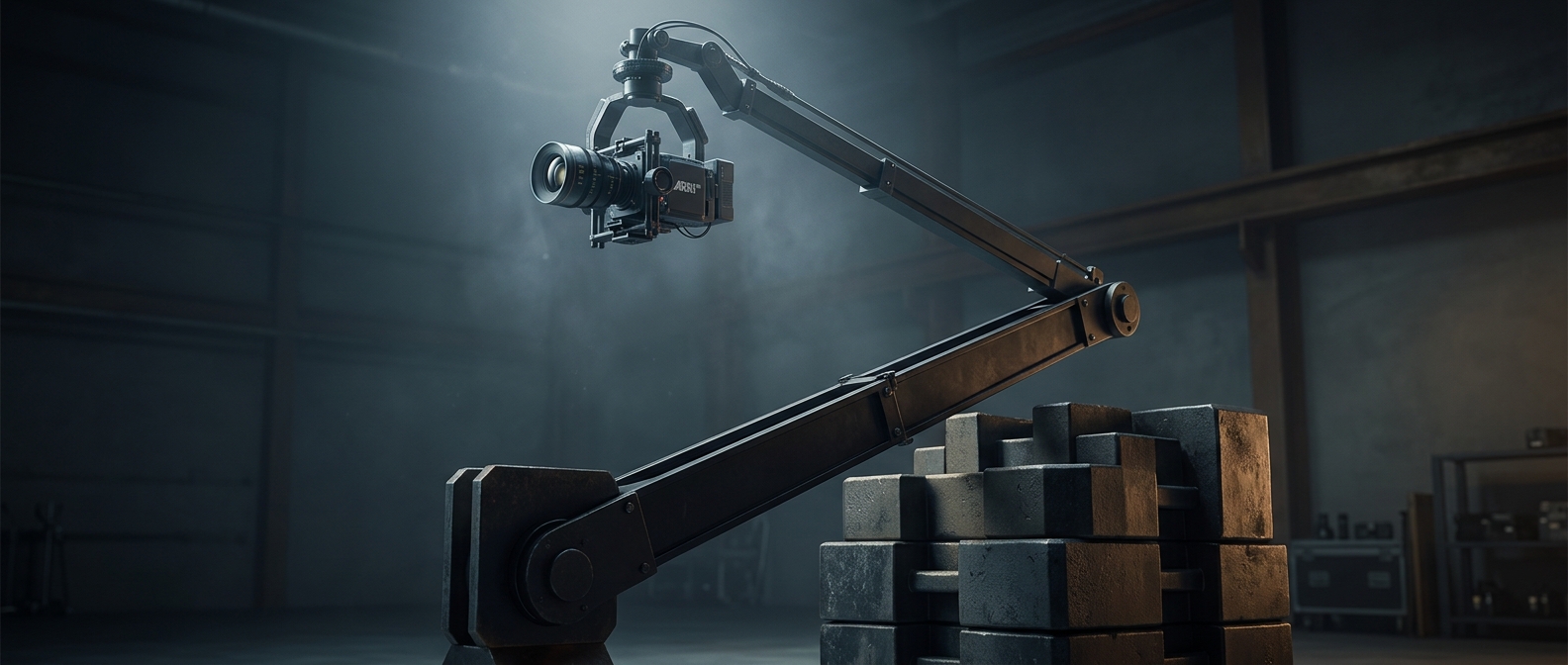
How a Camera Crane Stays Balanced
A camera crane is a long, pivoting arm: the camera sits at one end, and counterweights are mounted on the other. The pivot acts like a seesaw’s fulcrum. Because the camera and arm pull down on one side, the weights on the opposite side must create a matching turning force, or torque. Torque depends on both weight and distance from the pivot, so a heavy load placed farther out can balance a lighter load closer in.
Why the Weights Can Be So Heavy
The camera package may include more than the camera itself—such as a lens, monitor, and mounting hardware—and the arm’s own weight also matters. To balance those loads, crews may need dense blocks in substantial quantities. Some setups use lead, whose density allows a lot of balancing weight to fit in a relatively compact space.
Balance changes as the rig is assembled or adjusted. Moving the camera farther from the pivot increases its leverage; adding equipment changes the load. The counterweight arrangement has to account for the crane’s configuration, not just the camera’s weight.
What Balance Makes Possible
With the arm properly counterweighted, an operator can raise, lower, or sweep the camera through a controlled arc without the camera end simply dropping under its own load. The weights do not make the crane self-supporting: the base and structure must still carry the rig safely. Their job is to counter the arm’s turning force, letting a large camera movement feel smooth rather than like wrestling a seesaw.