The frame is a design boundary
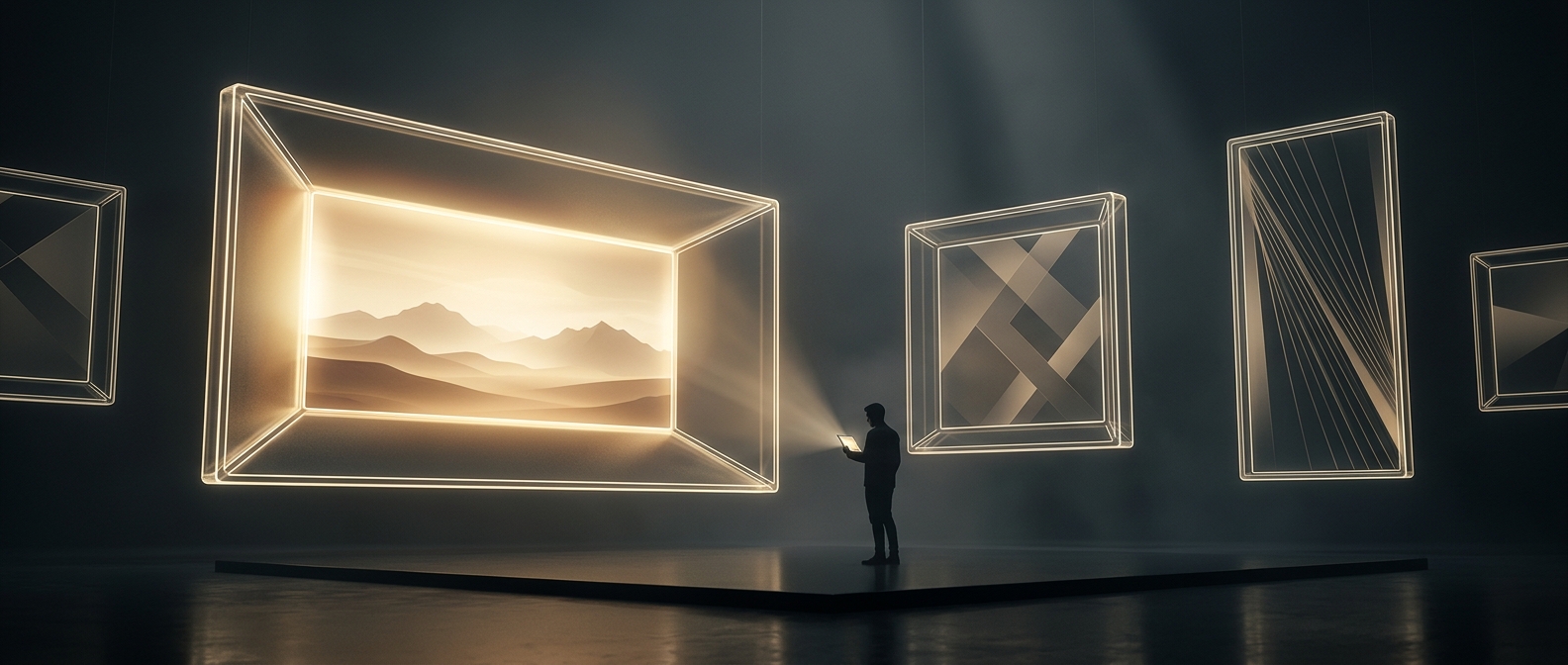
An aspect ratio is the relationship between a picture’s width and its height. It determines the outline of the image that reaches the audience, but it also sets a practical limit for everyone composing that image: anything outside the frame is invisible.
A wide frame can hold more of a room or landscape from side to side. That makes it useful for showing how characters relate to one another across a space, or for letting a small figure appear surrounded by a large setting. But width does not create space for free. With less height relative to the width, a tall building, a standing person, or an overhead view may be harder to fit without moving the camera or changing the composition.
One choice reshapes the whole shot
Filmmakers plan blocking—the movement and placement of actors and objects—with the frame in mind. In a wide composition, two characters can remain visible at opposite ends of the image; in a taller one, a director may have more room to emphasize height, vertical movement, or layers above and below a subject. The camera’s position, set design, and even where an actor pauses can all respond to that shape.
The intended format matters after filming, too. If a movie made for a wide frame is shown on a differently shaped screen, the image may appear with empty bands, be cropped, or be adjusted to fill the display. Each option changes what viewers see. That is why aspect ratio is not just a screen specification: it is a composition decision, made before the audience ever sees the picture.