How a flash outside the window becomes lightning indoors
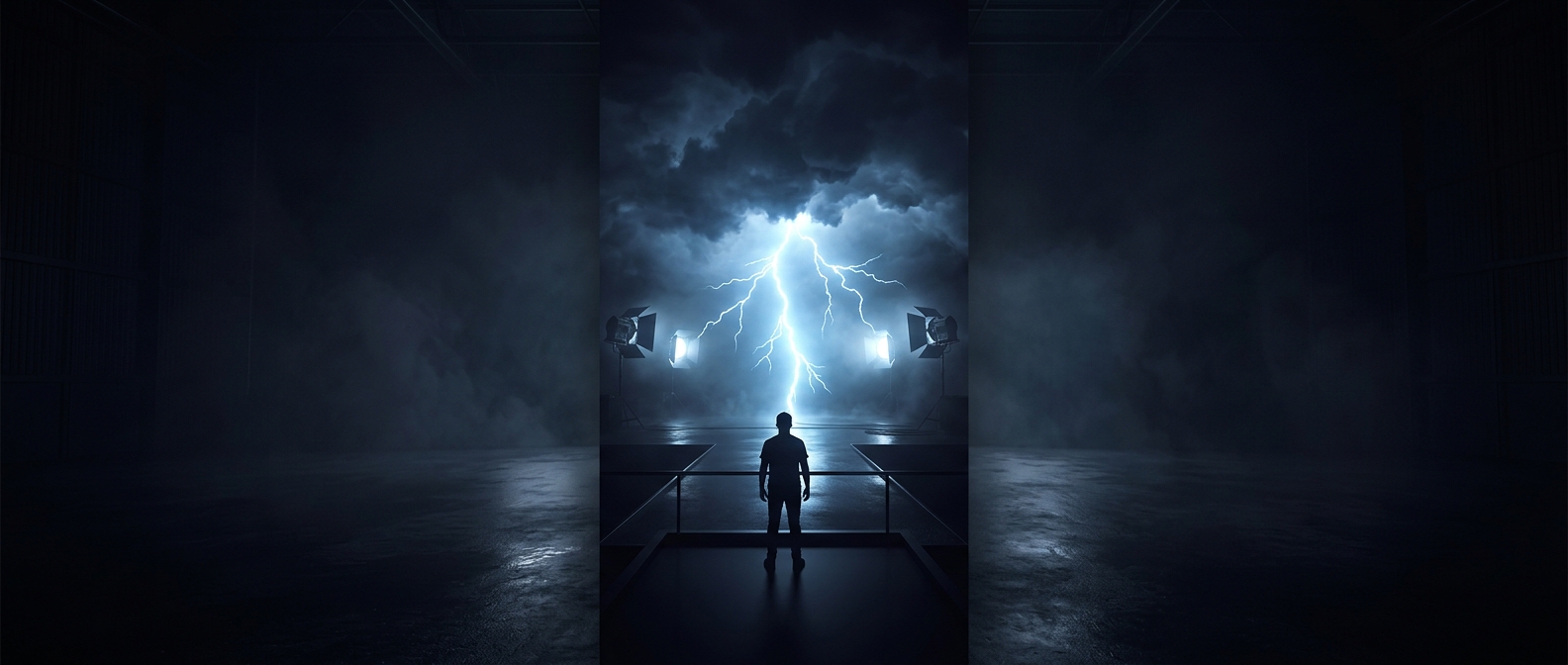
A convincing lightning flash has to do more than appear in a window. It must briefly change the light on the room itself: faces, walls, and objects should all seem to catch the same sudden burst. Placing powerful flashbulbs beyond a set window lets the crew create that effect from the direction the storm would come from, rather than adding a bright image to the glass alone.
The window is a useful boundary. It hides the equipment and gives the audience a reason for the light’s direction, while the flash spills across the set. A short burst also produces a sharp change from ordinary scene lighting to startling brightness—the visual rhythm people associate with lightning.
Why make the storm on set?
Real lightning cannot be scheduled for a take. A controlled flash can be triggered when the actors, camera, and scene are ready, then repeated if the shot needs another try. That repeatability matters because the flash is part of the performance: a sudden change in illumination can make a character’s reaction feel connected to an event outside the room.
The technique also gives filmmakers control over what the audience sees. They can decide when the room lights up and how strongly the burst affects the scene, without relying on unpredictable weather. The result is not a recording of a storm but a timed lighting cue—one that makes a fake window feel like the boundary between a quiet interior and an electrical sky.