Why a balloon makes useful moonlight
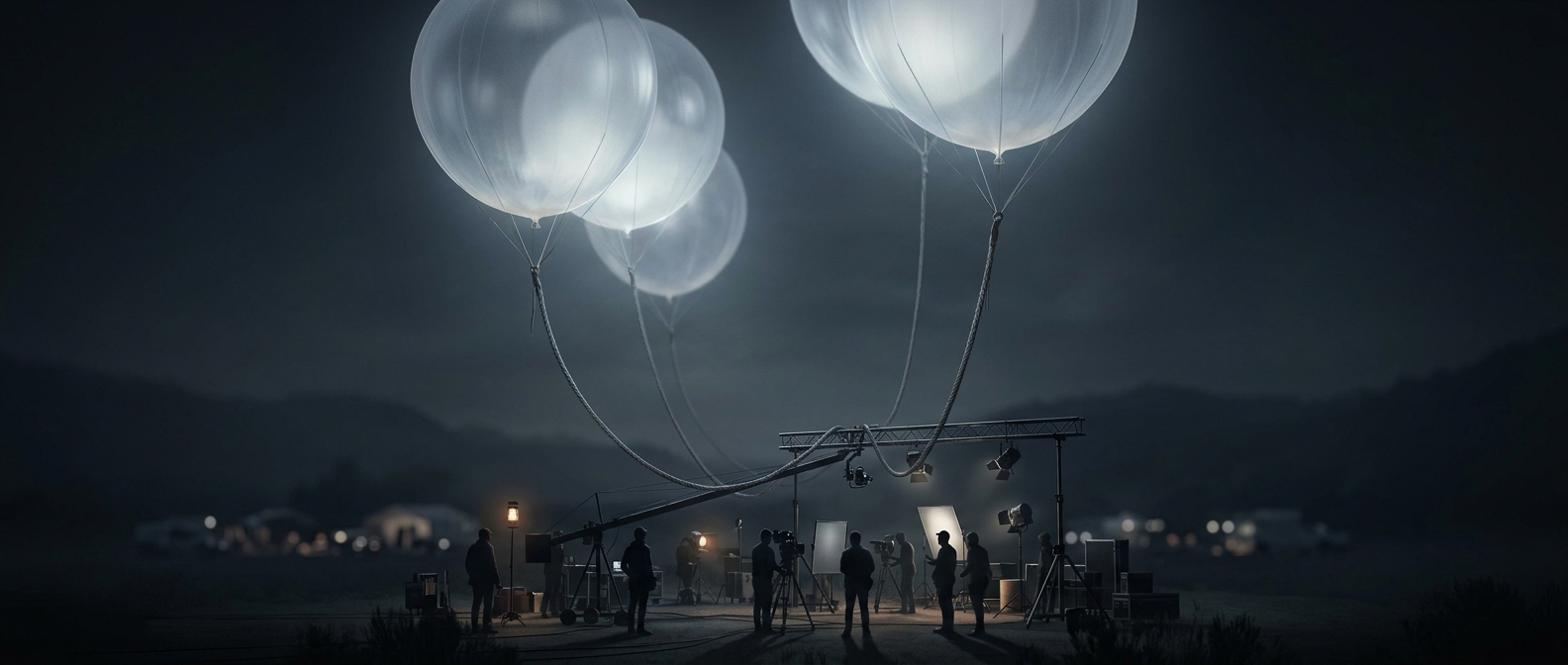
A small lamp produces a concentrated pool of light, with sharp shadows and a rapid falloff into darkness. For a night scene spread across a street or patch of woods, that can look less like open-air illumination than a spotlight. A lighting balloon solves the scale problem: lamps inside a large, translucent envelope turn its whole surface into a glowing source.
That larger source sends light in many directions, so shadows soften and illumination reaches a broader area. Raised above the set, it can suggest light arriving from the sky rather than from a fixture on the ground. The crew can also adjust the lamps’ brightness and color to suit the scene; the familiar cool tint of movie moonlight is an artistic choice, not a literal match for how moonlight must look.
A soft source with a practical limit
The balloon’s size is what makes the effect convincing—and what makes it cumbersome. It needs to be positioned high enough to spread light over the set, while its support, power supply and crew must stay out of the camera’s view. Trees, buildings and the angle of a shot can block or reveal the source, so lighting teams may need to move it as cameras shift. Wind can also make a suspended balloon harder to control.
The payoff is a broad wash of light that can cover actors, foliage and parts of a street at once. Instead of illuminating every object separately, the crew creates one controllable patch of artificial night, giving the scene a consistent direction and softer shadows.