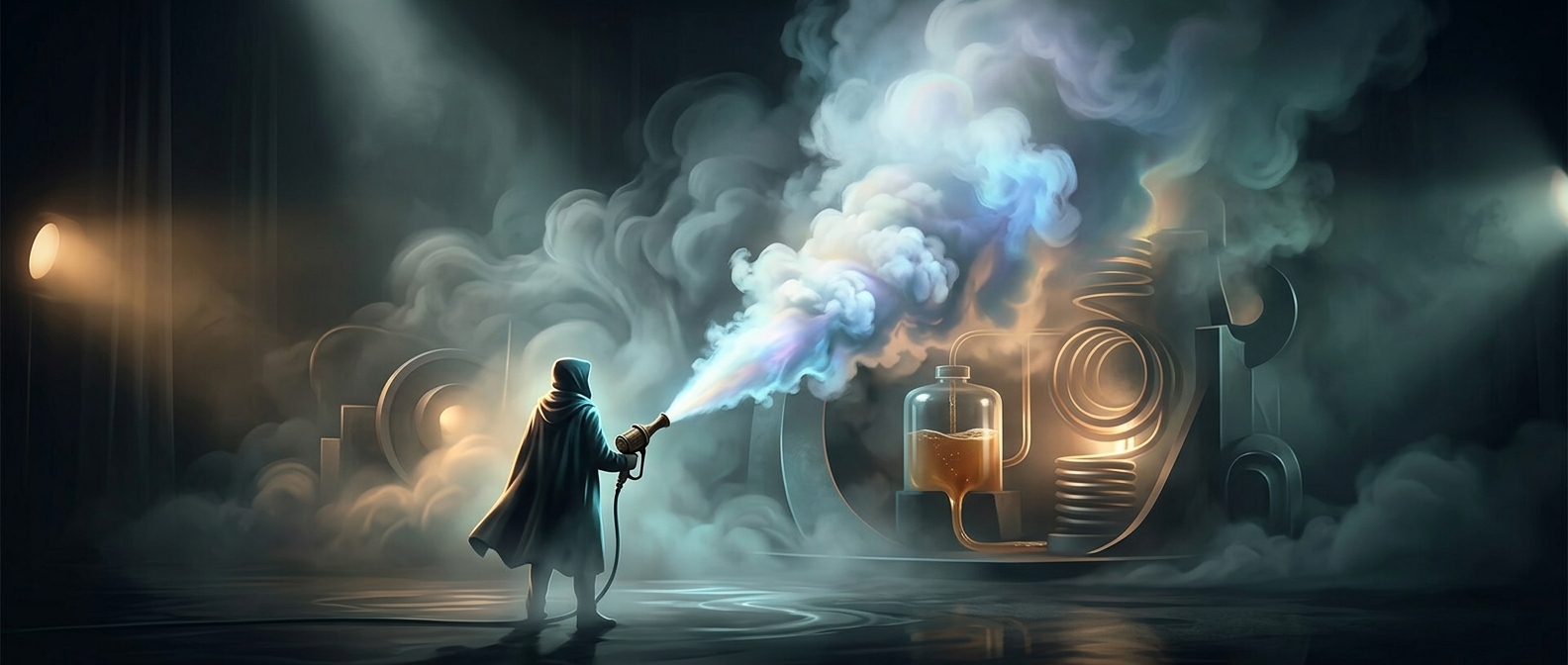
Why Stage Fog Catches the Light
The visible cloud from a fog machine is made of tiny liquid droplets, not smoke. Inside the machine, a pump sends water-and-glycol fluid through a heated block. The fluid becomes hot enough to form vapor, which is pushed out through a nozzle. When that warm stream meets cooler room air, some of the vapor condenses into droplets small enough to remain suspended for a while.
Those droplets matter because they scatter light. A beam that would otherwise be hard to see in clear air becomes a bright shaft when fog gives the light particles to bounce off. That is why a modest haze can make spotlights, lasers, or colored beams visible across a stage.
The Room Shapes the Effect
Fog does not spread evenly on its own. Fans, ventilation, temperature, and the shape of the space all affect where it travels and how long it hangs. A stage crew may use airflow to carry a cloud across a scene—or avoid drafts that would break it up before a lighting cue. The machine creates the droplets; the room helps choreograph them.
The result is a lighting tool as much as a visual effect: a nearly invisible beam becomes part of the scenery, while the same fog can soften the background and give a set more depth.