A sharp event gives editors a shared timestamp
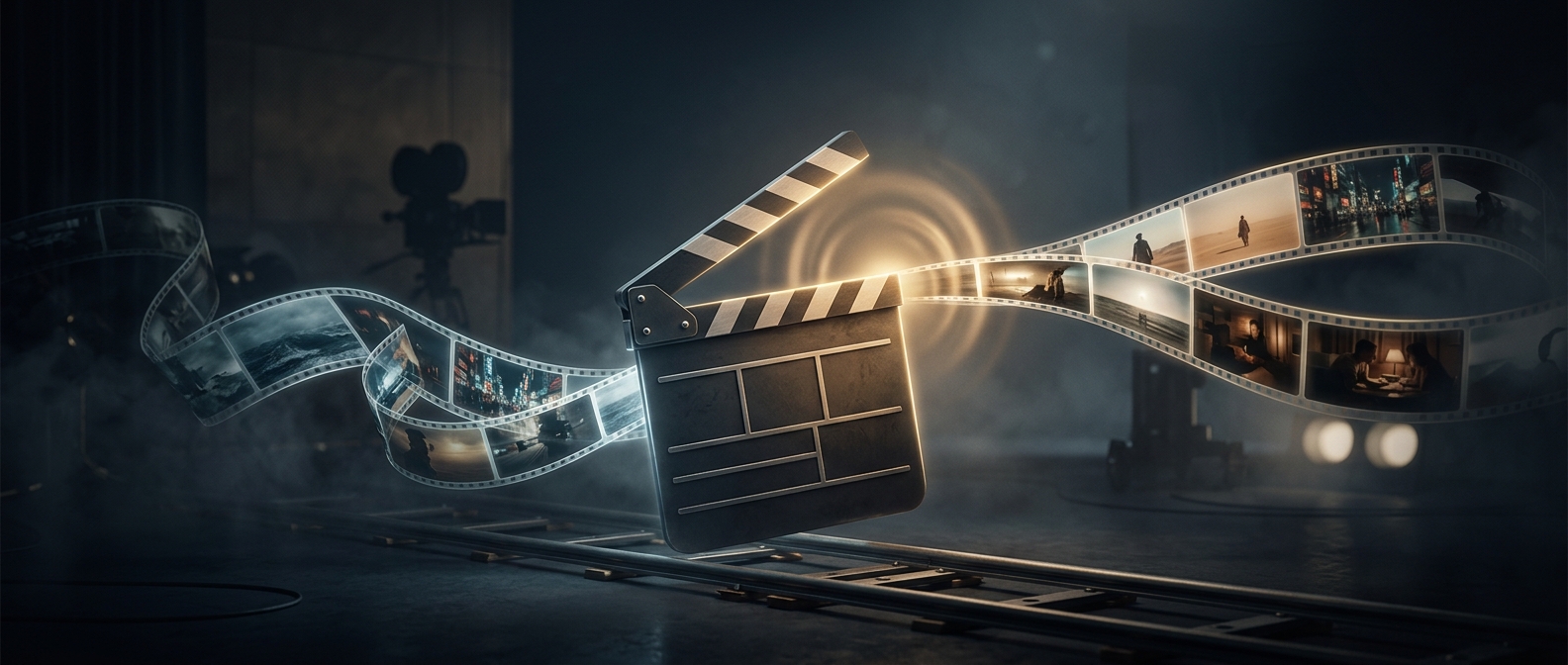
When picture and sound are recorded on separate devices, the files may have no built-in way to identify the same instant. A clapperboard creates one: the sticks meet in front of the camera and make a sharp crack for the microphone. That single event leaves two easy-to-find marks—an image of the sticks closing and a brief spike in the sound waveform, the graph of audio over time.
In the editing software, the editor moves the sound until its crack lines up with the frame of contact. The actors’ words and movements then fall into place together. If the clap lands a little before or after the spoken line, that is fine; what matters is that both recordings captured the same moment.
Why the clap is useful
A sharp impact is easier to locate than a soft sound that fades in gradually. The striped board also makes the closing motion visible, even in a busy shot. Together, those cues give the editor a practical reference without requiring the camera and audio recorder to communicate during filming.
The slate can also carry scene and take information, helping the crew and editor identify which recordings belong together. In productions that use electronic timecode—a shared clock recorded into files—the slate may still provide a visible backup or a quick check. Either way, the sticks turn a moment on set into a matching landmark in both picture and sound.
That is why the clap is more than a bit of movie-set theater: one small collision can bring two independently recorded tracks into sync.