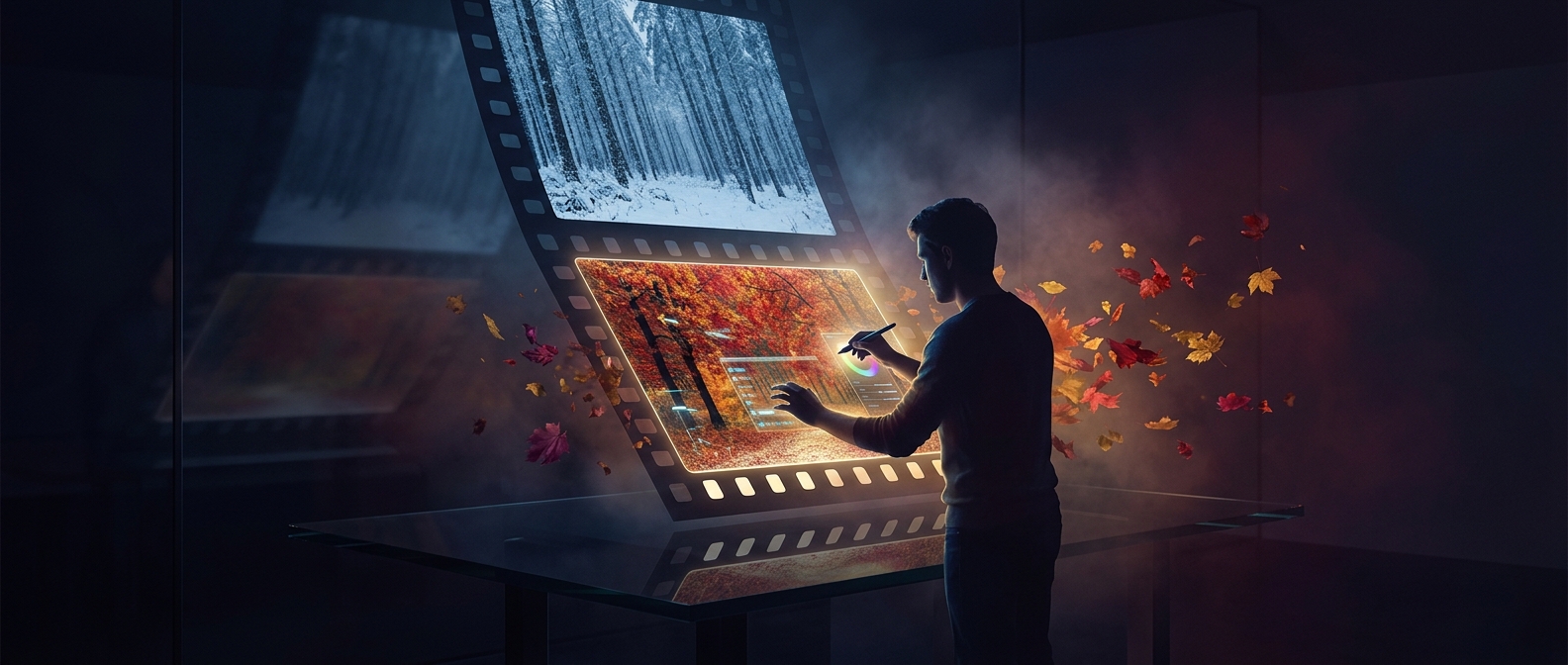
How a Color Grade Can Turn Summer Into Autumn
A colorist does not have to recolor every pixel equally. In a grading program, footage can be separated by hue, saturation, and brightness. The colorist can then steer foliage’s greens toward yellow or orange while leaving other parts of the image—such as a blue sky, a red sign, or a person’s skin—largely alone.
The adjustment is usually selective rather than a simple “make everything orange” filter. A colorist may soften the greens, warm the highlights, and deepen shadows to give the image a more autumnal balance. Masks and tracking tools can limit a change to particular areas or follow a moving subject, though complicated motion may require careful manual refinement.
The Image Still Has to Behave Like a Season
Color can alter the impression of a location, but it cannot replace every seasonal clue. Bare branches, the angle of sunlight, and the shape of shadows remain visible. If foliage is dense and the scene’s lighting is compatible, a grade may sell the shift; if strong summer details dominate, the altered colors can look artificial.
That is why the work often involves adjusting the whole palette, not just changing leaf color. The goal is to make the transformed foliage feel consistent with the light and atmosphere in the shot. The season is created through a chain of visual cues, and color is one powerful link—not a replacement for the rest.