How a “Miracle” Towel Demo Can Hide the Work
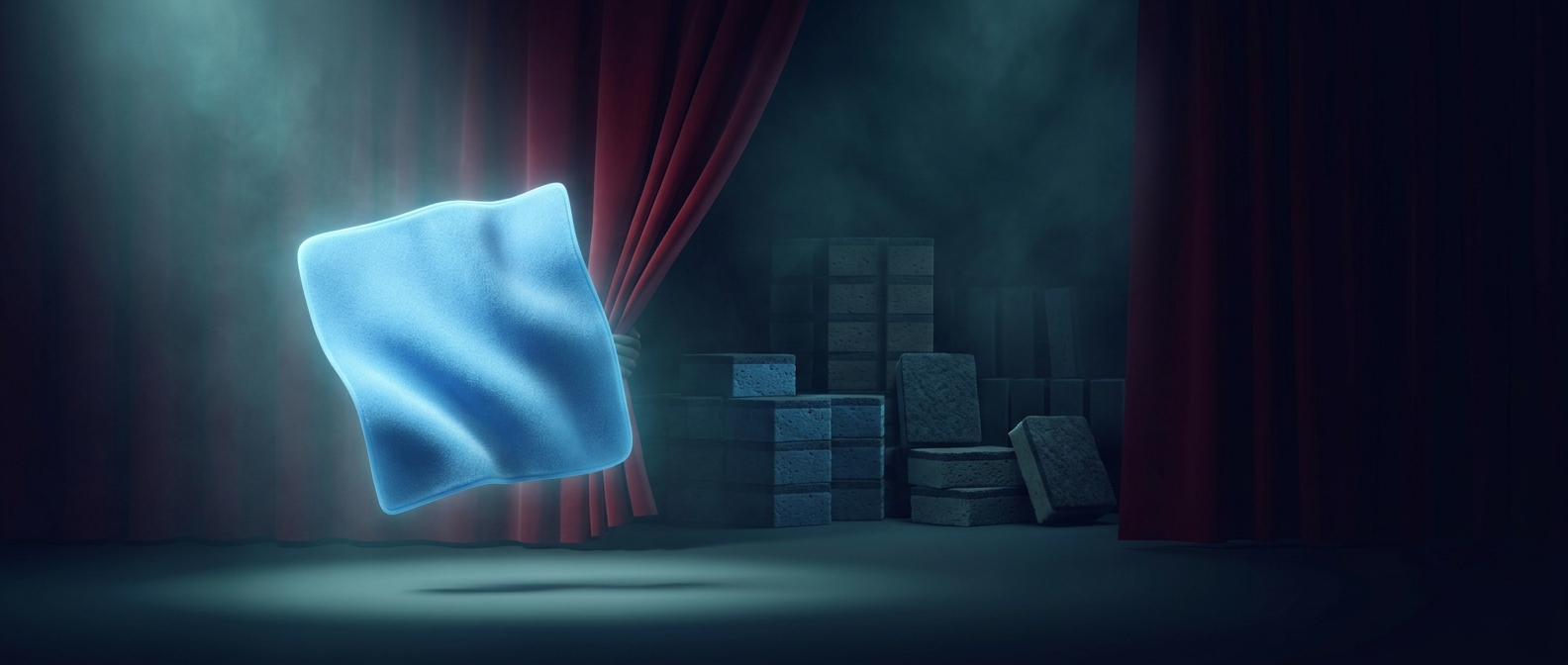
A towel advertisement often presents a simple test: liquid is poured onto a surface, then one swipe leaves it dry. But the camera shows only what is in frame. A demonstrator can use extra absorbent material just outside the shot, beneath the spill, or folded into the towel. That material can soak up liquid before the towel appears to do the job alone.
The same principle applies to camera angles. A low or tightly cropped view may conceal a thin layer of liquid, a damp patch, or the edge of a prepared surface. From the camera’s chosen position, the counter can look dry even when the full scene would tell a different story.
Why the Setup Matters
Absorbency depends on more than the towel itself. The amount and type of liquid, the surface, how long the spill sits, and how the towel is pressed or dragged all affect the result. A controlled demonstration can make a product’s strengths visible, but a hidden helper or selectively framed shot changes what the demonstration proves.
That does not mean every impressive towel test is staged, or that a towel cannot absorb a large spill. It means the image alone cannot show whether the product did all the work. In a fair comparison, the spill, surface, and method would be visible and consistent, with no concealed materials or cuts that alter the cleanup.
The telltale question is not just “Did the counter look dry?” but “What, exactly, was allowed to absorb the liquid—and could the viewer see it?”