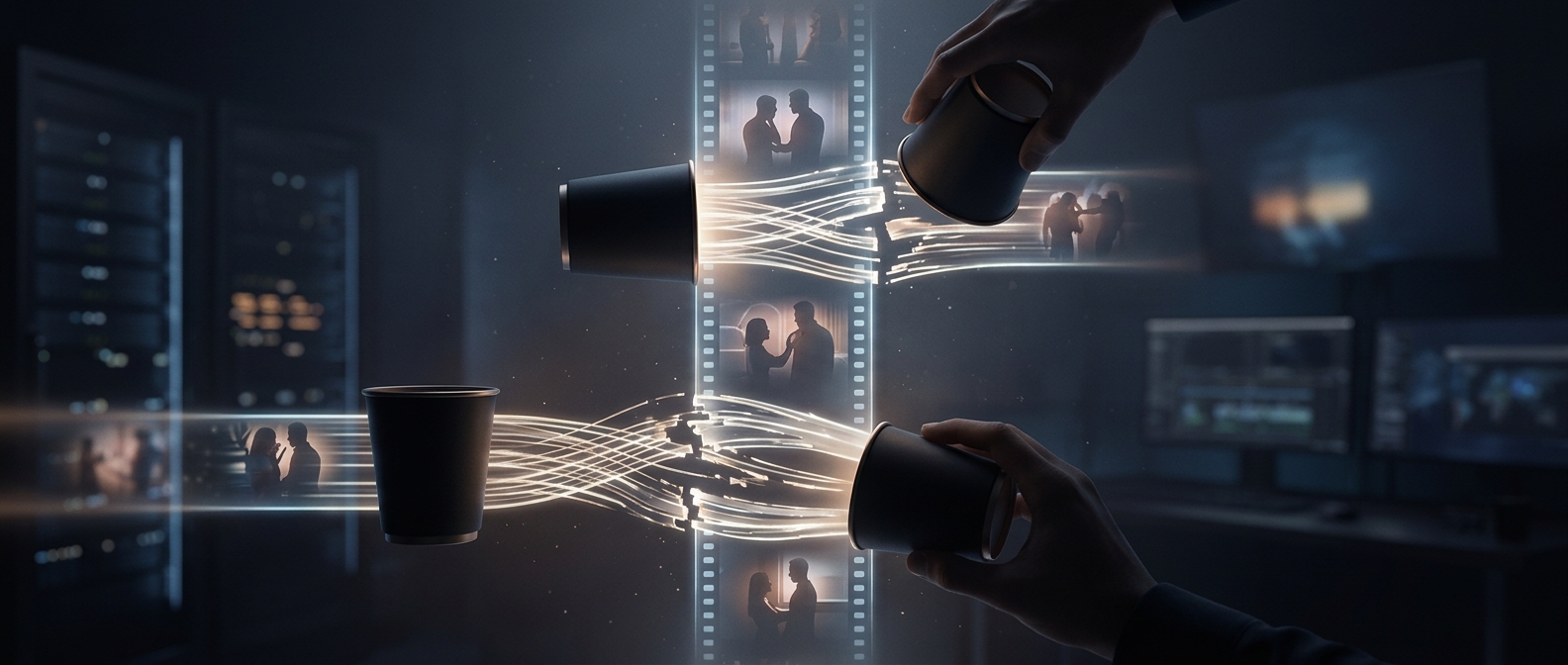
The cup hides a continuity clue
In an unscripted scene, a drink can quietly reveal when a shot was filmed. A clear glass makes its contents visible: if it is nearly full in one shot and almost empty in the next, viewers may notice that the footage does not follow a single uninterrupted moment.
That matters because a finished conversation is often assembled from pieces recorded at different times. Editors may cut between people listening, reacting, and speaking, even when those shots were captured separately. This is called continuity: the effort to make separate pieces of footage feel like one coherent scene.
An opaque vessel gives editors room
A metal goblet blocks the view of the liquid inside. Its level can change without creating an obvious visual mismatch, so editors have one less detail to track when joining shots. The cup does not make a scene continuous by itself; it simply removes a conspicuous clue that could expose a cut.
Other details—such as a person’s posture, clothing, or the placement of objects—can still give away an edit. But when the drink is hidden, the viewer is less likely to follow its level from shot to shot. A vessel that looks like set dressing therefore doubles as a practical editing aid, helping separate moments pass as one conversation.