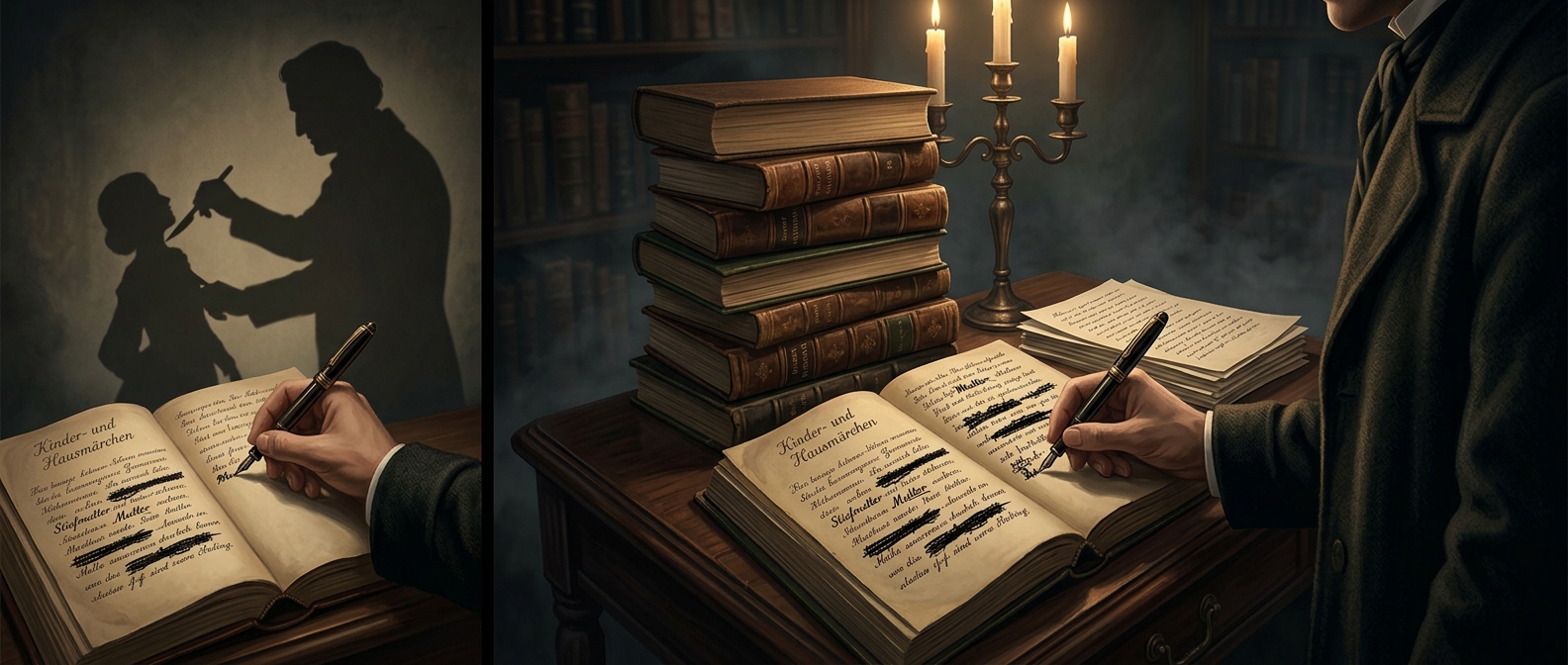
How a murderous mother became a stepmother
In the 1812 version of the Grimm tale, the woman who envies Snow White and plots against her is the girl’s biological mother. In later editions, the Grimms recast her as Snow White’s stepmother. The change kept the familiar conflict intact—the queen still sees the girl as a rival and tries to have her killed—but altered who could occupy the role of villain.
That distinction mattered to readers. A wicked stepmother was already a recognizable figure in European storytelling; a mother trying to destroy her own child was a more disturbing breach of the expected bond between parent and child. The later version lets the story keep its frightening queen while placing the danger outside Snow White’s birth family.
A small edit with a lasting effect
The change is an example of how a folk tale can shift as it is retold. The plot did not need to be rebuilt: changing the queen’s relationship to Snow White was enough to reshape the emotional meaning of the story. The villain became a replacement parent rather than the person who gave the heroine life.
That revision also became the version most people recognize. It is a reminder that a story’s familiar details are not always fixed from the beginning: sometimes a single family relationship can make the same actions feel different.