A live window into the take
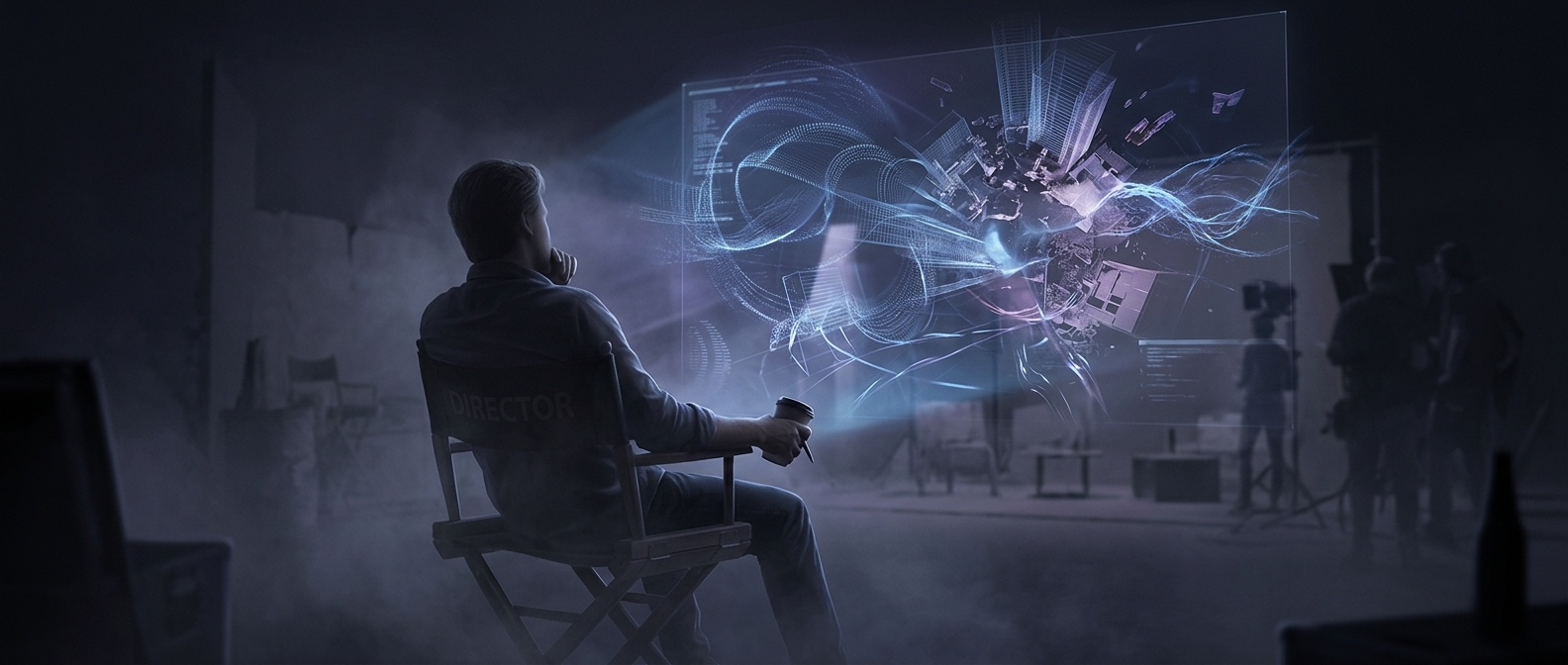
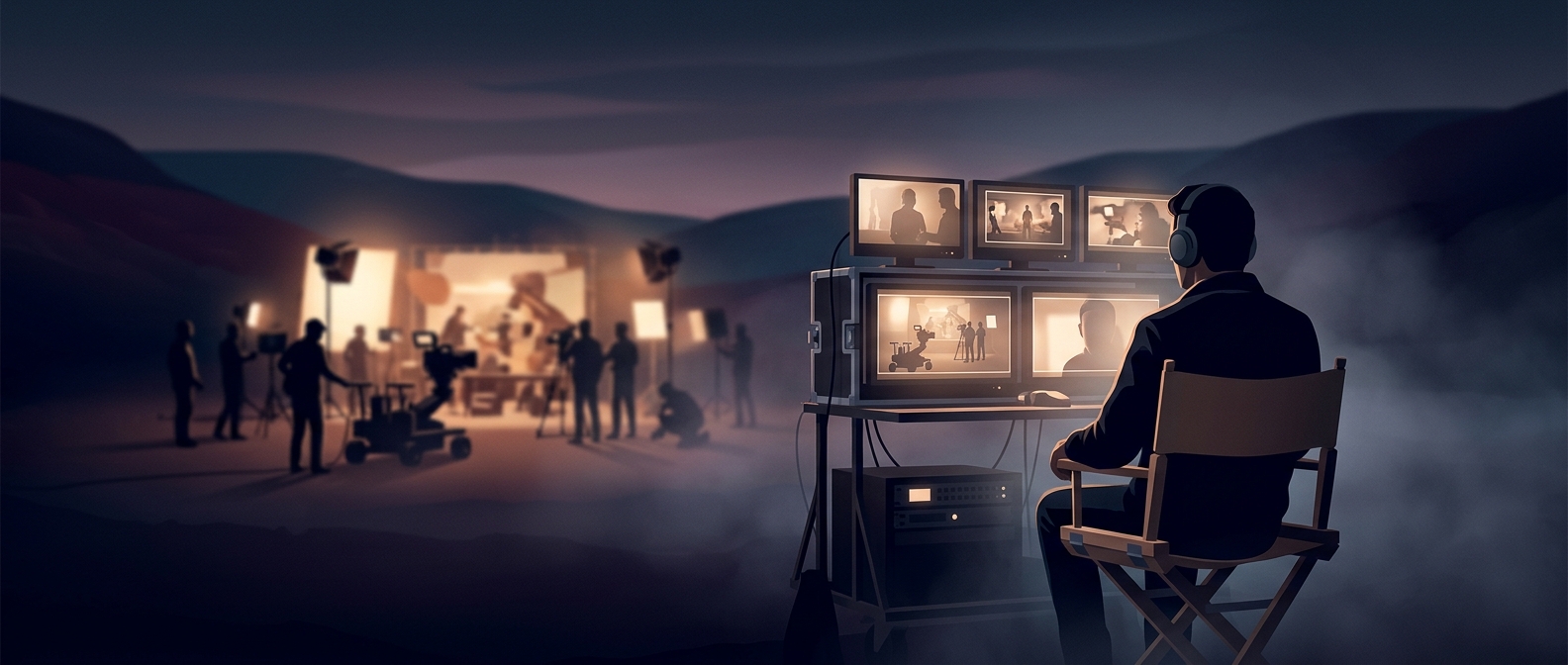
The monitors in a video village are usually connected to the camera’s video feed, so people there can follow a shot as it is filmed. Depending on the setup, they may also be able to review a take after “cut”—the call that ends the recording. That makes the area a working station, not just a place to watch: it gives decision-makers a chance to notice a missed moment, check whether an important detail is visible, or ask for another take while the set is still prepared.
Feedback without crowding the camera
A film set has limited room around the camera, where performers, camera operators, focus pullers, and other crew need to work. Sending monitors to a separate area lets producers and other observers see the shot without gathering behind the camera or adding traffic and conversation where the crew is concentrating. The separation also makes it easier to watch several takes and compare choices without interrupting the action.
A monitor image is useful for judging framing and performance, but it is not always identical to the finished picture: the image may still need editing, color work, and other post-production. Video village therefore offers a practical view of what the camera is capturing—not a guarantee of how the final scene will look. Its real value is timing: feedback can happen while the set, cast, and lighting are still in place.