Why a Take Has a Deliberate End
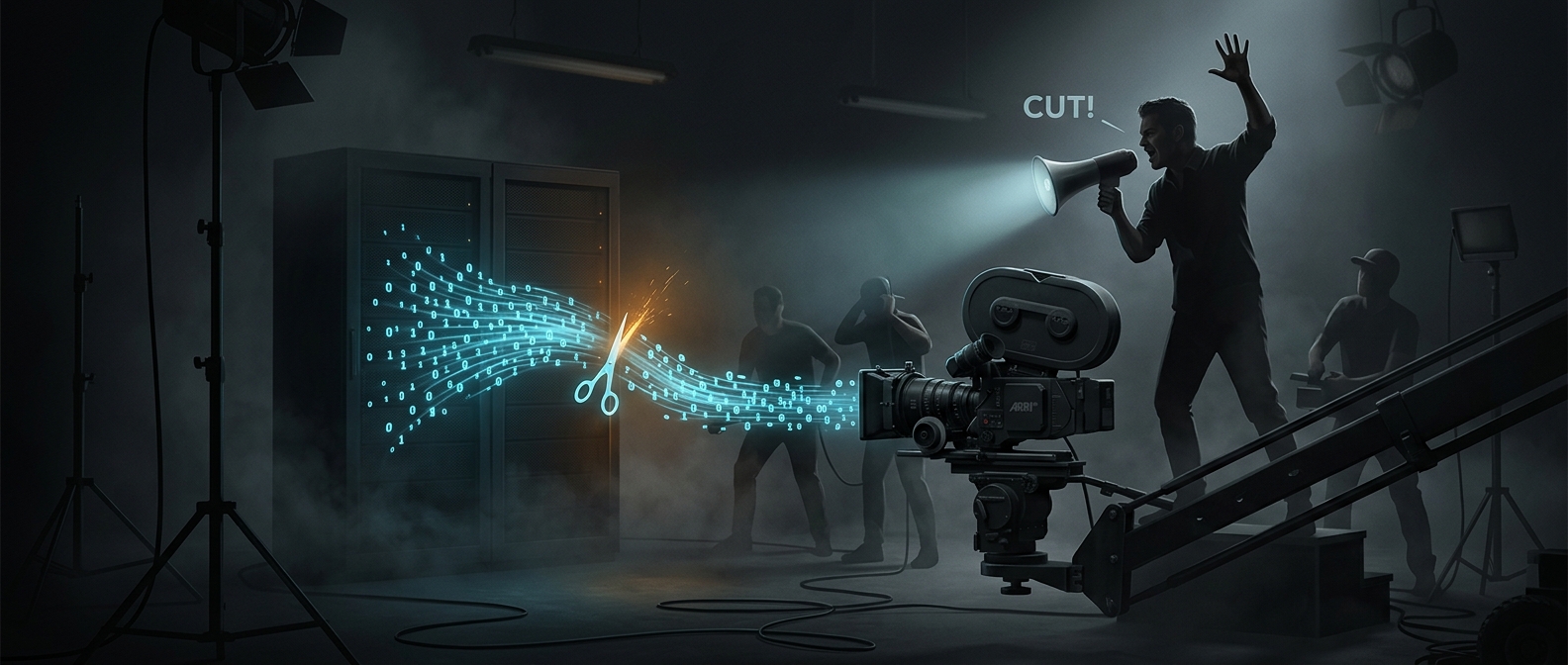
A camera recording is not just watching a scene; it is continuously creating material that must be stored, labeled, and managed. On digital productions, higher-quality footage can consume storage quickly, and camera cards need to be copied and checked before they can safely be reused. On film productions, every extra moment uses physical stock that must later be developed. In both cases, footage that keeps accumulating after the performance is over adds cost without adding a usable take.
“Cut” Also Resets the Workflow
The call marks the end of the performance for the crew. Once recording stops, the director can discuss what worked, actors and technicians can reset, and the next take can be prepared. Editors and production teams also benefit from clear boundaries: a take has an identifiable start and finish rather than hours of continuous material to sort through.
A crew may intentionally keep cameras rolling through a pause or transition when the scene needs it. But once the needed action is captured, calling “cut” prevents unused recording from consuming film stock or filling storage that must be managed for the rest of the shoot. It is a small command that keeps both the creative process and the production’s limited recording resources under control.