A prop has to survive the story—and the shoot
A replica is not simply a cheaper stand-in. It has to behave convincingly from the camera’s point of view and hold up to what performers do with it. A document may need readable markings in a close-up; a gadget may need to fit an actor’s hand, open on cue, or give the impression of working. The prop team builds or selects an object to meet the demands of the scene, not just to look plausible on a shelf.
Why one object may need several versions
Filming rarely happens in story order. A scene may be shot in fragments, from different angles, or again after a technical problem. Meanwhile, an object can be dropped, torn, wet, or altered as the plot advances. To keep those shots consistent, the crew may use duplicates: an intact version, a damaged one, or a sturdier copy for repeated handling. The continuity team tracks which version belongs at each moment, so a prop does not mysteriously repair itself between cuts.
Inventory is a creative shortcut
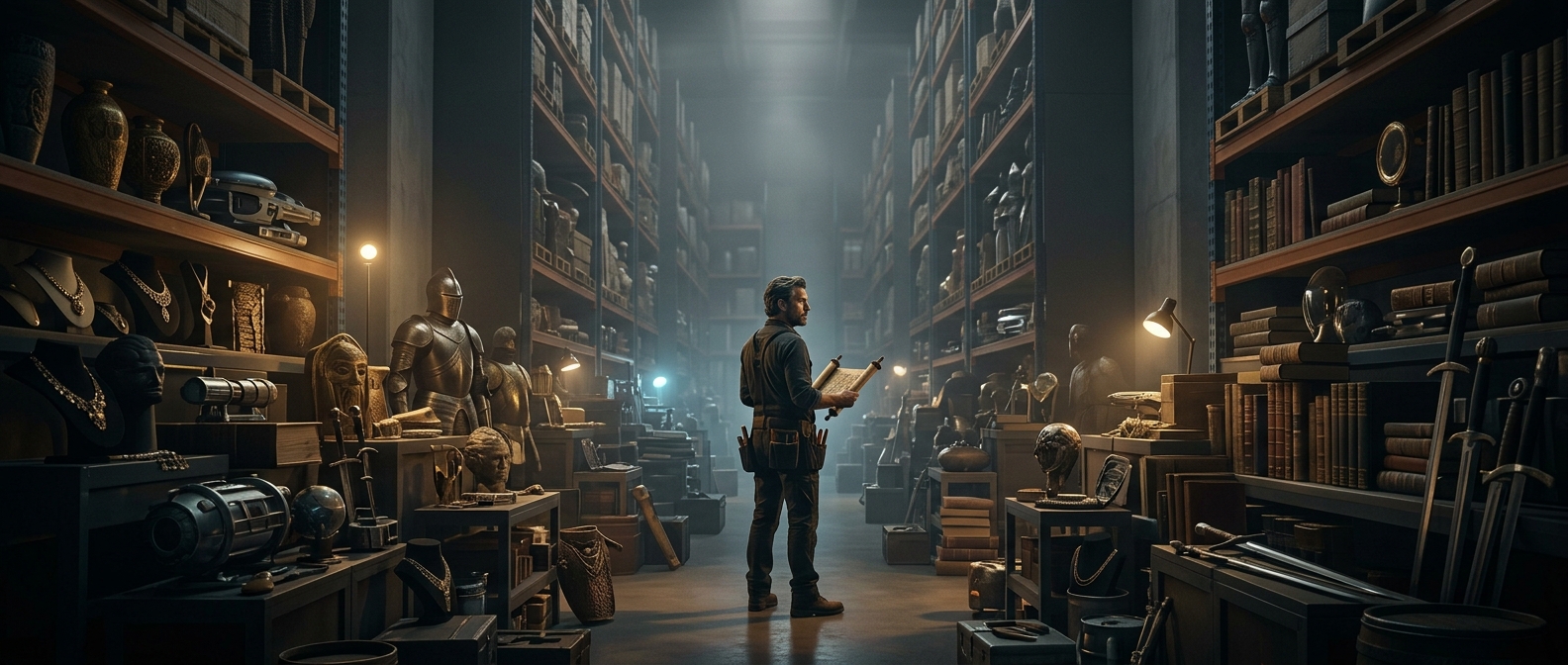
A well-stocked prop house lets a production compare shapes, materials, and styles before committing to a custom build. An existing item can be modified to match a director’s or designer’s vision, while a one-off prop can be made when the story requires something specific. Either way, the object must also work within practical limits: it has to be safe to handle, available when filming needs it, and convincing under the lighting and framing of the shot.
That is why a prop’s usefulness is measured less by how impressive it looks in storage than by whether it can reliably tell the same visual story take after take.