Why a Screen Diary Is Only Partly Written
A diary prop has two jobs: it must look like something a person has used, and it must supply whatever the camera actually shows. Those jobs rarely require a complete, carefully written book. If a scene frames one open page, the prop maker can prepare that page to match the action and leave the unseen pages as visual texture.
That approach saves time and gives the production control over the words that reach the audience. A legible sentence can establish a character’s mood or move a scene along. Dense writing on every page would take longer to create—and could invite attention to details the story does not need.
Believable Up Close, Unimportant at a Glance
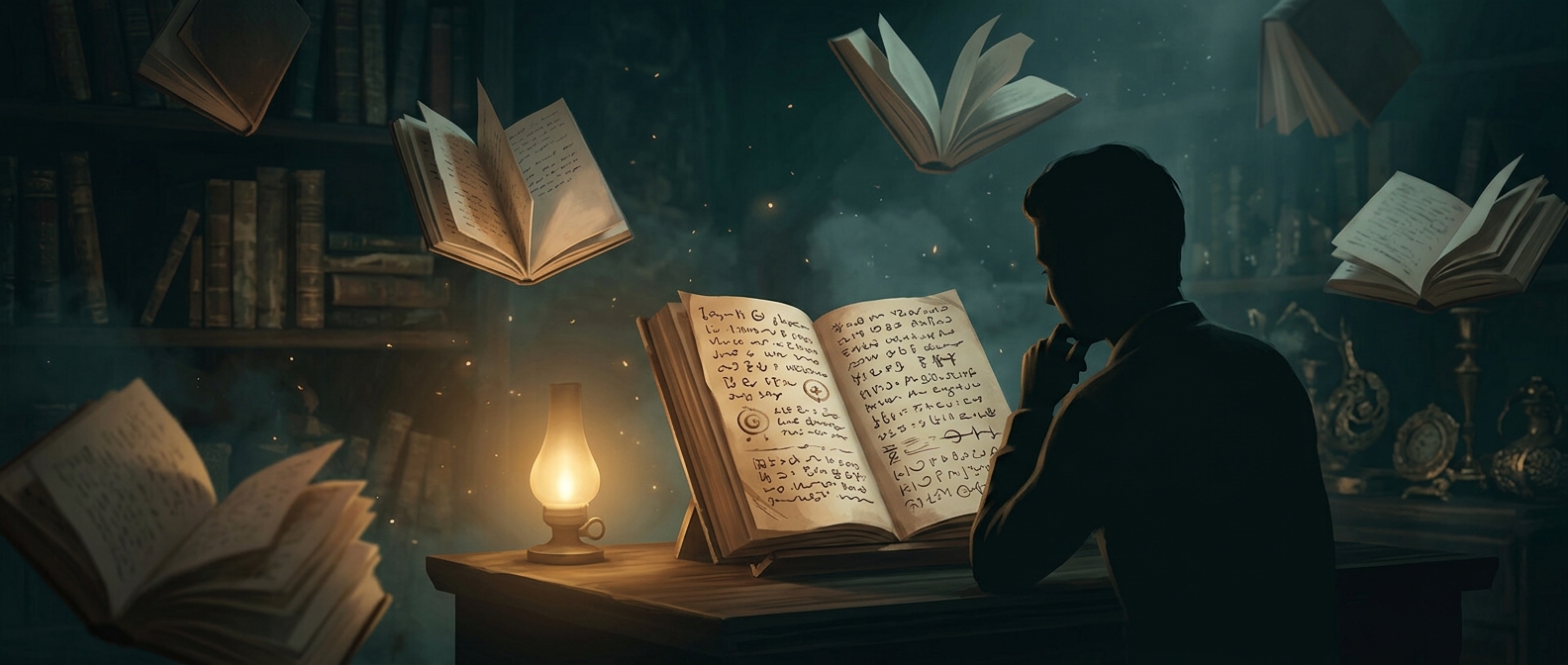
Handwriting, crossed-out lines, and uneven blocks of text help a blank notebook read as a used diary. Beyond the page shown clearly, gibberish can suggest writing without giving viewers more story to decode. Public-domain poetry offers another option: it supplies real language without requiring an entirely new text, though the chosen passage still has to suit what the shot reveals.
The camera’s framing determines how much work the prop needs. A close-up may expose every line; a passing glimpse may call only for the shape and rhythm of handwriting. The goal is not to write a whole fictional diary, but to make the visible part serve the scene and the rest feel plausible.