How a Foam Block Becomes a Convincing Statue
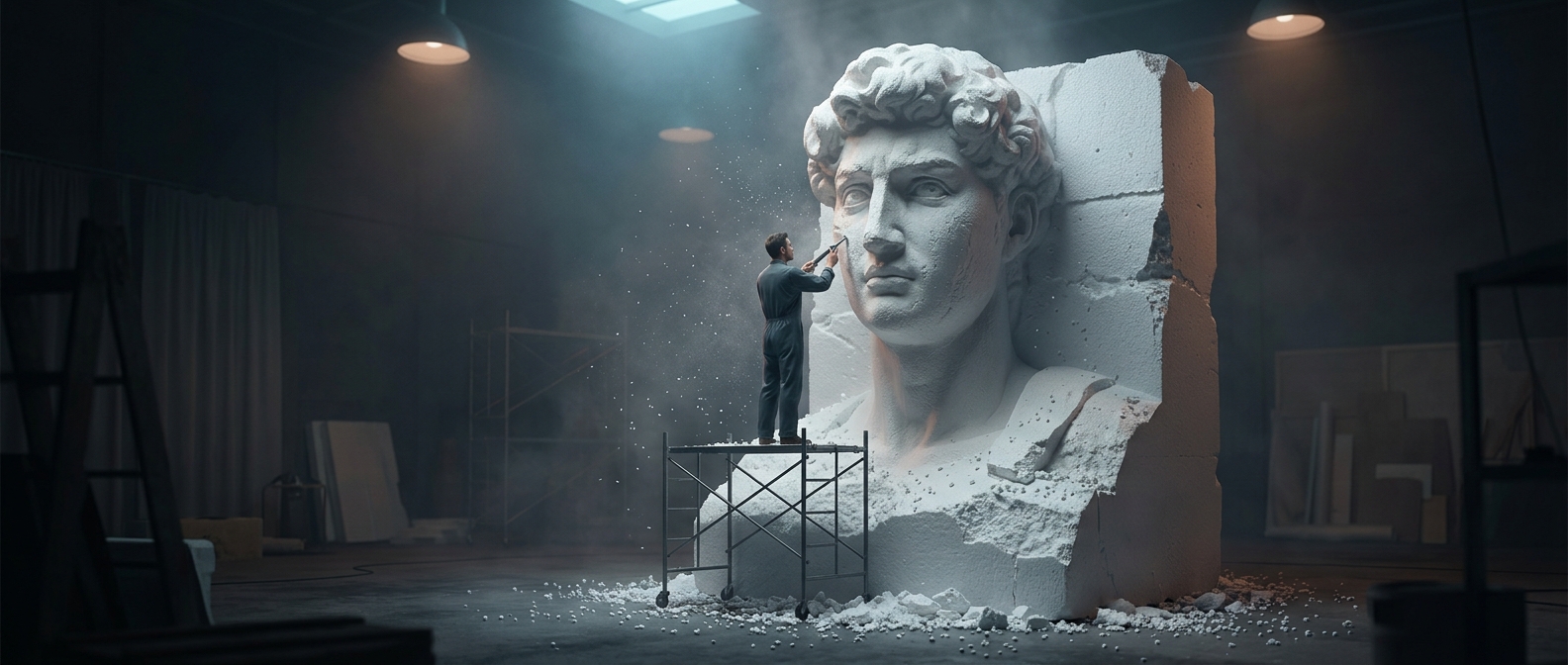
A film statue has to look convincing from the camera’s viewpoint, not survive centuries outdoors. That changes how it is built. A sculptor can cut and shape foam quickly with hand tools, producing the broad silhouette and details the scene needs without handling a massive block of stone or casting a heavy metal figure.
The bare foam is only the starting point. A hard coating gives the surface a more solid feel and helps protect the soft material; layers of paint then create the visual clues viewers associate with stone or metal. Subtle shifts in color, shadows in carved grooves, and rough or polished texture can sell the illusion. Under controlled lighting, those surface details often matter more than what the statue is made of.
Built for the Shot, Not for the Ages
The production can tailor the finish to the scene. A statue meant to appear ancient may receive mottled color and darkened crevices, while a clean, ceremonial figure might look smoother and more uniform. The camera distance also matters: fine detail is useful in a close-up, but a large, readable outline may be enough in a wide shot.
Foam’s lightness makes set pieces easier to move and position, but it also means they need careful handling and may require reinforcement, especially if actors or equipment will come close. The tradeoff is practical: the crew can create the appearance of a monumental object without bringing a monumental load onto the set. A convincing statue can therefore be less like a permanent sculpture and more like a carefully finished surface arranged for one particular scene.