The camera can make a fake bill look real
A prop bill has a peculiar job: it must read as money from across a room or in a close-up, but it must not be usable—or easily mistaken for usable—currency outside the scene. That tension shapes its design. For U.S. currency, reproduction safeguards require movie bills to differ from genuine notes in size and to be printed on only one side.
Those differences are easy to miss while watching a film, but they matter when a bill leaves the controlled world of a set. A convincing two-sided copy at real-currency scale could be used to deceive someone or passed along as counterfeit money.
Production design works around the restriction
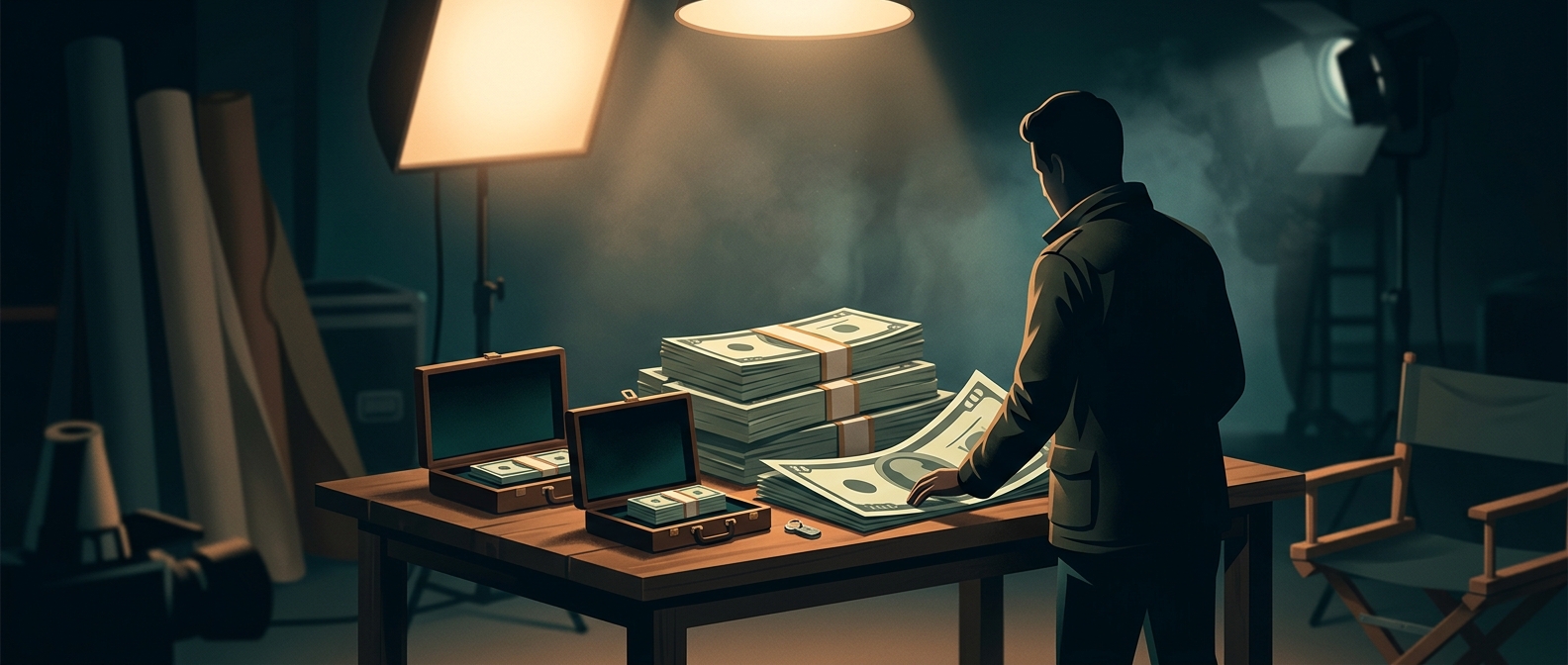
The art department can suggest cash without copying a genuine note exactly. A bill may appear briefly, sit at an angle, or be handled in a way that shows only its printed face. Camera framing, lighting, and editing help viewers recognize “money” without requiring a fully usable replica. When a scene needs more detail, designers can invent currency or alter its appearance.
The constraints also affect how props are made and managed: a production needs enough bills to dress a scene, but they remain clearly limited imitations rather than complete reproductions. The goal is not to fool the audience in every detail; it is to give the shot the visual cue it needs.
The illusion is built for the shot
That is why movie cash can seem authentic on screen yet look conspicuously wrong in a still photograph or in someone’s hand. The camera supplies part of the realism, while the bill itself preserves the difference. The most convincing prop money is designed to work as an image, not as currency.