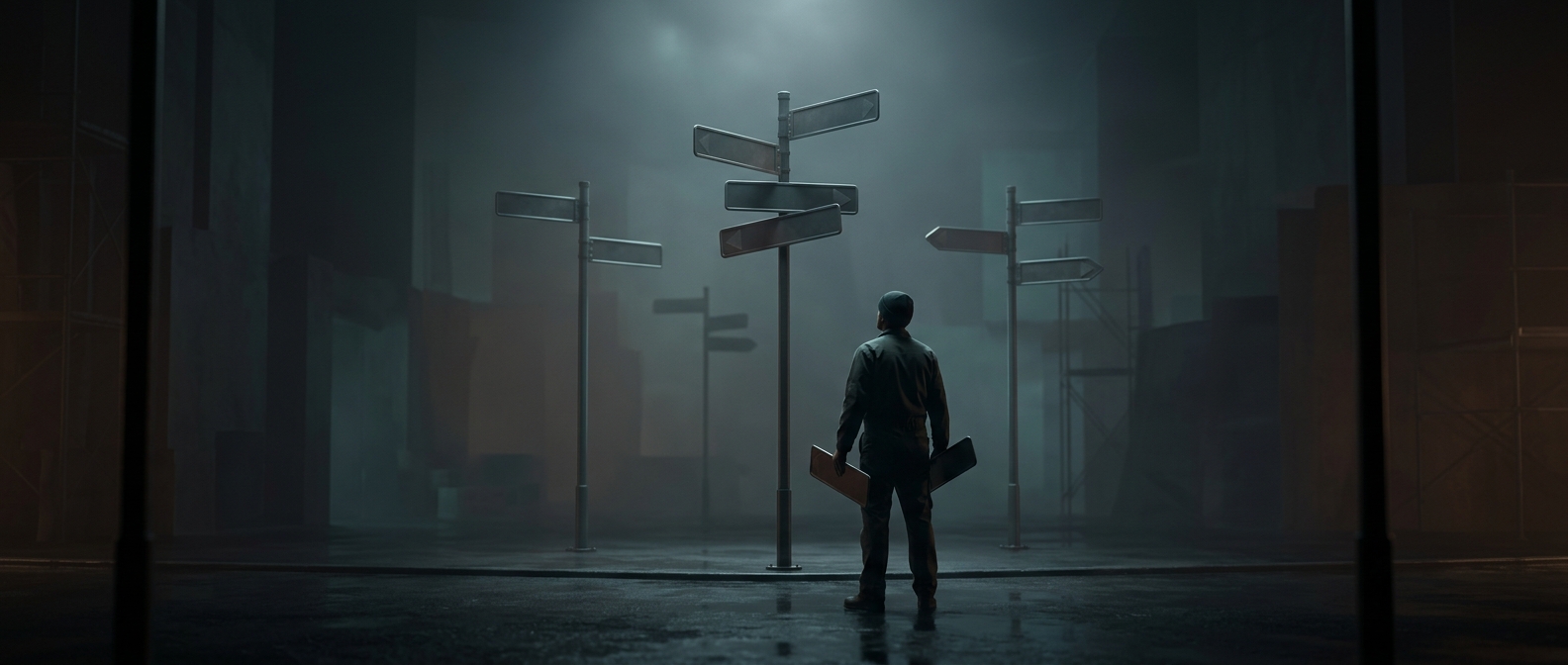
A street corner can be real while its map is invented
A camera may show a recognizable neighborhood, but the story needs that corner to belong to a made-up city—or to a part of town that exists only in the script. A fabricated street sign lets filmmakers borrow the texture of a real place without making the plot depend on its actual street grid.
That distinction matters when scenes are shot out of order or in several locations. One block can stand in for multiple fictional streets, and a sign can make each appearance read as the same imagined intersection. The setting stays coherent even when the production moves between real corners.
The sign is a small piece of continuity
A film crew’s art department can place a temporary sign over or near the signs already on a street. In the finished shot, that small change gives viewers a clear clue about where the scene is happening. It also prevents a real intersection name from sending viewers toward an unrelated place while they try to follow the story.
Street signs are unusually efficient set dressing: they carry information in a glance. A fictional name can suggest that the world extends beyond the frame, even though the camera may have filmed only one convenient block. The result is a useful production trick: the neighborhood remains convincingly real, while its geography belongs to the film.